Who'll keep the oil flowing? It's the only hope of staving off global economic meltdown. MARK ALMOND reveals who is coming to Trump's aid and who is ignoring his pleas for help
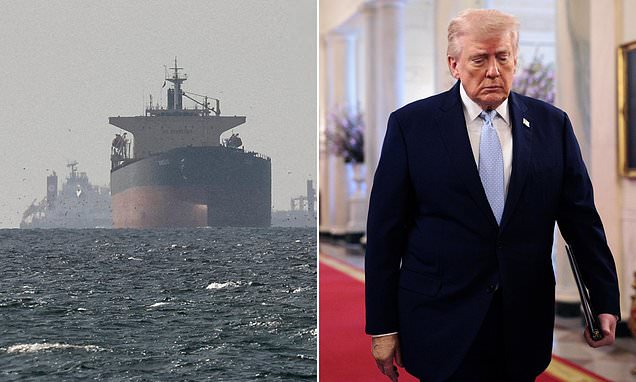
Before the US and Israel launched a blizzard of missile and bombing strikes on Iran three weeks ago, the Strait of Hormuz was among the busiest stretches of water in the world.
No wider than the English Channel, this deep-water bottleneck between the United Arab Emirates and Iran was plied by 140 ships every day before February 28. Since then, just 90 vessels have come through, mostly heading for China.
If the US cannot keep the route open, in the face of Iranian counter-attacks, even that trickle of exports will dry up. Not only is this crippling the economies of countries north of the Strait, such as Kuwait, Iraq, Bahrain, Qatar and the UAE, but it is depriving the whole world of oil and gas.
Overland transport is impossible on any scale. The pipelines do not exist and any convoy of tankers would be prey to Iranian drone strikes. On Thursday, Iran hit the terminus of the only trans-Saudi Arabian pipeline at the Red Sea port of Yanbu, triggering Riyadh’s threat to enter the war.
Its foreign minister Prince Faisal bin Farhan said: ‘This pressure from Iran will backfire politically and morally, and certainly we reserve the right to take military actions if deemed necessary.’
Saudi Arabia is the world’s biggest oil exporter and if its trade routes are blocked, the consequences could be dire for the global economy.
So can the West keep the Strait open? If so, how? And, with Riyadh now breaking from the largely neutral ranks of its Gulf neighbours, which other countries with vital interests in the region are willing to help the US? And who is giving Trump the cold shoulder?
Before the US and Israel launched a blizzard of missile and bombing strikes on Iran three weeks ago, the Strait of Hormuz was among the busiest stretches of water in the world.

www.dailymail.co.uk