Daily Market Analysis By FXOpen

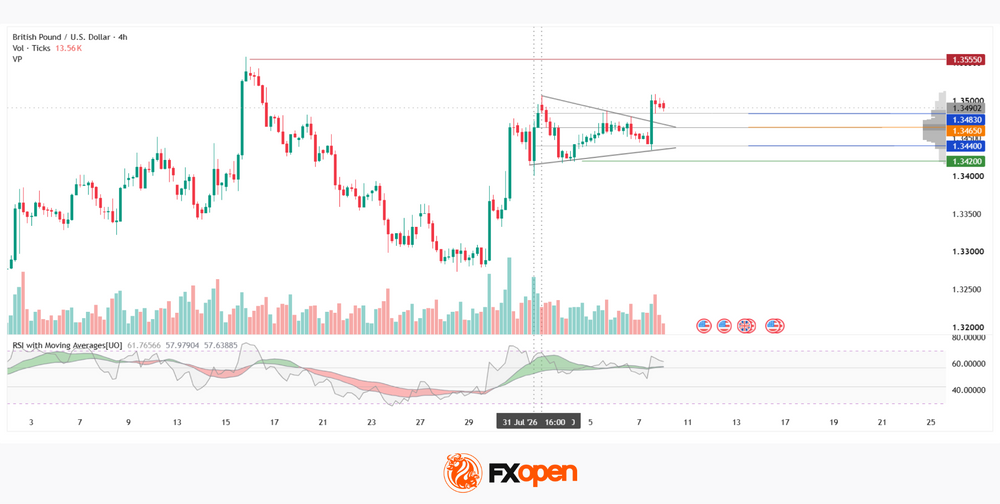
GBP/USD: The Triangle That Could Define the Rest of 2026

pound.png


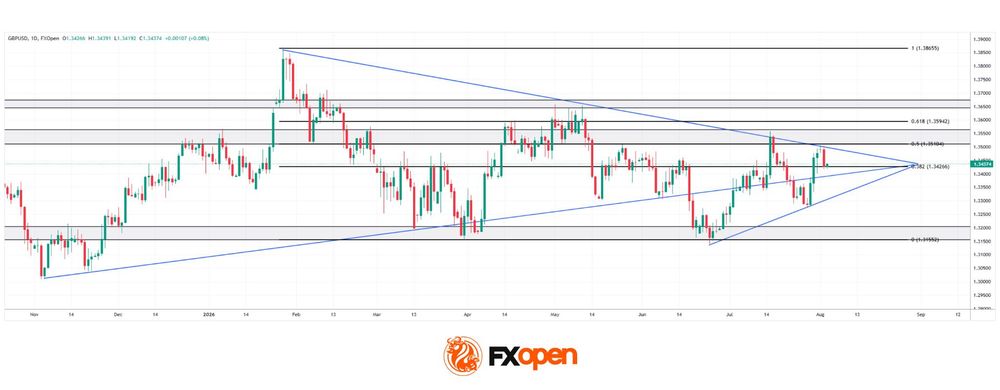
The pound just closed its strongest week against the dollar in months, ending July up more than 1% and holding just below $1.35. Two factors are driving the move. First, political risk has faded: the UK appointed its seventh prime minister in a decade, and the new government's pledge of fiscal discipline has reassured markets. Second, the Bank of England surprised with a more hawkish tone than expected—policymakers voted 6-3 to hold rates steady, but three members pushed for a hike, a stronger signal of resolve than markets had priced in.

The dollar, meanwhile, has had a rough few sessions. Following the Fed's decision to hold rates for a fifth consecutive meeting, Chair Kevin Warsh offered little clarity on the path ahead, leaving investors questioning whether the central bank is doing enough to bring inflation back to target. The dollar index posted its worst weekly performance in three months as a result, though roughly two-thirds of the market still expects a September hike.

With both central banks striking cautiously hawkish tones but offering little forward guidance, GBP/USD's next move looks set to hinge on incoming US labor data.
pound.jpg


TO VIEW THE FULL ANALYSIS, VISIT FXOPEN BLOG

Disclaimer: This article represents the opinion of the Companies operating under the FXOpen brand only (excluding FXOpen EU). It is not to be construed as an offer, solicitation, or recommendation with respect to products and services provided by the Companies operating under the FXOpen brand, nor is it to be considered financial advice.
 
AUD/NZD: A Mixed Jobs Report Meets a Critical Chart Level
aud.png


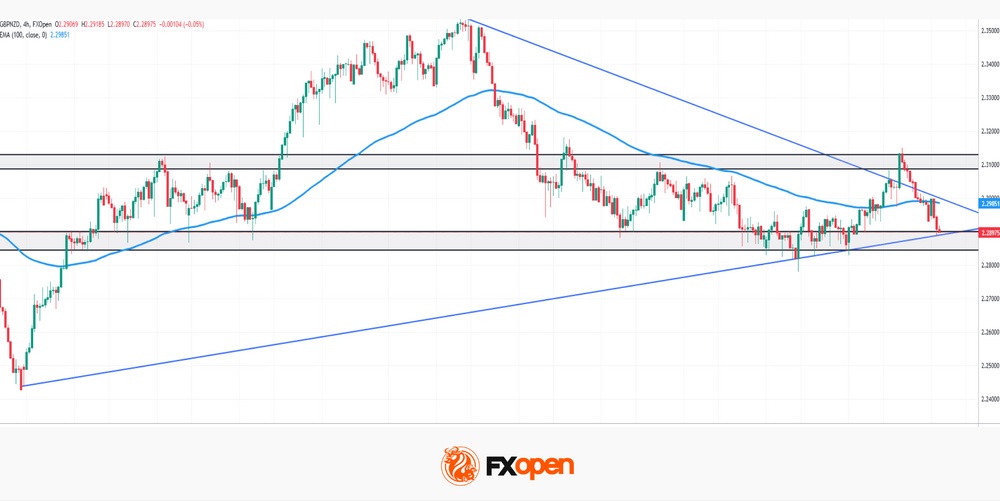
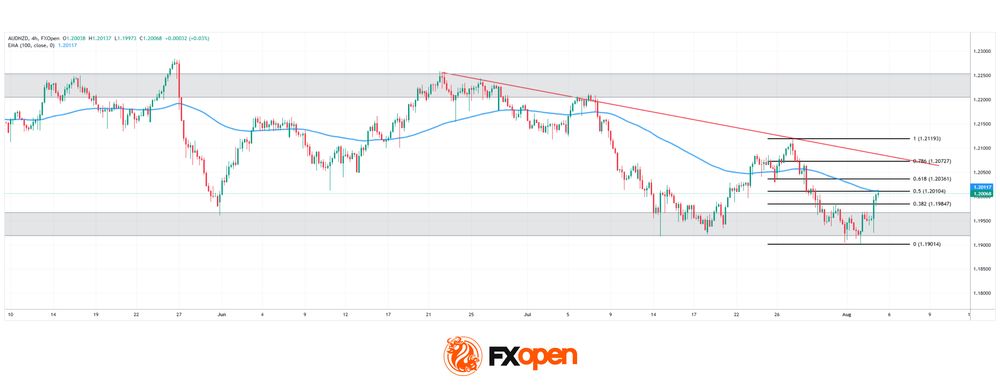
The Aussie and the Kiwi are telling two very different monetary policy stories right now, and the divergence is starting to show up clearly in the cross. The RBA held its cash rate at 4.35% in August, but the hawkish tone that once dominated has faded fast: Q2 inflation cooled to 3.9% from 4.1%, prompting Goldman Sachs to abandon its call for one final hike this year. Markets now price next to no chance of an August move, with only roughly even odds of a hike by November.

Across the Tasman, the RBNZ is playing a different game entirely. Having already hiked to 2.50% in June, the central bank has kept its guidance firmly hawkish, and markets are now almost fully pricing a further 25bp increase in September. Wednesday's employment data added an interesting twist: employment change q/q beat expectations sharply at 0.5% against 0.1% forecast, yet the unemployment rate also rose to 5.6% from 5.4%, above forecasts—a genuinely mixed print that complicates the otherwise hawkish RBNZ narrative.

The result: a Reserve Bank stepping back from further tightening against one still leaning hawkish, though now facing a labor market sending conflicting signals of its own.

aud.jpg


TO VIEW THE FULL ANALYSIS, VISIT FXOPEN BLOG

Disclaimer: This article represents the opinion of the Companies operating under the FXOpen brand only (excluding FXOpen EU). It is not to be construed as an offer, solicitation, or recommendation with respect to products and services provided by the Companies operating under the FXOpen brand, nor is it to be considered financial advice.
 
Euro and Pound Hold Gains as Markets Assess the US Employment Outlook
eurgbp.png


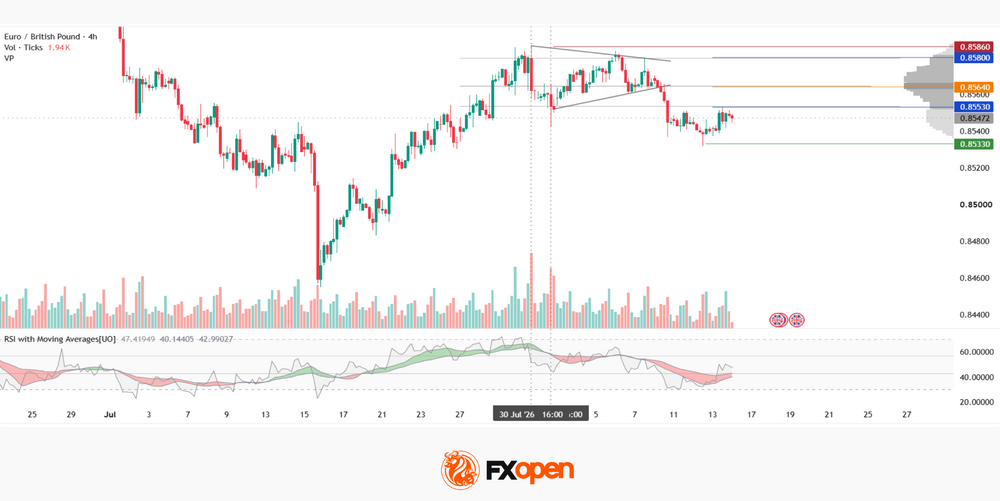
The euro and the pound continue to trade higher against the US dollar following last week's Federal Reserve meeting. As widely expected, the Fed left interest rates unchanged and reiterated that future monetary policy decisions would depend on incoming economic data. This cautious stance failed to provide fresh support for the dollar, while yesterday's weaker US labour market figures added further downward pressure. According to the latest ADP report, the US private sector added just 44,000 jobs, well below forecasts of 68,000 and the previous month's 95,000. Although the S&P Global Services PMI exceeded expectations, the ISM report painted a more mixed picture: the headline services index edged down to 54.1, while the employment component fell to 47.4, signalling continued cooling in the labour market. As a result, investors increased their expectations of a broader slowdown in the US economy, allowing both the euro and the pound to maintain their upward momentum.

eurgbp.jpg


TO VIEW THE FULL ANALYSIS, VISIT FXOPEN BLOG

Disclaimer: This article represents the opinion of the Companies operating under the FXOpen brand only (excluding FXOpen EU). It is not to be construed as an offer, solicitation, or recommendation with respect to products and services provided by the Companies operating under the FXOpen brand, nor is it to be considered financial advice.

 
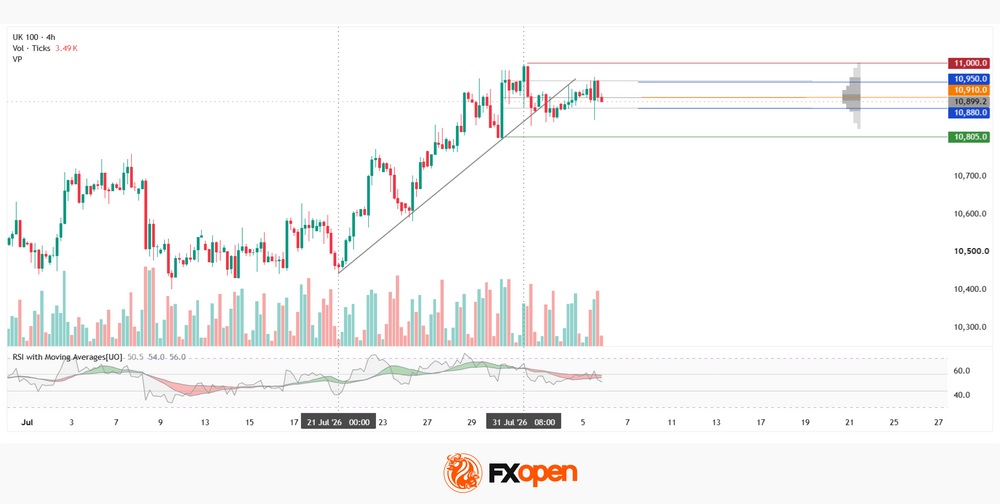
FTSE 100 Analysis: Strong BAE Systems Earnings Support the Index Rally Near Record Highs
ftse.png


On 30 July, BAE Systems reported its first-half 2026 financial results, with sales rising 9% year-on-year to £15.8 billion. Underlying operating profit increased by 11% to £1.7 billion, while underlying earnings per share climbed 13% to 38.9 pence. The company also raised its full-year outlook for sales, operating profit and EPS, supported by a record order backlog of £84 billion following £16.4 billion in newly secured contracts. On the same day, the FTSE 100 reached a fresh intraday high, helped by gains in mining stocks amid stronger commodity prices and positive momentum across industrial companies after encouraging earnings releases. The advance came alongside renewed focus on developments surrounding Iran and expectations ahead of the Bank of England’s rate decision.

ftse.jpg


TO VIEW THE FULL ANALYSIS, VISIT FXOPEN BLOG

Disclaimer: This article represents the opinion of the Companies operating under the FXOpen brand only (excluding FXOpen EU). It is not to be construed as an offer, solicitation, or recommendation with respect to products and services provided by the Companies operating under the FXOpen brand, nor is it to be considered financial advice.
 
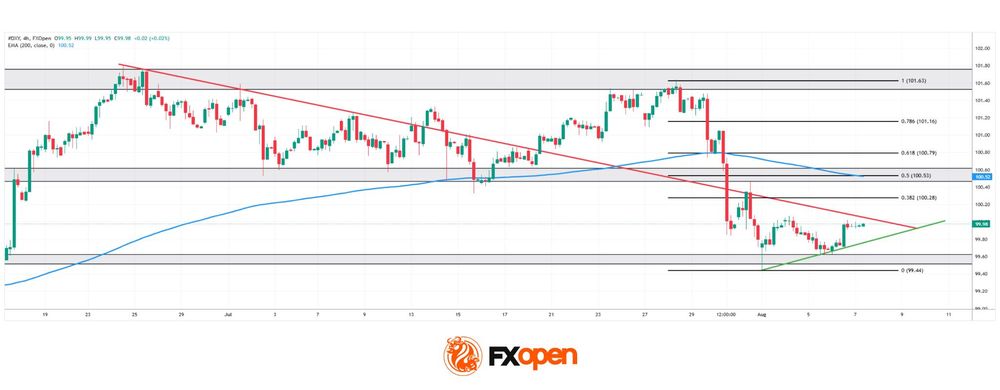
US Dollar Index (DXY): Two Months of Consolidation, One NFP Away From a Breakout
dxy.png


The dollar heads into today's session with one of the most important catalysts of the summer on deck: the July Non-Farm Payrolls report, due at 12:30 PM UTC. Economists expect around 95,000 jobs added, down from June's already weak 57,000 print, with the unemployment rate seen ticking up to 4.4% from 4.3%.

The backdrop makes this release particularly consequential. At its July meeting, the Fed held rates steady at 3.50%-3.75%, but the tone was notably hawkish: three policymakers pushed for a hike rather than any discussion of cuts. That stance has kept the dollar broadly supported, even as recent JOLTS data pointed to cooling labor demand and futures markets trimmed the odds of a September hike to around 59%, down from 67% just days earlier.

Today's numbers will likely decide which narrative wins out. A stronger-than-expected print, particularly alongside firm wage growth, would reinforce the Fed's hawkish resolve and could send the dollar testing higher levels. A weaker report, especially with downward revisions to prior months, would revive rate-cut expectations and put fresh pressure on the greenback heading into the rest of August.

dxy.jpg


TO VIEW THE FULL ANALYSIS, VISIT FXOPEN BLOG

Disclaimer: This article represents the opinion of the Companies operating under the FXOpen brand only (excluding FXOpen EU). It is not to be construed as an offer, solicitation, or recommendation with respect to products and services provided by the Companies operating under the FXOpen brand, nor is it to be considered financial advice.
 
3 EVENTS IN FOCUS | 10-14 AUGUST
News-and-You-Tube.png


In this video, we’ll explore the key economic events and market trends, shaping the financial landscape. Get ready for insights into financial markets to help you navigate the week ahead. Let’s dive in!

Key topics:

US Inflation Rate
The first major event is the US inflation report on 12 August. Markets currently see a 55% probability of a Federal Reserve rate hike in September, but a weaker-than-expected inflation reading could reduce those expectations and put pressure on the US dollar. June’s softer inflation data already triggered a sharp dollar decline, while some analysts expect the Fed to keep rates unchanged for now and consider cuts next year.

UK GDP Data
The UK GDP report on 13 August will be closely watched by sterling traders. Markets will focus on monthly, quarterly and annual growth figures. A significant surprise in the data could increase volatility across GBP pairs, with weaker growth potentially weighing on the pound.

US PPI
The US Producer Price Index, also released on 13 August, will provide further insight into inflation pressures before they reach consumers. June’s weaker-than-expected PPI and Core PPI readings pushed the dollar lower, and another soft report could strengthen expectations of easing inflation and add further pressure on the US currency.

With several high-impact releases packed into the week, disciplined risk management will remain essential. Geopolitical developments continue to influence commodity and currency markets, while economic data could generate sharp short-term price swings.

Gain insights to strengthen your trading knowledge.

Watch it now and stay updated with FXOpen.

TO VIEW THE FULL ANALYSIS, VISIT FXOPEN BLOG

Disclaimer: This article represents the opinion of the Companies operating under the FXOpen brand only (excluding FXOpen EU). It is not to be construed as an offer, solicitation, or recommendation with respect to products and services provided by the Companies operating under the FXOpen brand, nor is it to be considered financial advice.
 
GBP/USD Analysis: Weak US Labour Market Data Pushes the Pair Higher
gbpusd.jpg


The pair gained momentum following the release of the US labour market report for July 2026 on 7 August. Non-farm employment fell by 23,000 jobs, compared with a forecast for an increase of 80,000 jobs among economists surveyed by Reuters. Employment data for May and June were also revised downwards, according to the Bureau of Labor Statistics. The dollar responded with broad-based weakness. Earlier, on 30 July, the Bank of England kept its interest rate at 3.75% by a six-to-three vote, with three members of the committee voting for a rate hike. The regulator’s decision also highlighted inflation risks associated with volatility in energy prices.

gbpusd.png


TO VIEW THE FULL ANALYSIS, VISIT FXOPEN BLOG

Disclaimer: This article represents the opinion of the Companies operating under the FXOpen brand only (excluding FXOpen EU). It is not to be construed as an offer, solicitation, or recommendation with respect to products and services provided by the Companies operating under the FXOpen brand, nor is it to be considered financial advice.
 
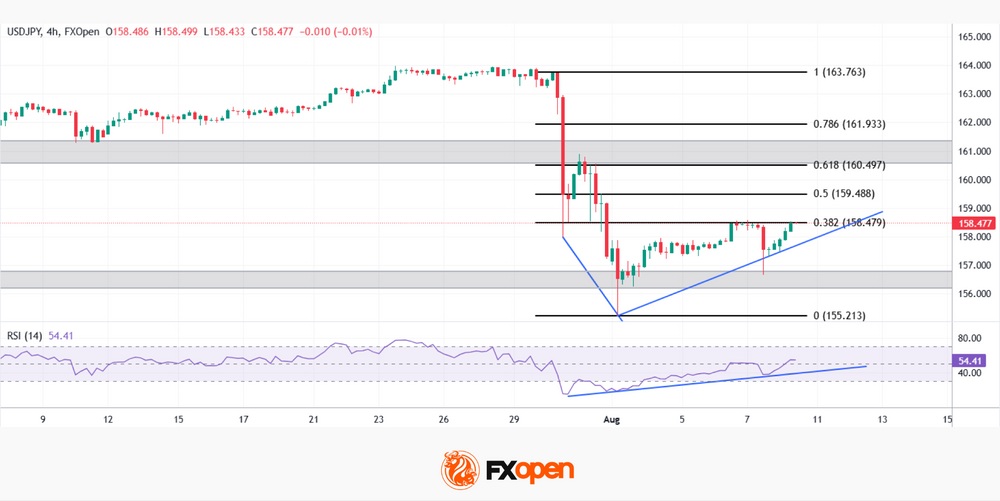
USD/JPY: Was Intervention Enough to Change the Trend?
yen.png


USD/JPY finds itself at the center of one of the most dramatic currency stories this summer. Having weakened to a four-decade low near ¥164, the yen was pulled back sharply after Japan and the US carried out a coordinated intervention, with Tokyo reportedly spending around $34 billion in a single session to defend its currency. The move briefly pushed the pair toward ¥155, though the yen has since given back some of those gains, trading back near ¥158 as doubts persist over how long intervention alone can hold.

The underlying driver remains the wide gap between US and Japanese interest rates, made worse by rebounding oil prices following renewed tensions in the Strait of Hormuz. Markets are now watching for a possible BoJ hike in September, encouraged by six straight months of rising real wages, while the Fed's own July dissents—three policymakers pushed for a hike over a hold—keep US rates firmly in the driver's seat too.

With both central banks now genuinely in play, USD/JPY's next move looks set to hinge on which side moves first: Tokyo's rate decision, or Washington's next data-driven signal.

yen.jpg


TO VIEW THE FULL ANALYSIS, VISIT FXOPEN BLOG

Disclaimer: This article represents the opinion of the Companies operating under the FXOpen brand only (excluding FXOpen EU). It is not to be construed as an offer, solicitation, or recommendation with respect to products and services provided by the Companies operating under the FXOpen brand, nor is it to be considered financial advice.
 
EUR/AUD: Two Central Banks on Hold, One Triangle About to Break
1-(1).png


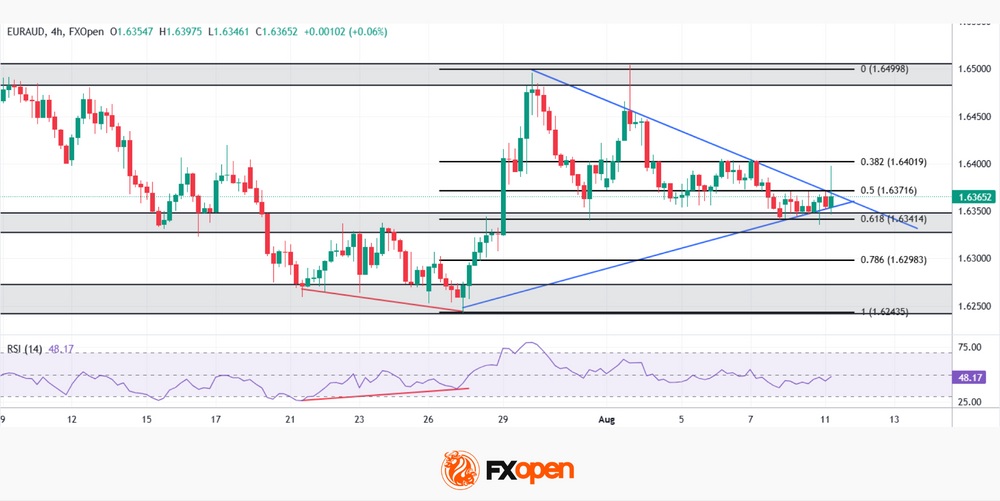
Overnight, the RBA held its cash rate steady at 4.35%, as widely expected after June's inflation data came in softer than forecast at 3.8% headline. Yet the accompanying statement struck a notably cautious tone, warning that trimmed mean inflation remains elevated and largely unchanged from the March quarter, with oil and related commodities still trading above pre-conflict levels due to the ongoing Middle East crisis. With 55% of economists still expecting at least one further hike in 2026, the door to additional tightening remains firmly open.

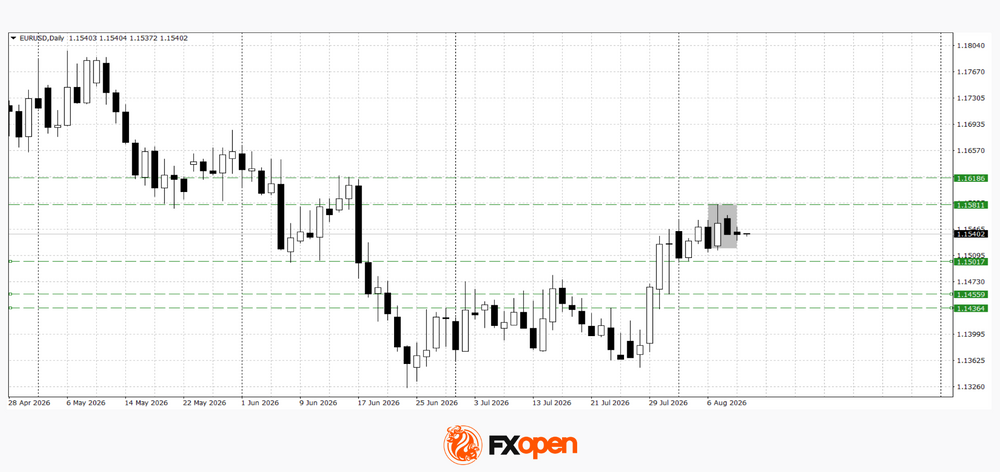
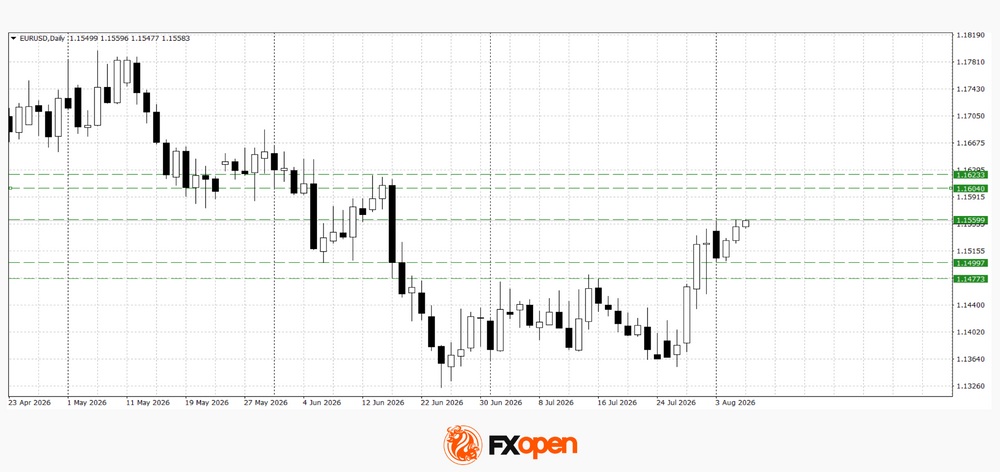
The euro, meanwhile, holds a cautiously bullish tone after climbing to a seven-week high near $1.155 against the dollar. Eurozone Q2 growth of 0.4% offered support, though weaker retail activity and mixed inflation signals keep the ECB's own path uncertain, with policymakers maintaining a deliberately cautious stance ahead of their September 15-16 meeting and giving no firm commitment to further hikes.

The result: two central banks in genuine holding patterns, each leaving the door open to more tightening while waiting for clearer data to justify the next move.

1-(2).jpg


TO VIEW THE FULL ANALYSIS, VISIT FXOPEN BLOG

Disclaimer: This article represents the opinion of the Companies operating under the FXOpen brand only (excluding FXOpen EU). It is not to be construed as an offer, solicitation, or recommendation with respect to products and services provided by the Companies operating under the FXOpen brand, nor is it to be considered financial advice.

 
EUR/USD and GBP/USD Await a Fresh Impulse from Inflation Data
eurgbp.jpg


The euro and pound are holding their ground against the US dollar, although the momentum in European currencies has become more subdued following their previous gains. Market participants are reluctant to establish new positions ahead of the release of the July US inflation report, which could alter expectations for the Federal Reserve’s future policy. Recent labour market data is also encouraging caution: a weak ADP report and a decline in the ISM employment component have added to signs of a gradual cooling in the US labour market.

Today, the main focus will be on the US Consumer Price Index (CPI). According to forecasts, annual inflation may slow to 3.4% from 3.5%, while monthly prices are expected to rise by 0.1% after falling 0.4% a month earlier. Core CPI is forecast at 2.5% year-on-year and 0.2% month-on-month. Weaker-than-expected figures could strengthen expectations of monetary policy easing by the Fed and put additional pressure on the dollar. If inflation comes in above forecasts or proves more persistent, the US currency could receive fresh support. Final inflation figures for Germany and Italy will also be released in Europe, although their impact is likely to remain limited in the absence of significant deviations from preliminary estimates. Therefore, US inflation data is likely to be the main driver for EUR/USD and GBP/USD during today's session.

eurgbp.png


TO VIEW THE FULL ANALYSIS, VISIT FXOPEN BLOG

Disclaimer: This article represents the opinion of the Companies operating under the FXOpen brand only (excluding FXOpen EU). It is not to be construed as an offer, solicitation, or recommendation with respect to products and services provided by the Companies operating under the FXOpen brand, nor is it to be considered financial advice.

 
DAX 40: Record Highs, Real Fundamentals, One Channel Left to Test
dax.jpg


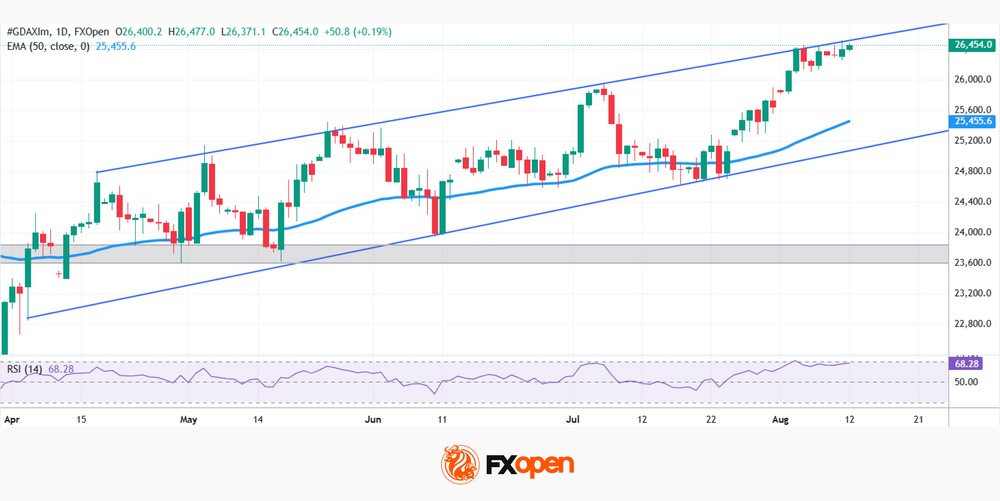
Germany's benchmark index just made history, breaking above 26,500 for the first time ever, extending a rally that has already delivered close to 10% over the past twelve months. The move came on fresh optimism around a potential resolution to the Iran conflict, though that optimism proved short-lived: President Trump's latest demands, that Tehran compensate for lives lost in recent attacks, have since added friction to already fragile diplomatic efforts around reopening the Strait of Hormuz, and the index has pulled back modestly from its peak.

Beneath the geopolitical noise, the underlying story remains genuinely constructive. Stronger-than-expected industrial production and export data have reinforced confidence in German manufacturing, while a wave of solid corporate earnings, alongside notable strength from SAP and Infineon, has kept sentiment firmly bullish. Roughly a third of this year's growth still owes to calendar effects and government stimulus in defence and infrastructure, a detail worth remembering, but private-sector momentum finally looks like it's stabilizing rather than collapsing.

The result: a record-breaking index now testing whether Middle East headlines can derail a rally built on genuinely improving fundamentals.

dax.png


TO VIEW THE FULL ANALYSIS, VISIT FXOPEN BLOG

Disclaimer: This article represents the opinion of the Companies operating under the FXOpen brand only (excluding FXOpen EU). It is not to be construed as an offer, solicitation, or recommendation with respect to products and services provided by the Companies operating under the FXOpen brand, nor is it to be considered financial advice.
 
Natural Gas Analysis: Attempted Wedge Breakout Amid Lower EIA Forecast
xngusd.png


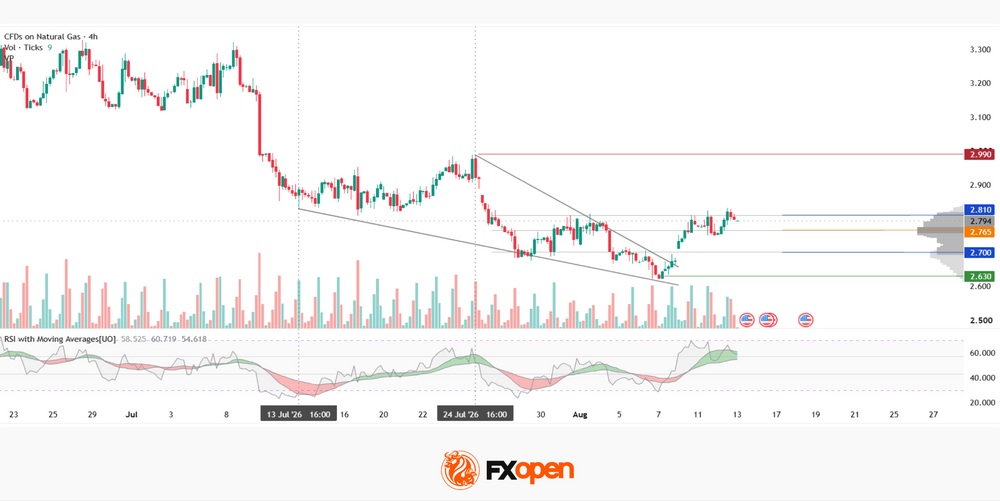
On 11 August, the US Energy Information Administration (EIA) lowered its forecast for the average natural gas price in the third quarter to $2.87 per million BTU — 50 cents below its previous estimate. The main reason is increased domestic production and inventories, which could create the largest stockpile in a decade ahead of the start of the heating season. Planned maintenance at the Freeport LNG export terminal may have added further pressure to the balance by reducing demand for gas used in liquefaction. Meanwhile, global LNG trade had already faced shipping disruptions in the Strait of Hormuz in July, highlighting the market’s continued sensitivity to geopolitical risks.

xngusd.jpg


TO VIEW THE FULL ANALYSIS, VISIT FXOPEN BLOG

Disclaimer: This article represents the opinion of the Companies operating under the FXOpen brand only (excluding FXOpen EU). It is not to be construed as an offer, solicitation, or recommendation with respect to products and services provided by the Companies operating under the FXOpen brand, nor is it to be considered financial advice.

 
The US Dollar Strengthens After Inflation Data: AUD/USD and USD/CAD at Key Levels
usd.jpg


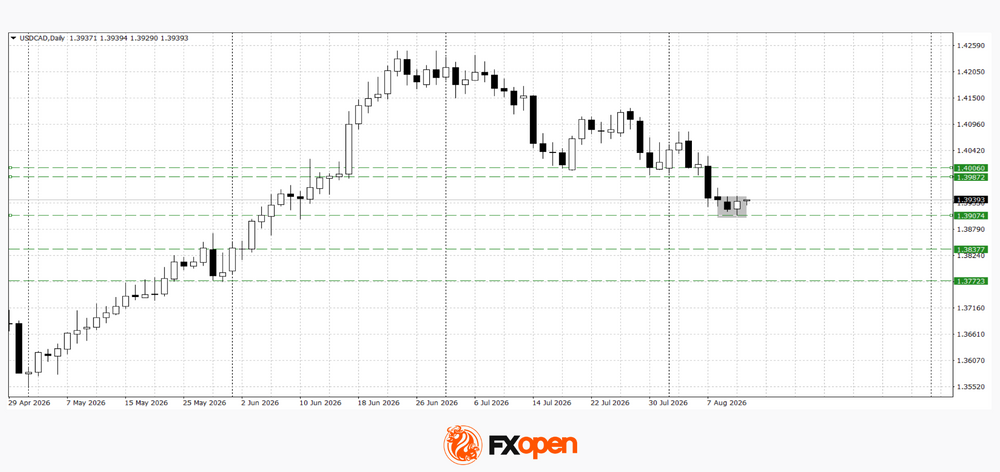
The US dollar strengthened against commodity currencies following the release of July US inflation data. The annual Consumer Price Index (CPI) came in at 3.4%, exactly in line with forecasts and down from the previous 3.5%, while prices rose by 0.1% month-on-month. Core inflation also matched expectations, at 0.2% month-on-month and 2.5% year-on-year. Despite the continued easing in price pressures, the report did not deliver any additional disinflationary surprise to the market. Inflation is gradually moving towards the Fed’s target, but the current pace of decline is still insufficient to significantly strengthen expectations of an imminent easing of monetary policy. Against this backdrop, the US dollar managed to recover some of its earlier losses.

usd.png


TO VIEW THE FULL ANALYSIS, VISIT FXOPEN BLOG

Disclaimer: This article represents the opinion of the Companies operating under the FXOpen brand only (excluding FXOpen EU). It is not to be construed as an offer, solicitation, or recommendation with respect to products and services provided by the Companies operating under the FXOpen brand, nor is it to be considered financial advice.
 
Back
Top