Daily Market Analysis By FXOpen

AUD/CAD: Two Hawkish Central Banks, One Triangle Left to Break

aud.jpg


The Aussie enters this week with genuine hawkish backing. RBA Assistant Governor Christopher Kent reaffirmed that tighter policy is working as intended, with markets now pricing roughly a 70% chance of one final hike to 4.60% by early next year, even as inflation eased below forecasts last quarter. That combination of commodity strength, gold, iron ore and LNG all running above forecast, and a still-hawkish central bank has kept AUD broadly supported near multi-week highs, with all eyes now on Thursday's July employment report.

The loonie tells an even stronger story. Canada's economy expanded at a blistering 3.4% annualised pace in Q2, well above the Bank of Canada's own 2.5% forecast, while July employment surged by 75,100 jobs against expectations of just 15,000, pulling unemployment down to a two-year low of 6.4%. That combination of surprising growth and labour market strength has fuelled speculation the BoC could hike if elevated energy prices persist, giving CAD real independent momentum of its own.

The result: two resource-linked currencies both riding genuinely hawkish narratives, leaving AUD/CAD's next move to hinge on which central bank blinks first.
aud.png


TO VIEW THE FULL ANALYSIS, VISIT FXOPEN BLOG

Disclaimer: This article represents the opinion of the Companies operating under the FXOpen brand only (excluding FXOpen EU). It is not to be construed as an offer, solicitation, or recommendation with respect to products and services provided by the Companies operating under the FXOpen brand, nor is it to be considered financial advice.

 
Nvidia Stock Price Targets for 2026-2030: What Analysts Think
45.png


Nvidia (NVDA) is one of the most closely watched AI and semiconductor stocks in the market. The shares traded near $206 in early August 2026, having gained little across the year while the wider chip sector surged. Wall Street's average 12-month target sits at $302.83, with published figures spanning $180 to $500. Longer-range projections reaching 2030 vary far more widely still.

That gap between the current price and NVIDIA analyst price targets is what makes the stock contentious. Bulls point to record data centre revenue and hyperscaler budgets still expanding. Bears question how long that spending lasts, and whether NVIDIA holds its share as its largest customers build rival chips.

Below, we cover the NVIDIA stock forecast 2026 through 2030, the drivers behind analyst targets, the risks that could limit them, and the stock's price history.

TO VIEW THE FULL ANALYSIS, VISIT FXOPEN BLOG

Disclaimer: This article represents the opinion of the Companies operating under the FXOpen brand only (excluding FXOpen EU). It is not to be construed as an offer, solicitation, or recommendation with respect to products and services provided by the Companies operating under the FXOpen brand, nor is it to be considered financial advice.
 
Euro and Pound Remain Cautious Ahead of FOMC Minutes
eurgbp.jpg


The euro and British pound are trading cautiously against the US dollar as markets await the release of the minutes from the Federal Reserve’s latest meeting. At its July meeting, the Fed left interest rates unchanged and reiterated that future decisions would depend on incoming economic data.

Investors will pay particular attention to how FOMC members assessed inflation risks, labour-market conditions and the outlook for interest rates. Following softer inflation data and signs of a cooling labour market, a more dovish tone in the minutes could strengthen expectations of monetary easing and weigh on the dollar. Conversely, a continued emphasis on inflation risks and a restrictive policy stance could provide additional support for the US currency.

For sterling, today’s UK inflation figures will provide an additional catalyst. The data will be closely assessed for clues about the Bank of England’s next policy steps. Persistent price pressures could reduce the scope for further monetary easing and support the pound, while a more pronounced slowdown in inflation could reinforce expectations of lower interest rates.

With few major domestic catalysts for the euro, EUR/USD is likely to remain particularly sensitive to movements in the US dollar. As a result, the FOMC minutes could become a key driver of the pair’s next move.

eurgbp.png


TO VIEW THE FULL ANALYSIS, VISIT FXOPEN BLOG

Disclaimer: This article represents the opinion of the Companies operating under the FXOpen brand only (excluding FXOpen EU). It is not to be construed as an offer, solicitation, or recommendation with respect to products and services provided by the Companies operating under the FXOpen brand, nor is it to be considered financial advice.

 
XAG/USD Analysis: Silver Surges on Jobs Data, Yields Threaten to End It
xagusd.png


Silver has had one of its strongest months in years, but this week's price action shows just how fragile precious metals rallies can be when bond markets get nervous. The metal surged nearly 10% last week after July's Non-Farm Payrolls badly missed expectations, printing a loss of 23,000 jobs, prompting markets to price out any chance of a September Fed hike and reviving safe-haven demand.

That momentum reversed on Tuesday, however, with silver dropping toward $64 as global bond yields spiked to multi-year highs on mounting concerns over government spending and persistent inflationary pressures. Rising oil prices added to the unease, keeping inflation risks firmly in focus even as rate-hike expectations continue to fade.

Beneath the volatility, the structural picture remains supportive: silver continues to draw solid demand from the green energy transition, solar panels, electric vehicles, and AI data centre infrastructure, all keeping a floor under prices. All eyes now turn to the Fed's July meeting minutes and Chair Kevin Warsh's remarks at Jackson Hole, both expected to offer fresh clues on the path ahead for rates.

xagusd.jpg


TO VIEW THE FULL ANALYSIS, VISIT FXOPEN BLOG

Disclaimer: This article represents the opinion of the Companies operating under the FXOpen brand only (excluding FXOpen EU). It is not to be construed as an offer, solicitation, or recommendation with respect to products and services provided by the Companies operating under the FXOpen brand, nor is it to be considered financial advice.
 
Dollar Under Pressure as Treasury Yields Fall: USD/JPY and USD/CAD Await Fresh Data
usd.png


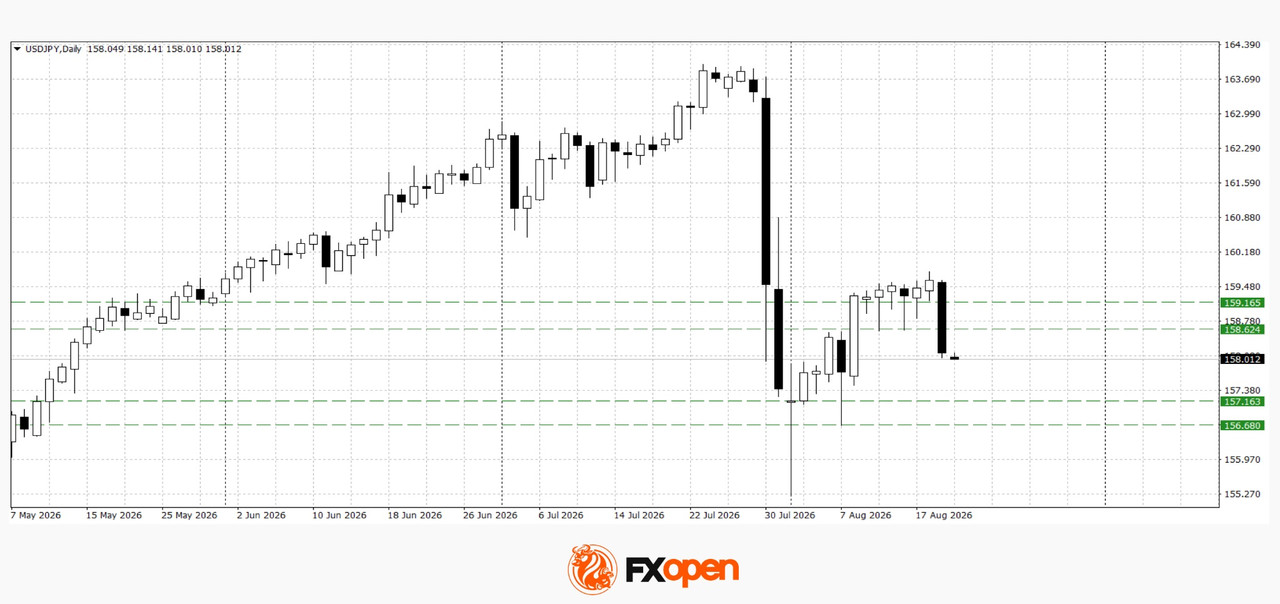
The US dollar has come under moderate pressure as long-term US Treasury yields have declined. Another factor has been the US Treasury Department’s decision to increase buyback operations for securities with maturities ranging from 10 to 30 years in an effort to support market liquidity. Against this backdrop, the 30-year Treasury yield fell by around 9 basis points to 5.19%.

The decline in yields has weakened one of the key sources of support for the dollar and has been particularly significant for USD/JPY, which remains highly sensitive to movements in the US bond market.

The recently released FOMC minutes provided a counterweight. The minutes revealed growing concerns among policymakers about inflation risks, with several officials favouring a rate hike as early as the July meeting. This kept the overall tone relatively hawkish. Although policymakers were divided over whether an immediate rate increase was necessary, inflation risks remain a central concern for the Federal Reserve, while future decisions will continue to depend on incoming economic data.

Today, markets will focus on a fresh batch of US economic figures. The Philadelphia Fed Manufacturing Index is expected to fall to 24.1 from 41.4, while initial jobless claims are forecast at 210,000. Weaker-than-expected figures could put additional pressure on the dollar, whereas resilient data may allow the currency to recover some of its recent losses.

For the Canadian dollar, commodity-price data will provide an additional catalyst. The Raw Materials Price Index (RMPI) is expected to decline by 1.8% following a 6.9% drop in the previous month, making the actual reading potentially important for the further direction of USD/CAD.

usd.jpg


TO VIEW THE FULL ANALYSIS, VISIT FXOPEN BLOG

Disclaimer: This article represents the opinion of the Companies operating under the FXOpen brand only (excluding FXOpen EU). It is not to be construed as an offer, solicitation, or recommendation with respect to products and services provided by the Companies operating under the FXOpen brand, nor is it to be considered financial advice.

 
Japan 225 Analysis: Index Declines Amid Rising BoJ Rate Expectations
nikkei.jpg


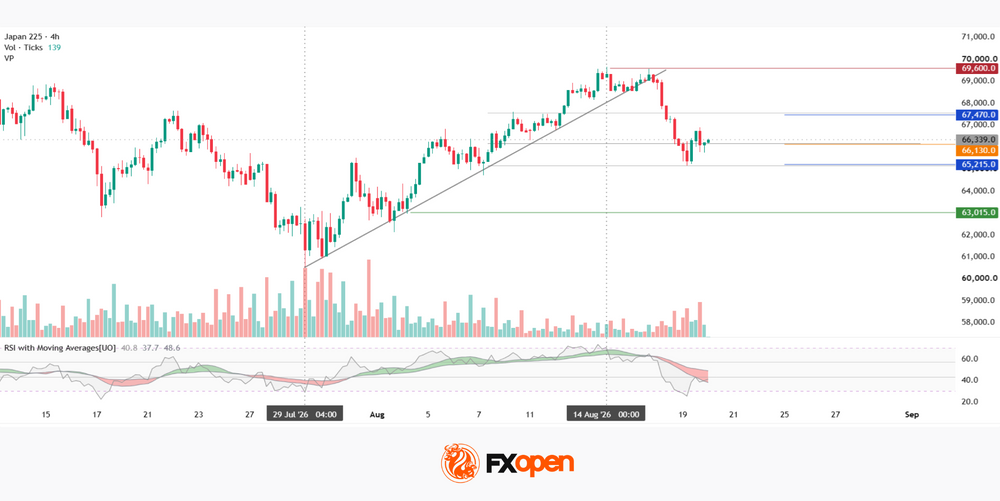
Selling pressure on the Japan 225 has intensified as markets increasingly anticipate a possible Bank of Japan rate hike in September. According to Reuters, policymakers are considering taking action at the 17–18 September meeting and may be open to tightening monetary policy at a faster pace than the current guidance of roughly two rate increases per year.

Market pricing points to a high probability of a September hike. At the same time, Japanese government bond yields have climbed to multi-year highs, reflecting growing expectations for tighter monetary policy alongside concerns over inflation and fiscal risks.

nikkei.png


TO VIEW THE FULL ANALYSIS, VISIT FXOPEN BLOG

Disclaimer: This article represents the opinion of the Companies operating under the FXOpen brand only (excluding FXOpen EU). It is not to be construed as an offer, solicitation, or recommendation with respect to products and services provided by the Companies operating under the FXOpen brand, nor is it to be considered financial advice.
 
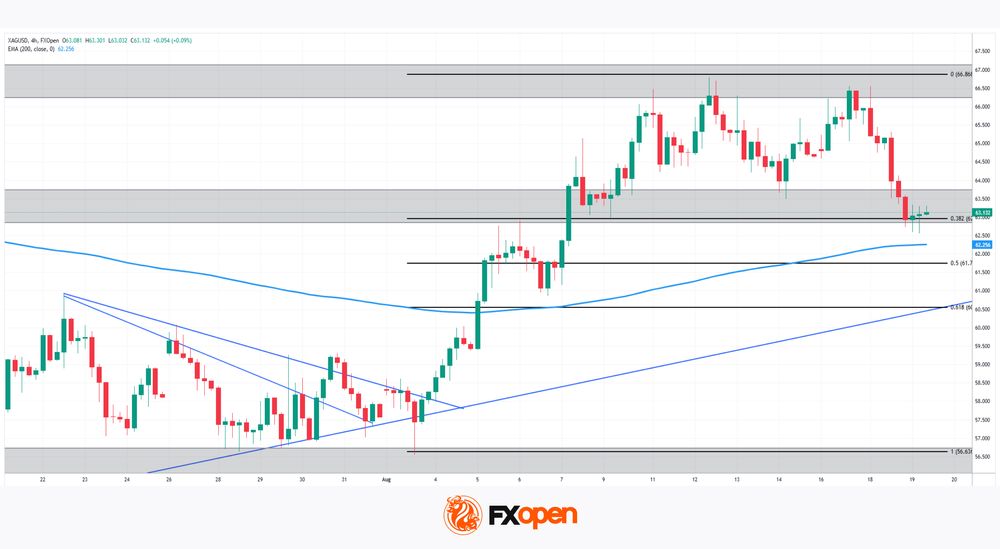
XAG/USD Analysis: Triangle Breakout Attempt Amid US Treasury Buybacks
xagusd.png


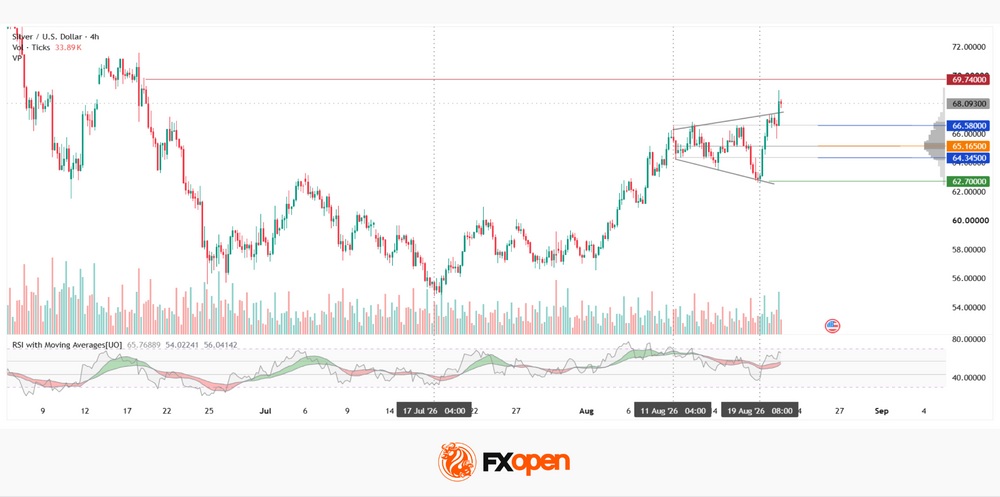
On 19 August, the US Treasury announced that it would double the volume of long-term government bond buybacks. The measure led to a noticeable decline in yields at the longer end of the curve and forms part of the Treasury’s broader efforts to contain pressure on long-term borrowing costs. These efforts include market interventions and calls for the Federal Reserve to expand the limits of the FIMA repo facility.

Lower Treasury yields improve the relative appeal of precious metals, which do not generate interest income, providing direct support for silver. Industrial demand is another important factor. Chinese imports of silver-containing ores rose 62.5% year-on-year in June amid expanding production of solar panels and power-grid equipment.

xagusd.jpg


TO VIEW THE FULL ANALYSIS, VISIT FXOPEN BLOG

Disclaimer: This article represents the opinion of the Companies operating under the FXOpen brand only (excluding FXOpen EU). It is not to be construed as an offer, solicitation, or recommendation with respect to products and services provided by the Companies operating under the FXOpen brand, nor is it to be considered financial advice.

 
Microsoft: AI Payoff or AI Overspend — The Chart Weighs In
microsoft.png


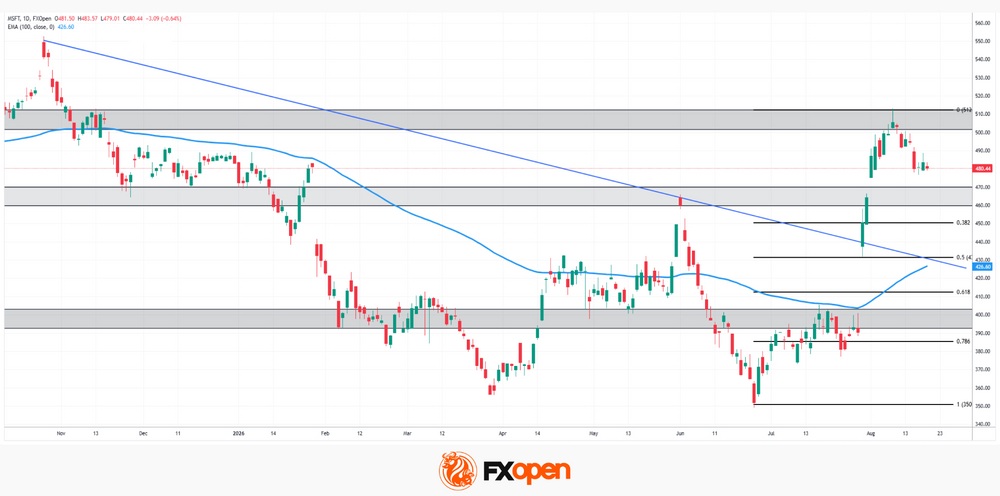
Microsoft's stock has lived two very different lives in the space of a month. On July 30, shares surged 15.5% in a single session, their biggest one-day jump since 2020, wiping out nearly all of 2026's earlier losses, after fiscal Q4 earnings crushed expectations: Azure revenue growth accelerated to 43% year-over-year, crossing $100 billion in annual revenue for the first time, while Microsoft 365 Copilot surpassed 30 million paid seats.

That euphoria has since cooled. Morgan Stanley sounded a fresh alarm this week, warning that the gap between Microsoft's massive AI capital spending, some $190 billion planned for infrastructure, and the revenue it's actually generating continues to widen, pressuring near-term cash flow. Shares dropped over 3% on the news, adding to a separate wave of investor-lawsuit headlines questioning the company's earlier disclosures.

Still, Wall Street's underlying conviction hasn't wavered: 56 analysts maintain a "Strong Buy" consensus with an average price target above $560. The tension is clear, genuine AI monetization proof from Azure against mounting concerns that the spending required to sustain it may be outpacing the payoff.

microsoft.jpg


TO VIEW THE FULL ANALYSIS, VISIT FXOPEN BLOG

Disclaimer: This article represents the opinion of the Companies operating under the FXOpen brand only (excluding FXOpen EU). It is not to be construed as an offer, solicitation, or recommendation with respect to products and services provided by the Companies operating under the FXOpen brand, nor is it to be considered financial advice.
 
September's Central Bank Divide: Where Could FX Divergence Emerge?
news-1.png


In this video, Gary Thomson explores the key September central bank meetings and whether policy divergence could impact major FX pairs.

Key topics covered:

ECB Decision — 10 September — Markets are pricing a high probability of a 25-basis-point hike. Will the ECB signal that further tightening is still possible?

Fed Decision — 16 September — Although markets lean towards a hold, renewed inflation pressure could bring a hike back into focus.

BoE Decision — 17 September — UK inflation remains elevated, but slowing wage growth and a softer labour market could keep the Bank Rate unchanged.

BoJ Decision — 18 September — Markets are increasingly considering a 25-basis-point hike. Could tighter Japanese policy provide lasting support for the yen?

FX Divergence in Focus — EUR/USD, GBP/USD, EUR/GBP, USD/JPY, EUR/JPY could all react as markets reassess the expected paths of interest rates.

With four major central bank decisions in just eight days, it may be the changes in expectations — not only the decisions themselves — that drive the FX moves.

Watch it now and stay updated with FXOpen.

TO VIEW THE FULL ANALYSIS, VISIT FXOPEN BLOG

Disclaimer: This article represents the opinion of the Companies operating under the FXOpen brand only (excluding FXOpen EU). It is not to be construed as an offer, solicitation, or recommendation with respect to products and services provided by the Companies operating under the FXOpen brand, nor is it to be considered financial advice.

 
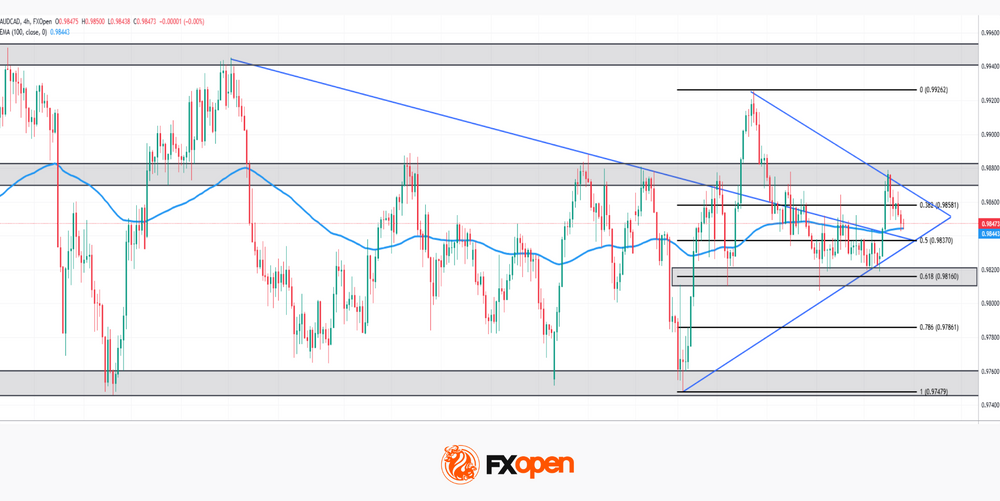
AUD/CAD Analysis: Gap Pushes Price Beyond the Broadening Triangle
audusd.jpg


On 19 August, Reserve Bank of Australia Deputy Governor Andrew Hauser adopted a more hawkish tone, warning that another rate increase could become necessary if the inflation risks highlighted by the central bank — including the conflict in the Middle East, a surge in demand from the AI sector and weak productivity — begin to materialise.

His comments came one week after the RBA decided on 11 August to leave its policy rate unchanged at 4.35% for a second consecutive meeting.

For the Canadian dollar, oil prices remain a more important driver. Crude has continued to rise this week amid heightened geopolitical tensions and concerns over potential supply disruptions. Higher oil prices can traditionally support the Canadian dollar given the country's significant commodity exports.

audusd.png


TO VIEW THE FULL ANALYSIS, VISIT FXOPEN BLOG

Disclaimer: This article represents the opinion of the Companies operating under the FXOpen brand only (excluding FXOpen EU). It is not to be construed as an offer, solicitation, or recommendation with respect to products and services provided by the Companies operating under the FXOpen brand, nor is it to be considered financial advice.
 
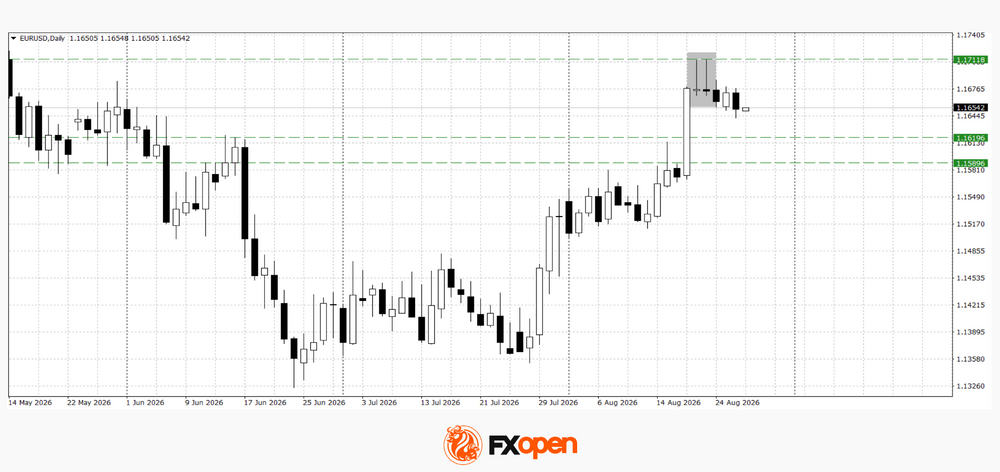
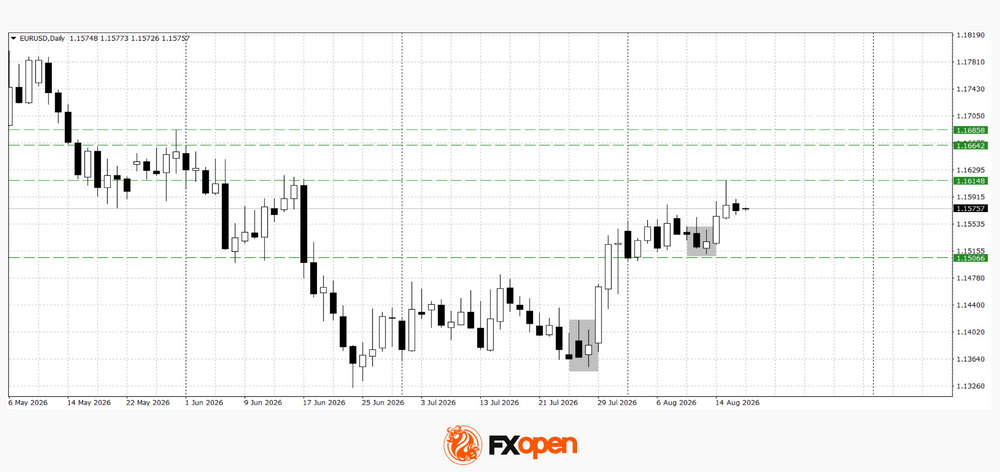
EUR/USD Analysis: Is the Dollar Rally Really Over?
eurusd.jpg


EUR/USD has regained ground in recent sessions, with the pair trading near 1.17 as broad-based weakness in the US dollar continues to dominate the foreign-exchange market. The main driver remains the changing monetary-policy outlook, with investors focused on whether the Federal Reserve can maintain a restrictive stance while the US economy shows signs of slowing.

The dollar faces a key test this week as Fed Chair Kevin Warsh prepares to deliver his first speech at Jackson Hole on Friday. Persistent inflation and rising long-term Treasury yields could encourage a hawkish tone, particularly if Warsh signals that rate cuts in September are far from guaranteed. Conversely, weaker US growth or softer inflation data would reinforce expectations of easier monetary policy and could extend the dollar's decline.

In Europe, euro-area inflation rose to 2.9% in July, keeping price pressures above the ECB's 2% target. The ECB has kept interest rates unchanged since June, but higher energy prices and renewed inflation risks could limit the scope for further easing.

With EUR/USD trading near multi-month highs, the Jackson Hole symposium and upcoming US PCE inflation data could determine whether the euro can extend its advance or whether a hawkish Fed response triggers a renewed recovery in the dollar.

eurusd.png


TO VIEW THE FULL ANALYSIS, VISIT FXOPEN BLOG

Disclaimer: This article represents the opinion of the Companies operating under the FXOpen brand only (excluding FXOpen EU). It is not to be construed as an offer, solicitation, or recommendation with respect to products and services provided by the Companies operating under the FXOpen brand, nor is it to be considered financial advice.

 
WTI Analysis: Attempted Uptrend Breakout Without Momentum Confirmation
oil.png


WTI crude fell more than 2% on Monday, 24 August, as market participants took profits amid expectations that the US could announce a new round of sanctions against Iran. Additional pressure came from a warning by the Iranian authority responsible for the Persian Gulf and Strait of Hormuz, which said vessels violating transit rules could face fines or detention.

At the same time, the US Energy Information Administration (EIA), in its 11 August forecast, expects the average Brent price to remain around $85 per barrel in the third quarter. Persistently low commercial crude inventories in the US could also help limit the downside and prevent a deeper decline.

oil.jpg


TO VIEW THE FULL ANALYSIS, VISIT FXOPEN BLOG

Disclaimer: This article represents the opinion of the Companies operating under the FXOpen brand only (excluding FXOpen EU). It is not to be construed as an offer, solicitation, or recommendation with respect to products and services provided by the Companies operating under the FXOpen brand, nor is it to be considered financial advice.
 
Nvidia Earnings: Beating Isn't Enough — The Chart Wants More
nvda.png


All eyes turn to Wednesday, when Nvidia reports fiscal Q2 2027 earnings in what may be the single most consequential release of the quarter for the entire tech sector. Wall Street expects revenue of between $93–95 billion, implying year-over-year growth of as much as 67–100%, driven largely by demand for the company's Blackwell architecture and the early ramp-up of its next-generation Vera Rubin chips. With Nvidia commanding an estimated 80–81% share of the AI accelerator market, the report functions less like a single-company event and more like a health check for the entire AI infrastructure trade, historically moving shares of AMD, Broadcom, and Marvell in sympathy.

The stakes are amplified by timing: earnings land squarely alongside the Jackson Hole Economic Symposium, where Fed Chair Kevin Warsh's remarks could reshape rate expectations just as investors digest Nvidia's guidance. That combination matters because Nvidia's premium valuation, trading well above the broader semiconductor sector on a forward basis, leaves the stock unusually sensitive to shifts in the discount rate.

With shares up nearly 18% year-to-date but price targets still implying meaningful upside, the market has already priced in near-perfection. The real question isn't whether Nvidia beats, but whether beating is enough.

nvda.jpg


TO VIEW THE FULL ANALYSIS, VISIT FXOPEN BLOG

Disclaimer: This article represents the opinion of the Companies operating under the FXOpen brand only (excluding FXOpen EU). It is not to be construed as an offer, solicitation, or recommendation with respect to products and services provided by the Companies operating under the FXOpen brand, nor is it to be considered financial advice.

 
Gold Price Forecasts for 2026–2030: Analytical Outlook
main-66.jpg


Gold continues to attract attention as investors search for a so-called safe haven in an increasingly uncertain global environment. Rising geopolitical tensions, currency volatility, central bank reserve shifts, and questions about long-term economic resilience have all pushed gold back into focus.

After record highs in 2025 and a peak above $5,500 in January 2026, prices corrected through the first half of the year, leaving many asking what comes next. The gold price forecast for 2027 draws particular attention: it is near enough to model with current data, yet far enough out for those assumptions to diverge widely.

Analysts reach different conclusions because they rely on different assumptions about interest rates, central bank demand, geopolitical developments, and mine supply. This article breaks down the factors shaping gold’s trajectory and examines analytical gold price forecasts for 2026 to 2030.

TO VIEW THE FULL ANALYSIS, VISIT FXOPEN BLOG

Disclaimer: This article represents the opinion of the Companies operating under the FXOpen brand only (excluding FXOpen EU). It is not to be construed as an offer, solicitation, or recommendation with respect to products and services provided by the Companies operating under the FXOpen brand, nor is it to be considered financial advice.

 
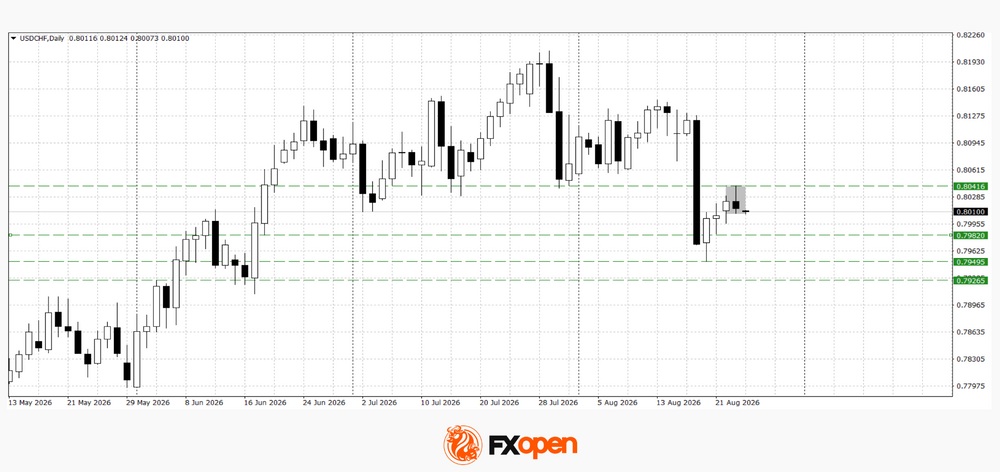
Dollar Recovery Loses Momentum: USD/CAD and USD/CHF Resume Their Declines
usd.png


The US dollar has resumed its decline following a corrective recovery, as the support behind the currency proved insufficient to sustain the rebound. Selling pressure increased as long-term US Treasury yields fell amid reports that the US Treasury was prepared to expand its bond-buyback operations. Larger buybacks support the government bond market and can contribute to lower yields, reducing the dollar's interest-rate advantage and limiting its recovery.

At the same time, geopolitical tensions surrounding Iran continue to support demand for the US dollar as a safe-haven asset. So far, however, this factor has not been strong enough to generate a sustained appreciation in the currency.

Today, markets will focus on a fresh batch of US economic data. Revised second-quarter GDP figures, the core Personal Consumption Expenditures (PCE) price index, personal income and spending data, and durable goods orders are all due to be released.

According to forecasts, US GDP growth could be revised down from 2.1% to 1.5%, while the core PCE price index is expected to show annual growth of 3.3% and a monthly increase of 0.2%. A combination of slower economic growth and persistent inflationary pressure could complicate the Federal Reserve's policy decisions, leaving policymakers to balance the risk of economic weakness against the need to keep inflation under control.

Markets will also be watching comments from Federal Reserve officials for clues about how policymakers are assessing current inflation risks and signs of an economic slowdown.

usd.jpg


TO VIEW THE FULL ANALYSIS, VISIT FXOPEN BLOG

Disclaimer: This article represents the opinion of the Companies operating under the FXOpen brand only (excluding FXOpen EU). It is not to be construed as an offer, solicitation, or recommendation with respect to products and services provided by the Companies operating under the FXOpen brand, nor is it to be considered financial advice.
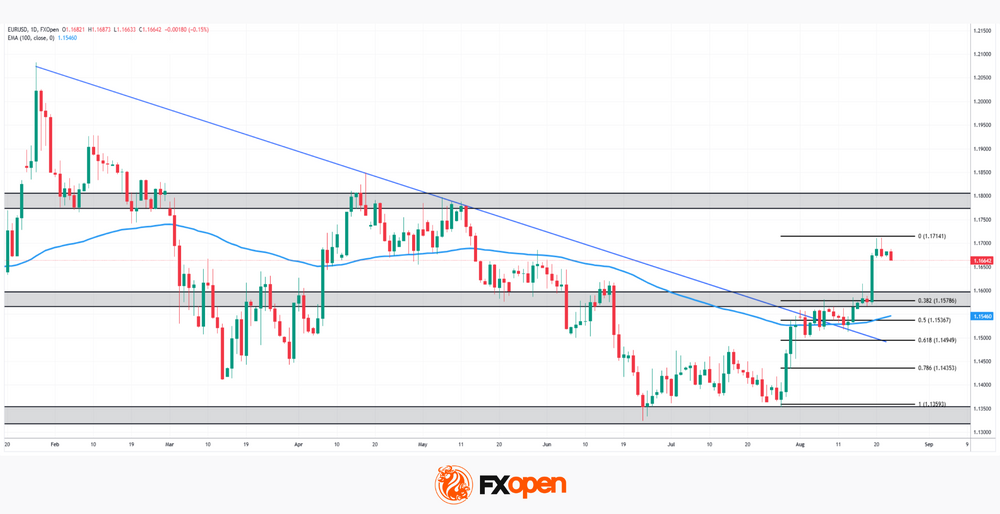
 
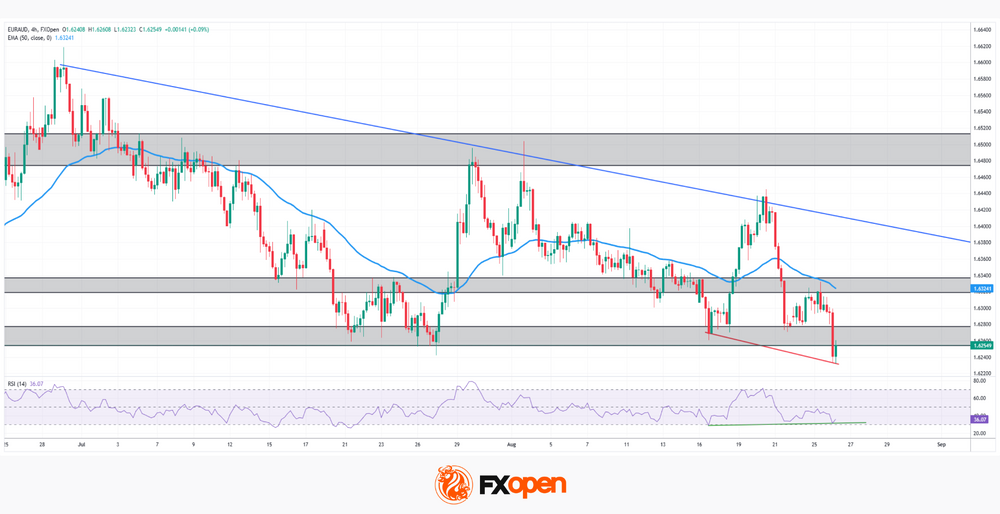
EUR/AUD: A Hawkish Euro Meets a Stubborn Downtrend
eurusd.jpg


The euro is riding genuine hawkish momentum right now. It's holding above $1.165 against the dollar, its strongest level since mid-May, with markets fully pricing in an ECB hike in September following June's initial tightening move. That conviction is backed by real data: German Q2 GDP was revised up to 0.3% growth, and August business activity showed clear improvement, especially in German manufacturing. Elevated energy prices from the ongoing Middle East conflict remain the ECB's main concern, keeping the door open to more than 40 bp of additional tightening priced in for this year alone.

The Aussie, meanwhile, is stuck in a genuinely tricky spot. The RBA delivered a hawkish hold on August 11, with Governor Bullock confirming the bank would "raise rates again if needed", but that resolve hasn't translated into currency strength. RBA Deputy Governor Andrew Hauser reinforced the hawkish tone this week, flagging the Middle East conflict, the AI investment boom, and weak productivity as key upside inflation risks, yet the AUD has still underperformed most major peers, caught between domestic hawkishness and a broader risk backdrop it can't fully control.

The result: an ECB gaining real traction on its hawkish pivot, against an RBA talking tough but struggling to make it stick.

eurusd.png


TO VIEW THE FULL ANALYSIS, VISIT FXOPEN BLOG

Disclaimer: This article represents the opinion of the Companies operating under the FXOpen brand only (excluding FXOpen EU). It is not to be construed as an offer, solicitation, or recommendation with respect to products and services provided by the Companies operating under the FXOpen brand, nor is it to be considered financial advice.

 
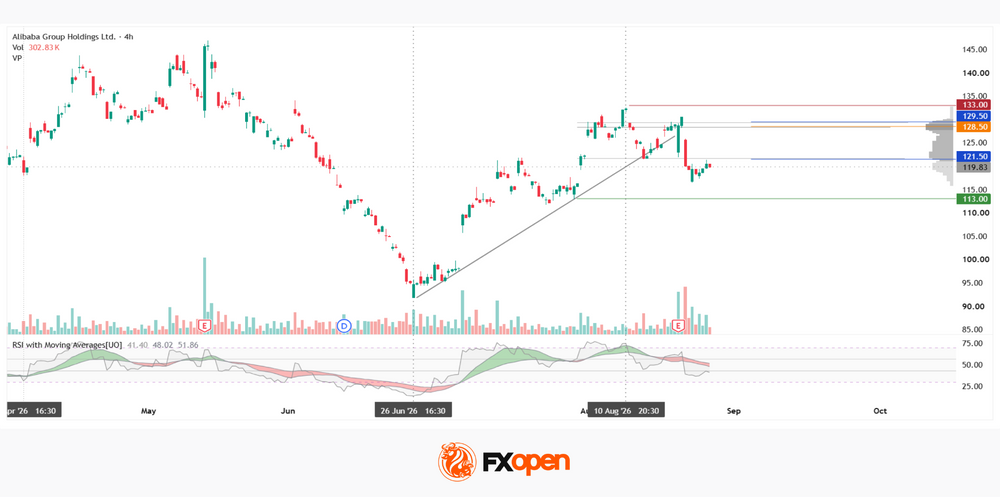
Alibaba Analysis: Uptrend Break Attempt Amid Rising AI Investment
alibaba.jpg


Alibaba reported its first-quarter results on 20 August, revealing a mixed picture for investors. Revenue increased by 9%, driven by accelerating growth in its cloud computing and AI businesses, but net profit fell by nearly three-quarters as capital expenditure on AI infrastructure surged.

Management said it expects these investments to reach break-even within the next three years. Meanwhile, free cash flow turned negative as spending on computing capacity continued to rise. To finance the further development of its full-stack AI ecosystem, Alibaba also completed a new share offering on the Hong Kong Stock Exchange this week, raising approximately $10.2 billion. Investors responded cautiously to the combination of weaker earnings and equity dilution.

alibaba.png


TO VIEW THE FULL ANALYSIS, VISIT FXOPEN BLOG

Disclaimer: This article represents the opinion of the Companies operating under the FXOpen brand only (excluding FXOpen EU). It is not to be construed as an offer, solicitation, or recommendation with respect to products and services provided by the Companies operating under the FXOpen brand, nor is it to be considered financial advice.
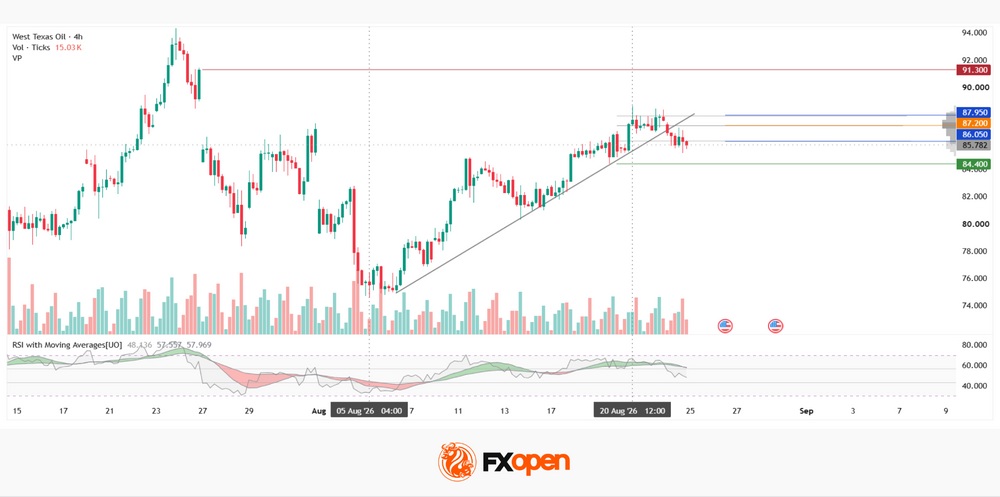
 
Euro and Pound Retreat from Highs After Strong US Data
eurgbp.jpg


The euro and pound have pulled back from their recent highs as the US dollar regained ground following a batch of stronger-than-expected economic data. The Personal Consumption Expenditures (PCE) price index accelerated to 3.7% year-on-year, compared with expectations of 3.6%, while the quarterly core PCE reading came in at 3.6%, above the forecast of 3.4%.

The dollar also received support from stronger consumer activity. Personal spending increased by 0.2%, versus expectations of 0.1%, while personal income rose by 0.4%, double the forecast of 0.2%. At the same time, revised US GDP growth for the second quarter came in at 1.5%, matching market expectations.

Taken together, the figures point to continued resilience in the US economy and reduce the likelihood of the Federal Reserve shifting rapidly towards a more accommodative monetary-policy stance.

Market attention is now turning to fresh US data and the Jackson Hole symposium. Initial jobless claims are expected to come in at 208,000, up slightly from 206,000 a week earlier, while the trade deficit is forecast to narrow modestly to $100.8 billion from $101.4 billion previously.

Following the latest strong US figures, investors will also be paying close attention to comments from Fed officials on inflation and the outlook for interest rates. Resilient economic data combined with hawkish signals from Jackson Hole could provide further support for the dollar, while signs of a cooling labour market or a more cautious Fed tone could put renewed pressure on the US currency.

eurgbp.png


TO VIEW THE FULL ANALYSIS, VISIT FXOPEN BLOG

Disclaimer: This article represents the opinion of the Companies operating under the FXOpen brand only (excluding FXOpen EU). It is not to be construed as an offer, solicitation, or recommendation with respect to products and services provided by the Companies operating under the FXOpen brand, nor is it to be considered financial advice.

 
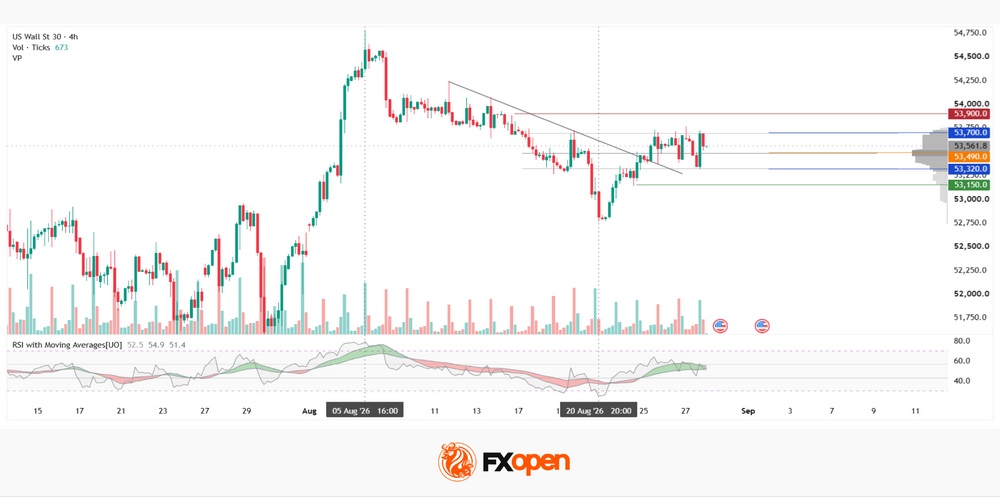
Dow Jones Analysis: Attempted Trend Breakout Amid Fed Rate Expectations
1.png


On 26 August, the US Commerce Department released July data on the Personal Consumption Expenditures (PCE) index. Core PCE rose 0.2% month-on-month and 3.3% year-on-year, in line with market expectations. Ellen Zentner, Chief Economic Strategist at Morgan Stanley Wealth Management, noted that the modest upside surprise in inflation was not significant enough to shift the balance of expectations ahead of the Federal Reserve's September meeting.

Earlier, on 19 August, minutes from the Fed's July meeting showed that policymakers remained open to further rate increases if inflationary pressures persisted, with three committee members having already voted in favour of a hike. Against this backdrop, Treasury yields remain close to multi-year highs, keeping rate expectations tilted towards the possibility of further tightening.

1.jpg


TO VIEW THE FULL ANALYSIS, VISIT FXOPEN BLOG

Disclaimer: This article represents the opinion of the Companies operating under the FXOpen brand only (excluding FXOpen EU). It is not to be construed as an offer, solicitation, or recommendation with respect to products and services provided by the Companies operating under the FXOpen brand, nor is it to be considered financial advice.
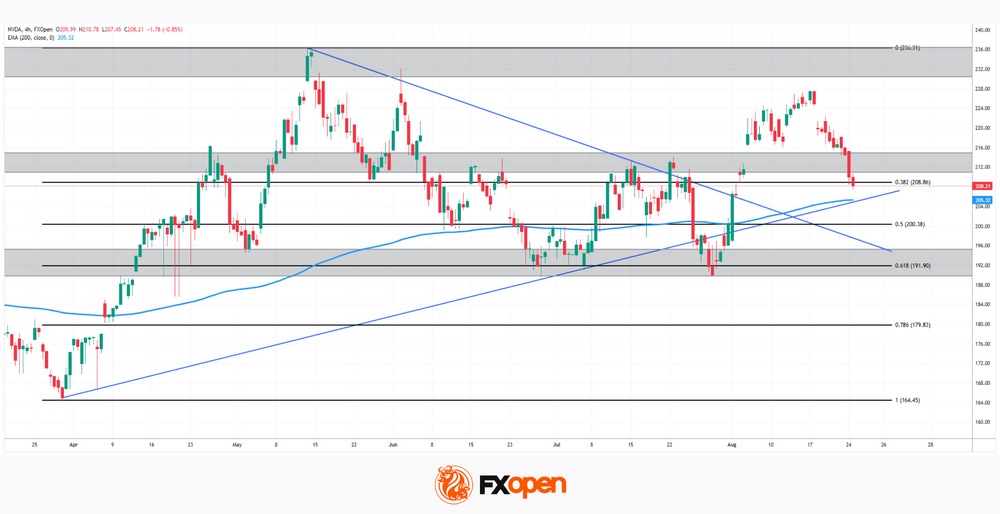
 
Weekly Market Insights with Gary Thomson: US NFP, EU Inflation, and RBNZ Interest Rate Decision
news-1-1.png


In this video, Gary Thomson looks at three key events in the first week of September that could shape expectations for the euro, New Zealand dollar and US dollar: Eurozone inflation, the RBNZ interest rate decision and the latest US employment report.

Key topics covered:

Eurozone Inflation — 1 September — Annual inflation rose to 2.9% in July, remaining above the ECB’s 2% target. Could another strong reading strengthen expectations for further rate hikes and support the euro?

RBNZ Interest Rate Decision — 2 September — Markets widely expect a 25-basis-point hike to 2.75%. With inflation above the RBNZ’s target range but unemployment at its highest level in more than a decade, what could the Bank’s guidance mean for the New Zealand dollar?

US NFP & Unemployment Rate — 4 September — July’s jobs report surprised to the downside, with payrolls falling by 23,000 and previous figures revised lower. Will the latest data confirm a broader slowdown in the US labour market or show signs of stabilisation?

With major central bank meetings approaching, markets could react not only to the headline data but also to what the figures mean for future monetary policy.

Watch it now and stay updated with FXOpen.

TO VIEW THE FULL ANALYSIS, VISIT FXOPEN BLOG

Disclaimer: This article represents the opinion of the Companies operating under the FXOpen brand only (excluding FXOpen EU). It is not to be construed as an offer, solicitation, or recommendation with respect to products and services provided by the Companies operating under the FXOpen brand, nor is it to be considered financial advice.

 
Back
Top