Elina Ward
Member
- Messages
- 86
- Likes
- 1
25 March 2026
XAU/USD Drops Over 18% as Hawkish Fed Signals and Inflation Pressures Drive Sharp Repricing
XAU/USD represents the price of Gold (XAUUSD) against the U.S. dollar, a traditional safe-haven asset that is highly sensitive to interest rates, inflation expectations, and broader risk sentiment. As a non-yielding asset, gold is particularly impacted by changes in monetary policy expectations and real yields.Between March 16 and March 24, XAU/USD experienced a sharp and extended decline, driven by a shift in macroeconomic expectations following the Federal Reserve’s policy decision and rising inflation pressures linked to energy markets.
Gold initially traded near 5011.75, before entering a sustained downward move, eventually reaching a low of 4099.15 on March 23. The metal later recovered partially, closing near 4474.10 on March 24.
This marked a decline of approximately 91,260 ticks, equivalent to an −18.21% move from the opening level to the period low. On a net basis, gold declined 53,765 ticks (−10.73%) from open to close, reflecting a partial recovery after the sharp sell-off.
📊 Price Action Summary
| Metric | Value |
|---|---|
| Weekly Open | 5011.75 |
| Period Low | 4099.15 |
| Weekly Close | 4474.10 |
| Total Move (Open → Low) | −91,260 ticks |
| Percentage Move (Open → Low) | −18.21% |
| Net Move (Open → Close) | −53,765 ticks |
| Percentage Move (Open → Close) | −10.73% |
| Structure | Two-phase move (sell-off + recovery) |
| Session | Multi-session (macro-driven repricing) |
Hawkish Fed Signals Trigger the Initial Move
The decline was driven primarily by macroeconomic developments, particularly the outcome of the Federal Reserve meeting on March 18.While the Fed held interest rates steady, policymakers emphasized elevated inflation risks and uncertainty linked to geopolitical tensions in the Middle East. Rising energy prices contributed to inflation concerns, reinforcing expectations that interest rates would remain higher for longer.
As a result, gold came under pressure, as higher interest rate expectations reduce the attractiveness of non-yielding assets.
Initial Stability Followed by Extended Downside
The price action developed in two distinct phases.The first phase showed relative stability near the 5000 level, as safe-haven demand provided temporary support amid geopolitical uncertainty.
However, following the Fed decision and the shift in macro expectations, the second phase emerged, with gold entering a sustained decline toward 4099.15, as markets repriced interest rate expectations and risk conditions.
Market Structure Accelerated the Move
As XAU/USD moved lower, price broke through key support levels, triggering a cascade of stop-loss orders and accelerating downside momentum.This amplified the decline, extending the move beyond the initial reaction and contributing to the full −91,260 tick range observed.
The sharp move into March 23 reflected a liquidity-driven extension rather than a disorderly collapse.
A Repricing Event Driven by Macro and Inflation Dynamics
The overall move reflected a clear sequence:- Geopolitical tensions initially supported gold demand
- Rising energy prices increased inflation expectations
- Hawkish Fed signals reinforced a higher-for-longer rate outlook
- Gold sold off as macro conditions outweighed safe-haven demand
- Partial recovery followed as markets stabilized
Conclusion
Between March 16 and March 24, XAU/USD declined from approximately 5011.75 to 4099.15, marking an −18.21% move, before recovering to close near 4474.10. On a net basis, this represented a −10.73% decline from the opening level, highlighting that while gold experienced a sharp macro-driven sell-off, part of the move was later retraced as market conditions stabilized.The move was driven primarily by macroeconomic repricing following the Federal Reserve’s cautious stance, with inflation pressures—partly linked to energy markets—reinforcing expectations of sustained higher interest rates. Market structure then amplified the decline as key levels were breached, while the subsequent recovery reflected a partial normalization in sentiment.
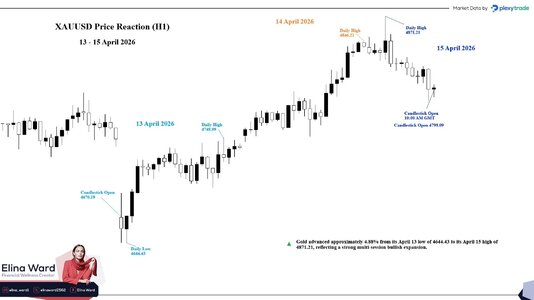
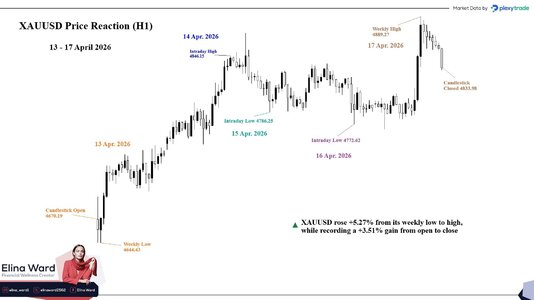
The chart below illustrates XAU/USD price action on a 1-hour timeframe for March 16–24, 2026.