Daily Market Analysis By FXOpen

Euro Hits Fresh Yearly Lows Amid Dovish ECB Signals

YNUMqQwU_o.jpg


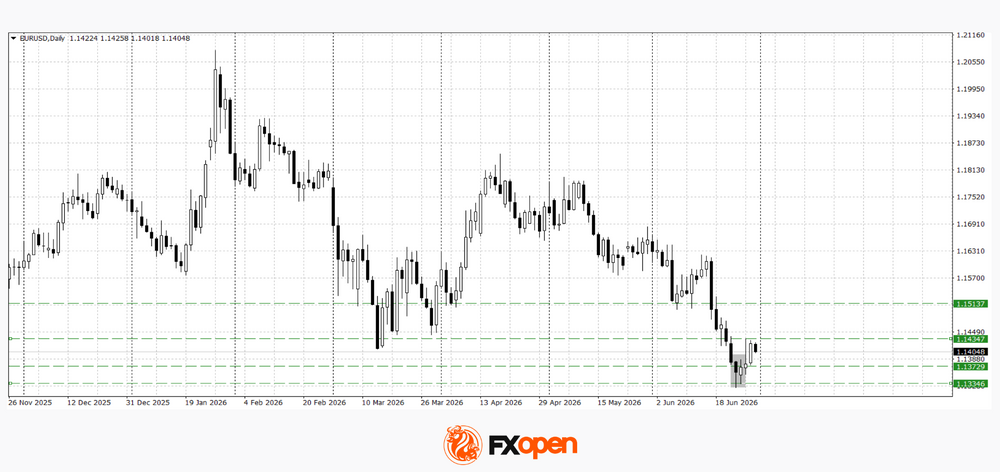
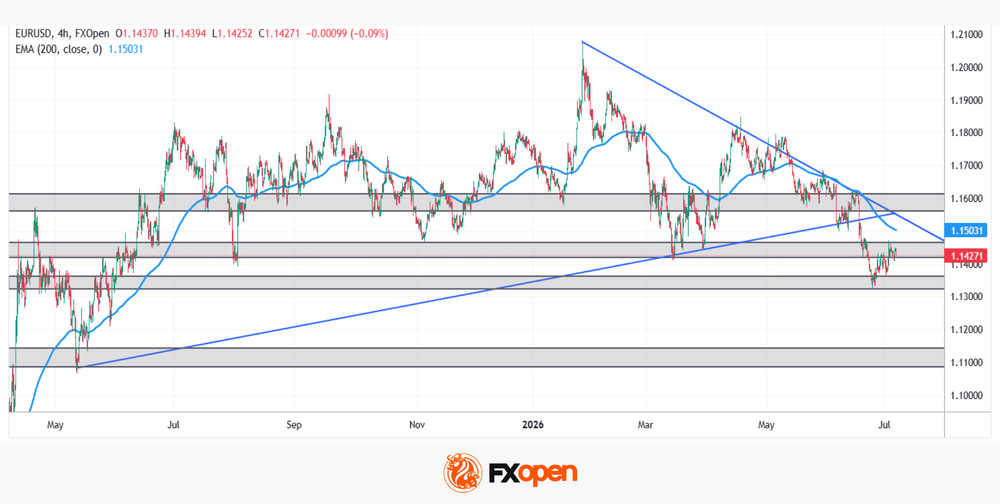
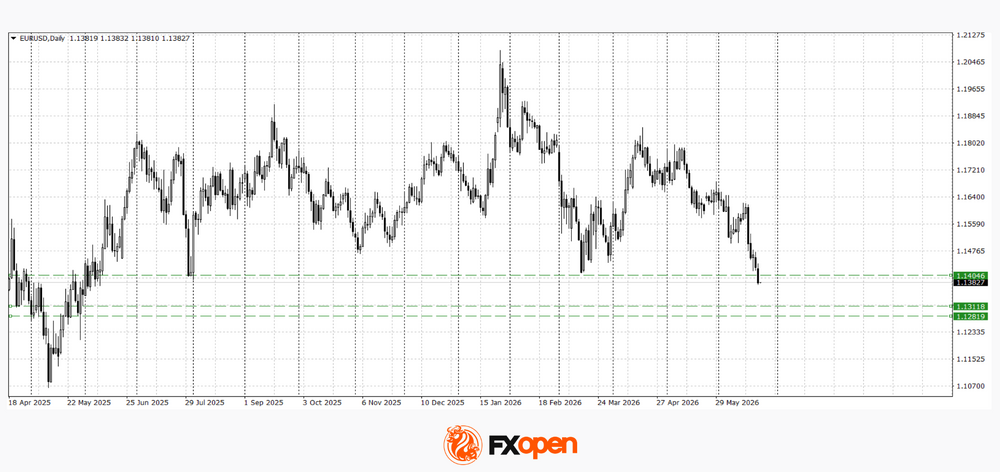
The euro remains under pressure following weak macroeconomic data from the euro area and fresh signals that the European Central Bank is prepared to maintain a more accommodative monetary policy stance. Data released yesterday pointed to a deterioration in business activity across the eurozone’s largest economies. Weak readings from Germany and France heightened concerns about the pace of the region’s economic recovery.

Additional pressure came from comments by ECB President Christine Lagarde, which markets interpreted as more dovish than recent remarks from Federal Reserve officials. As a result, investors continue to scale back expectations for further policy tightening by the ECB.

Market participants will also focus today on Germany’s Ifo Business Climate Index. Forecasts suggest the headline index may rise to 85.6 from 84.9 previously, while the Expectations Index is expected to increase to 85.0 from 83.8. Although an improvement in business sentiment could provide temporary support for the euro, investors are likely to assess the data against the broader backdrop of slowing economic activity across the euro area. Even if the figures improve, markets may view them as insufficient to alter the prevailing picture of economic cooling.
J7E8ugbC_o.png


TO VIEW THE FULL ANALYSIS, VISIT FXOPEN BLOG

Disclaimer: This article represents the opinion of the Companies operating under the FXOpen brand only (excluding FXOpen EU). It is not to be construed as an offer, solicitation, or recommendation with respect to products and services provided by the Companies operating under the FXOpen brand, nor is it to be considered financial advice.
 
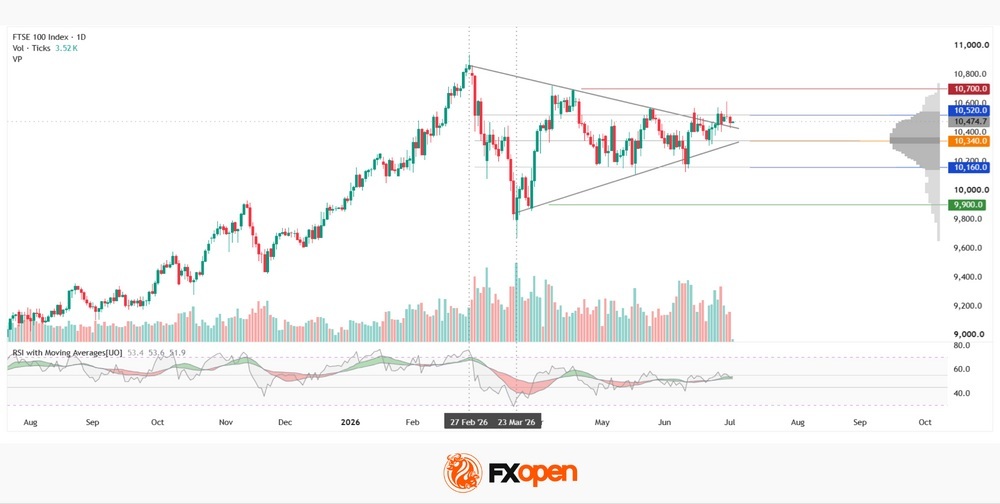
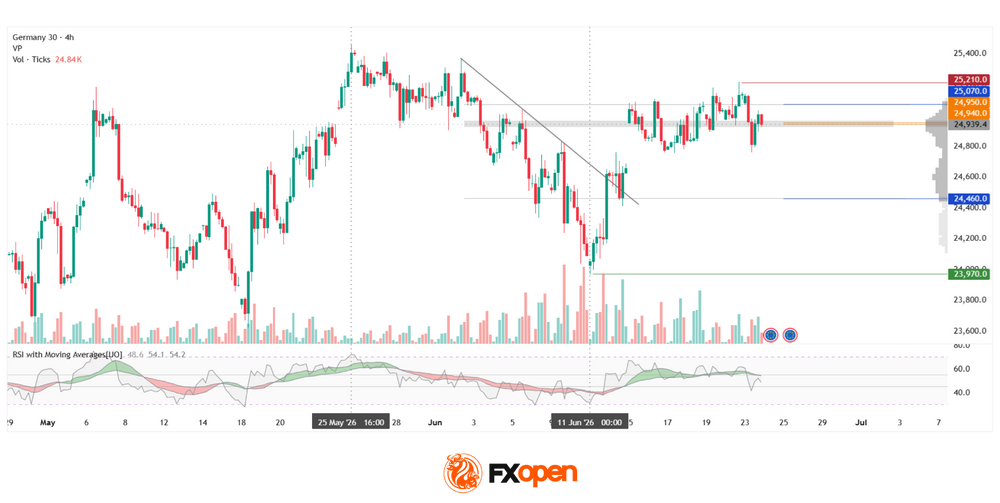
DAX 40: consolidation amid technology sell-off
V7USevzr_o.jpg


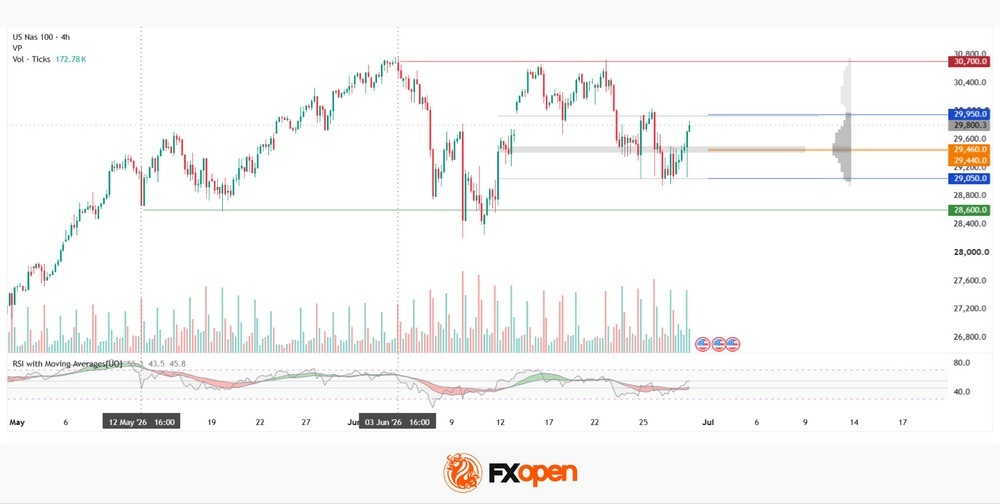
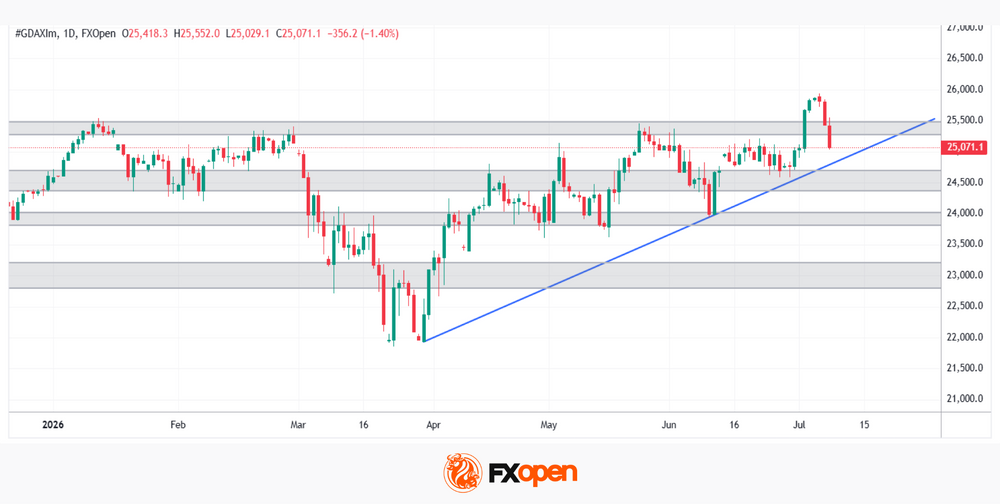
A wave of selling in the technology sector that emerged earlier this week has weighed on European equities. The trigger was investor concern over the profitability of large-scale debt-funded investments by major US tech companies in AI infrastructure. The Nasdaq and S&P 500 fell to their lowest levels in more than a week, with semiconductor manufacturers bearing the brunt of the decline.

In Germany, Infineon Technologies (-5.86%), Siemens Energy (-3.93%) and Vonovia (-3.21%) were among the worst performers, while SAP and Airbus ended the session in positive territory, gaining around 2% each. Geopolitical factors also remain in the background: a memorandum signed in June between the United States and Iran has yet to remove uncertainty, with implementation of the agreement still subject to ongoing negotiations.

jTsK7WKg_o.png


TO VIEW THE FULL ANALYSIS, VISIT FXOPEN BLOG

Disclaimer: This article represents the opinion of the Companies operating under the FXOpen brand only (excluding FXOpen EU). It is not to be construed as an offer, solicitation, or recommendation with respect to products and services provided by the Companies operating under the FXOpen brand, nor is it to be considered financial advice.
 
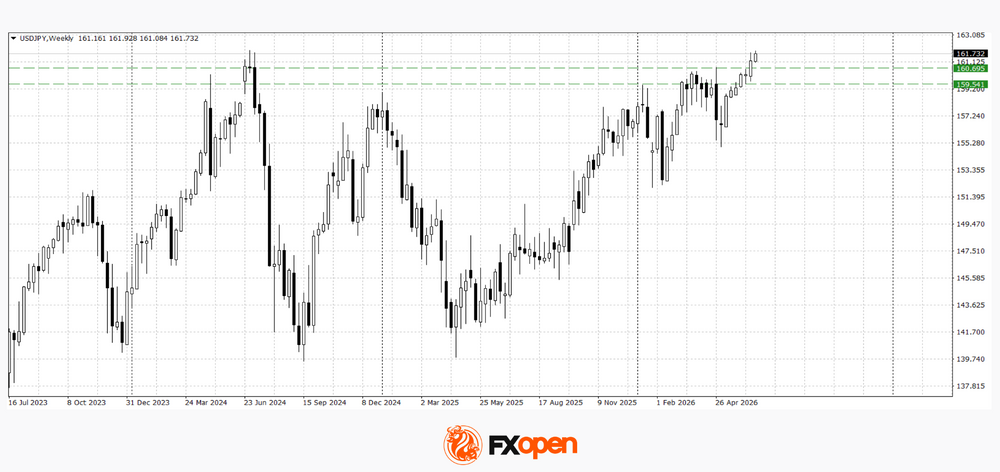
US Dollar Strengthens Amid Equity Market Weakness and Hawkish Fed Rhetoric
tqkbDB0r_o.jpg


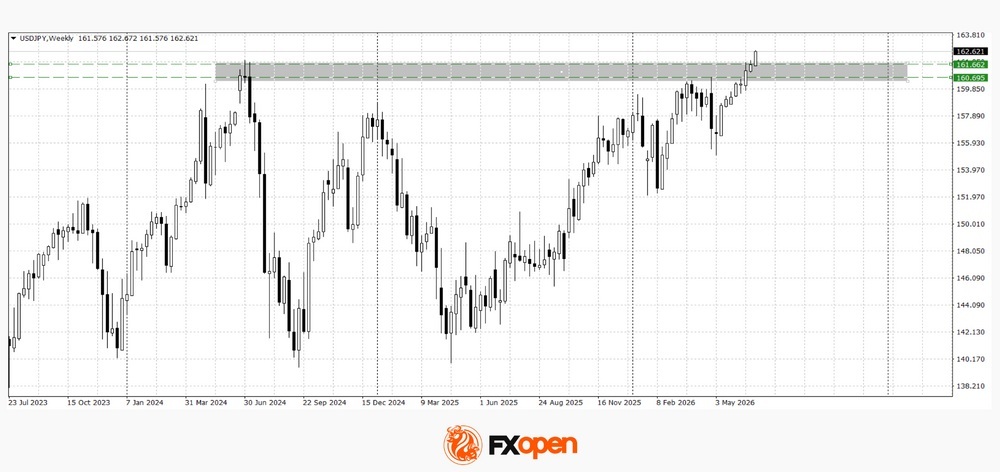
The US dollar continues to hold firm near multi-year highs as sentiment across equity markets deteriorates and investors increasingly expect the Federal Reserve to maintain a restrictive monetary policy stance for longer. The US economy remains resilient, while inflation risks continue to run elevated, prompting market participants to reassess the timing of potential interest rate cuts. Against this backdrop, demand for the dollar is being supported both by attractive US asset yields and its status as a safe-haven currency.

An additional source of support for the greenback has come from the decline in stock markets, which has increased investor caution and encouraged capital flows into the dollar. Despite some easing in geopolitical tensions surrounding Iran and a correction in oil prices, expectations of a more hawkish Fed remain the key market driver. Interest-rate futures continue to reflect a high probability that restrictive policy will remain in place for an extended period, supporting the dollar against most major currencies.

xXj54eBR_o.png


TO VIEW THE FULL ANALYSIS, VISIT FXOPEN BLOG

Disclaimer: This article represents the opinion of the Companies operating under the FXOpen brand only (excluding FXOpen EU). It is not to be construed as an offer, solicitation, or recommendation with respect to products and services provided by the Companies operating under the FXOpen brand, nor is it to be considered financial advice.

 
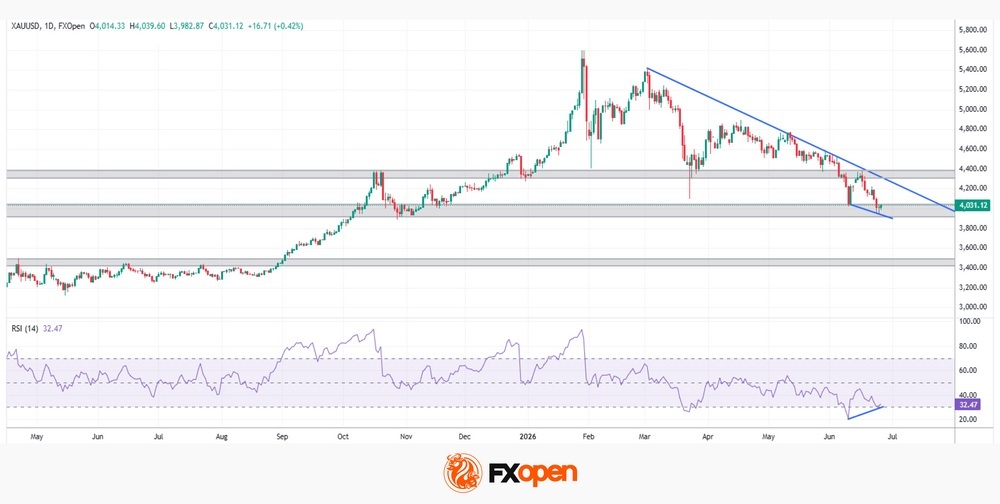
Gold Analysis: Could XAU/USD Bounce From the Crucial $4,000 Level?
tb0MWURC_o.png


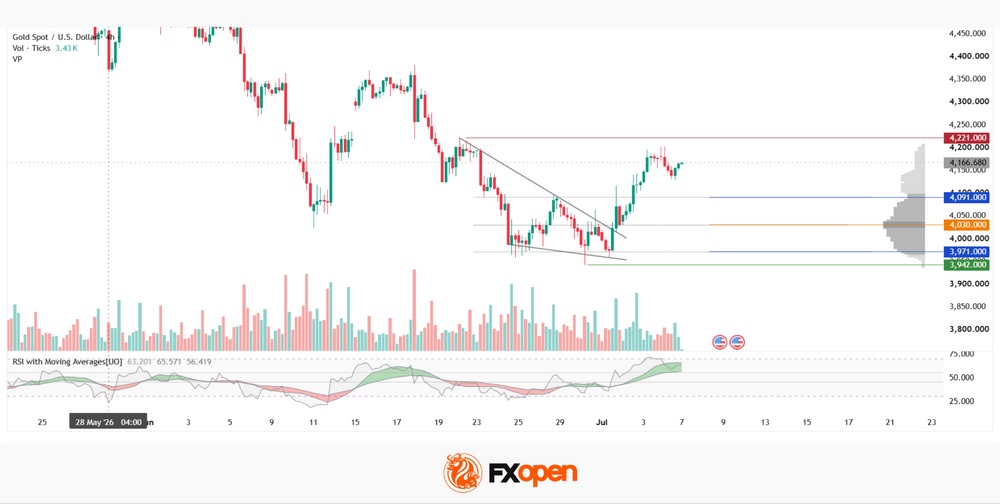
The year 2026 has so far been an unforgiving one for gold. XAU/USD is down approximately 7% since the start of the year, and roughly 28% from the late-January peak — a significant correction, though a physiologically natural one following the sustained bullish rally of recent years.

Fundamental Picture
Several factors have converged to weigh on the precious metal. The Federal Reserve has maintained its restrictive stance, keeping interest rates elevated and reducing the appeal of a non-yielding asset like gold. Simultaneously, institutional portfolio rotation has forced financial players to liquidate a portion of the long positions accumulated during the bull run, amplifying selling pressure. Notably, even the US-Iran geopolitical tension — a scenario that would typically act as a tailwind for gold in its role as a so-called safe-haven asset — has failed to provide meaningful support, with the broader macro environment overriding the flight-to-safety narrative.

46KBzvyb_o.jpg


TO VIEW THE FULL ANALYSIS, VISIT FXOPEN BLOG

Disclaimer: This article represents the opinion of the Companies operating under the FXOpen brand only (excluding FXOpen EU). It is not to be construed as an offer, solicitation, or recommendation with respect to products and services provided by the Companies operating under the FXOpen brand, nor is it to be considered financial advice.
 
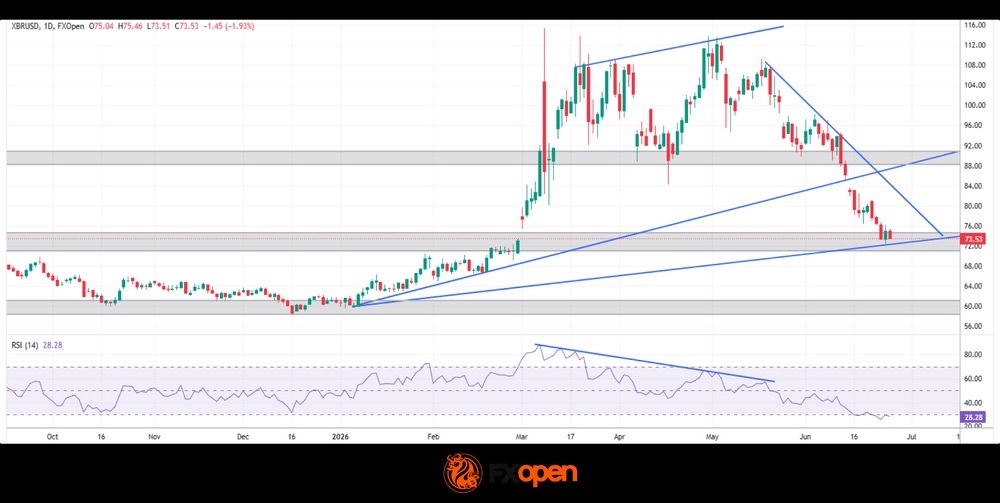
Brent Crude Oil Analysis: Stabilisation or Simply a Pause?
clkLsVxD_o.png


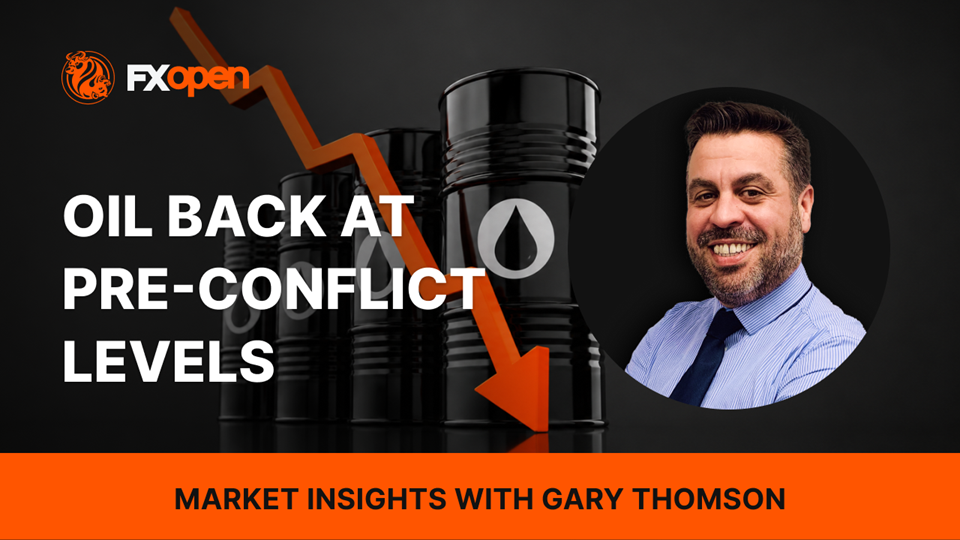
Over the past few weeks, financial markets have been more focused than ever on developments surrounding the Strait of Hormuz — a critical waterway at the centre of ongoing US-Iran negotiations. The back-and-forth of diplomatic headlines has injected significant volatility into energy markets, causing no shortage of headaches for traders and investors alike. For now, the price appears to have found a temporary equilibrium around the key $70 per barrel level, returning to territory last seen before the outbreak of the conflict. The question, then, arises naturally: has the period of uncertainty and volatility finally come to an end, or is this merely a pause before the next move?

BVq7sKz0_o.jpg


TO VIEW THE FULL ANALYSIS, VISIT FXOPEN BLOG

Disclaimer: This article represents the opinion of the Companies operating under the FXOpen brand only (excluding FXOpen EU). It is not to be construed as an offer, solicitation, or recommendation with respect to products and services provided by the Companies operating under the FXOpen brand, nor is it to be considered financial advice.

 
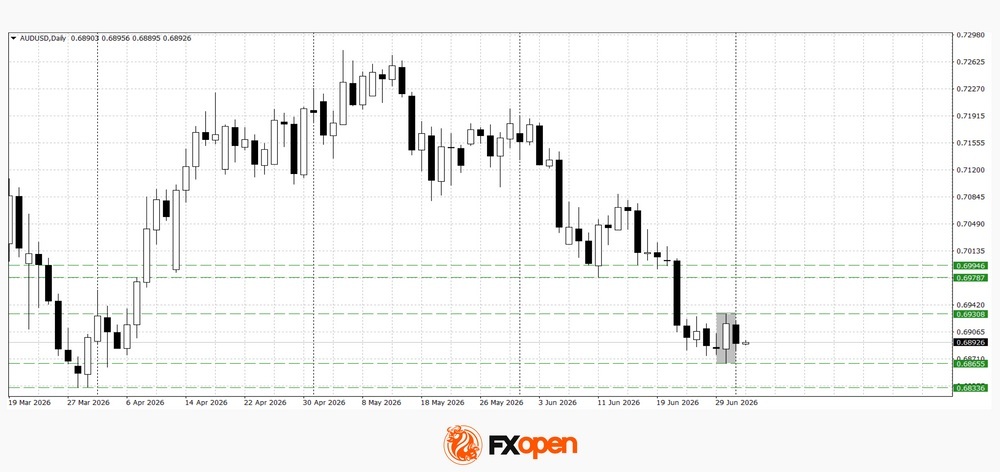
AUD/USD: Will the RBA Be Able to Keep Its Currency Strong?
X9cPcrbN_o.png


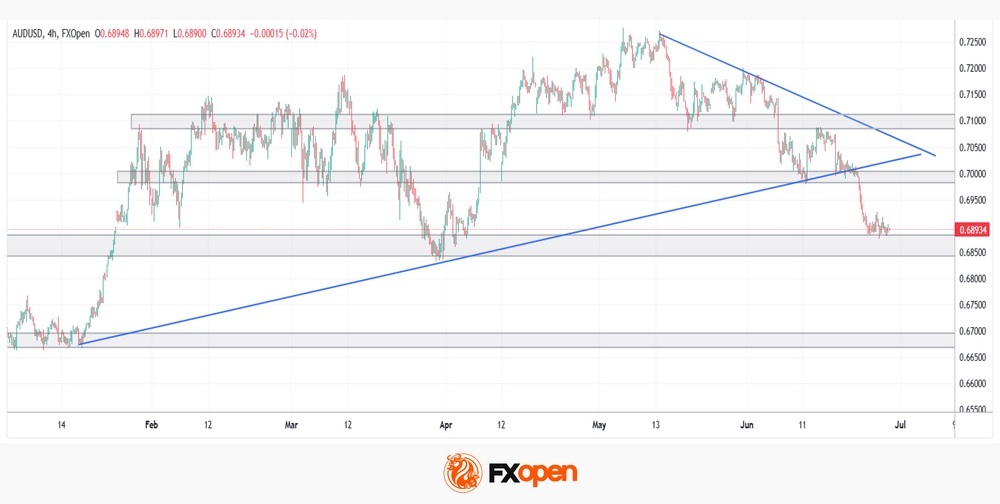
As the chart shows, AUD/USD has entered a distinctly bearish phase in recent weeks, reflecting the broader consolidation — and in some cases outright weakness — that the US dollar has begun imposing across most major currency pairs.

Fundamental Analysis
The Reserve Bank of Australia concluded its June meeting by holding the cash rate steady at 4.35%, opting to monitor the effects of the three consecutive hikes already delivered since the start of the year. The board acknowledged that financial conditions have tightened and that the economy is showing early signs of slowing, while maintaining a vigilant stance on inflation, which remains above target.

In theory, a pause after a tightening sequence — with a cash rate at 4.35%, the highest in the G10 — is a structurally supportive signal for the Australian dollar, as elevated rate differentials tend to attract flows toward AUD-denominated assets. However, markets had already fully priced in this outcome, stripping the decision of any surprise. AUD/USD has consequently failed to post any meaningful bullish impulse, sliding toward almost three-month lows near 0.6890, weighed down by renewed US dollar strength on growing Federal Reserve rate hike expectations. Adding further complexity to the outlook, the ongoing Middle East conflict continues to weigh on global risk sentiment, acting as an additional headwind for a currency that markets have long treated as a barometer of global risk appetite.

e70sBvbb_o.jpg


TO VIEW THE FULL ANALYSIS, VISIT FXOPEN BLOG

Disclaimer: This article represents the opinion of the Companies operating under the FXOpen brand only (excluding FXOpen EU). It is not to be construed as an offer, solicitation, or recommendation with respect to products and services provided by the Companies operating under the FXOpen brand, nor is it to be considered financial advice.
 
AUD/CAD: Pair Remains Range-Bound Amid Interest Rate Divergence
wgrYa5dR_o.png


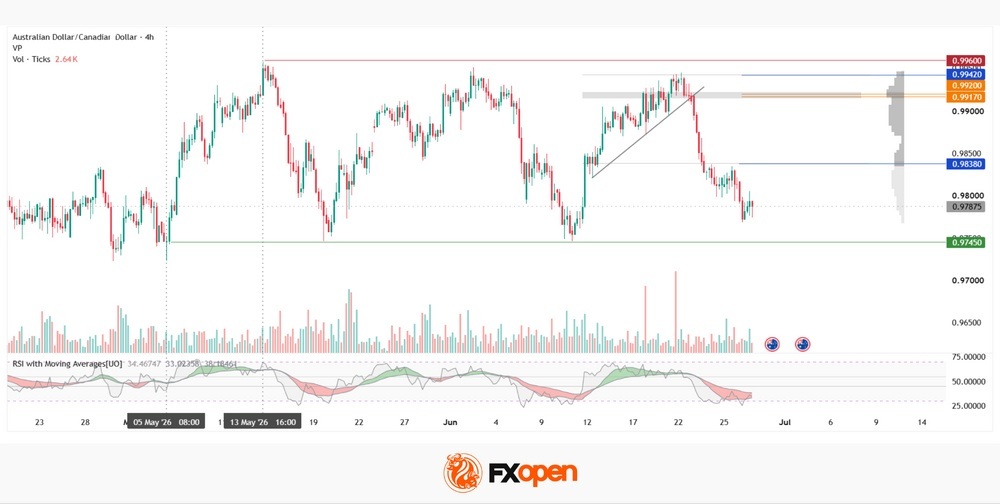
The key macroeconomic factor for AUD/CAD remains the divergence in monetary policy between the two central banks. After three consecutive rate hikes since the beginning of the year, the Reserve Bank of Australia left its cash rate unchanged at 4.35%, citing persistent inflationary pressure and signs of slowing economic growth. The RBA stressed that inflation remains above its target range and that it is in no rush to begin easing policy. By contrast, the Bank of Canada has now kept its policy rate unchanged at 2.25% for a fifth consecutive meeting. Economic activity remains subdued, inflation has risen mainly due to higher energy prices, while core inflation has eased to 2.1%. The 210-basis-point interest rate differential formally supports the Australian dollar, although the RBA's more restrictive policy cycle continues to weigh on domestic demand and limits further gains in AUD.

Yf0GE838_o.jpg


TO VIEW THE FULL ANALYSIS, VISIT FXOPEN BLOG

Disclaimer: This article represents the opinion of the Companies operating under the FXOpen brand only (excluding FXOpen EU). It is not to be construed as an offer, solicitation, or recommendation with respect to products and services provided by the Companies operating under the FXOpen brand, nor is it to be considered financial advice.

 
Back
Top