
Phylo
Legendary member
- Messages
- 5,602
- Likes
- 439
A non-partisan research post - London
---------------------------------------------------
---------------------------------------------------


Exactly. They didn't really trust one of their neighbors. Was it Finland or Latvia or someone else?😉Estonia pursued NATO membership to secure collective defense against potential aggression, especially after experiencing Soviet occupation.
Yes. Estonian leaders and much of the public were worried that Russia could one day move against them, and this fear was a major reason they pushed so hard to join NATO in 2004.ecfr+1
Historical context
- Estonia regained independence from the Soviet Union in 1991 and still shared a long land border with Russia, which many Estonians saw as a potential future threat.ecfr
- Memories of Soviet occupation, mass deportations, and forced Russification during the 20th century shaped a strong desire to anchor security in Western institutions, especially NATO.ecfr
Security concerns before NATO
- Throughout the 1990s and early 2000s, Estonian policymakers warned that without NATO protection, Russia might try to reassert influence or even use military pressure against its former Soviet republics.nytimes+1
- This concern was not framed as expecting an imminent invasion, but as fear of long‑term vulnerability if Russia recovered militarily and politically from its post‑Soviet weakness.ecfr
NATO membership as protection
- Estonia saw NATO’s Article 5 guarantee as the only credible deterrent against a possible Russian attack, which drove its rapid military reforms and intense diplomatic effort to secure membership by 2004.ecfr
- Officials later described NATO membership as “essential” to Estonia’s security, precisely because any aggression from Russia would trigger a collective response by all allies.dw
- https://www.gisreportsonline.com/r/estonia-preemptive-strikes-russia/
- https://defence24.com/geopolitics/estonia-shall-not-be-threatened-by-russia-commentary
- https://www.dw.com/en/how-estonians-are-managing-the-threat-of-a-russian-invasion/a-73724598
- https://thehill.com/opinion/interna...onia-is-no-longer-afraid-of-the-russian-bear/
- https://ecfr.eu/publication/the-bear-in-the-baltics-reassessing-the-russian-threat-in-estonia/
- https://www.nytimes.com/2025/10/24/world/europe/estonia-military-industry-economy.html
- https://www.npr.org/2024/05/01/1196980715/invasion-worries-in-eastern-europe
- https://www.defensenews.com/global/...last-road-through-russia-has-closed-for-good/
- https://www.nbcnews.com/news/world/...shadow-nato-allies-baltic-countries-rcna22350

| Year | Key Events |
|---|---|
| 1991 | • 20 Aug 1991 – Restoration of independence after the failed Soviet coup.• 30 Aug 1991 – First free parliamentary elections; Edgar Savisaar becomes Prime Minister. |
| 1992 | • 20 Jun 1992 – New Constitution adopted (parliamentary republic).• 6 Oct 1992 – Arnold Rüütel elected President (first post‑Soviet head of state). |
| 1993 | • 1 Jan 1993 – Introduction of the Estonian kroon (replacing the ruble).• 1993‑94 – Major land‑reform completion, returning property to pre‑1940 owners. |
| 1994 | • Tiit Vähi becomes Prime Minister (second term).• Estonia signs the Partnership for Peace (PFP) agreement with NATO (Nov 1994). |
| 1995 | • 5 Mar 1995 – Parliamentary elections; Tiit Vähi continues as PM.• 1995 – Estonia joins the World Trade Organization (WTO) as an observer. |
| 1996 | • Mart Laar returns as Prime Minister (second term) and initiates sweeping economic reforms (tax cuts, privatization).• 1996 – Estonia begins accession talks with the European Union (formal application later in 2002). |
| 1997 | • 1 Jan 1997 – Estonia becomes a member of the Council of Europe.• 1997 – Application for NATO membership submitted (along with other Baltic states). (The Council of Europe is an intergovernmental organization founded in 1949 to promote human rights, democracy, and the rule of law across the European continent. It currently has 46 member states (as of 2025) and is best known for the European Convention on Human Rights and the European Court of Human Rights, which enforce civil‑ and political‑rights standards for all members. The Council of Europe is separate from the European Union and focuses on broader cultural, legal, and social cooperation rather than economic integration.) |
| Year | Key Events & Milestones |
|---|---|
| 1991 | • Treaty of Maastricht signed (23 Feb) – laid the foundation for the EU and the future single currency.• European Economic Area (EEA) agreement concluded, extending the single market to EFTA states (effective 1 Jan 1994). |
| 1992 | • Maastricht Treaty (Treaty on European Union) came into force (1 Nov). It created the three‑pillar structure (European Communities, Common Foreign & Security Policy, Justice & Home Affairs) and set convergence criteria for the Economic and Monetary Union (EMU). |
| 1993 | • Single Market completed (1 Jan) – free movement of goods, services, capital and people across member states.• Treaty of Amsterdam signed (2 Oct) to reform EU institutions in preparation for enlargement. |
| 1994 | • EU enlargement began with the accession of Austria, Finland and Sweden (1 Jan 1995).• European Monetary Institute (EMI) established as the precursor to the European Central Bank (ECB). |
| 1995 | • Schengen Agreement implemented (1 Mar) – abolition of internal border controls for participating states.• EU‑EURO: The euro was introduced as an accounting currency on 1 Jan 1999 (negotiations and preparations intensified during this period). |
| 1996 | • Treaty of Amsterdam entered into force (1 May) – streamlined decision‑making, expanded the co‑decision procedure, and increased the European Parliament’s powers.• Stability and Growth Pact negotiations began to enforce fiscal discipline among euro‑area members. |
| 1997 | • Treaty of Amsterdam fully operational; further institutional reforms prepared the EU for the 2004 enlargement.• Euro‑zone convergence: 11 EU members met the Maastricht criteria, paving the way for the launch of the euro in 1999. |

 sputnikglobe.com
 sputnikglobe.com
 southfront.press
It's getting a little tiring doing research for you, but ...Okay R_L, let's play it your way. . .
1) When, exactly, did Russia 'decide' the people of Ukraine shouldn't decide the future of Ukraine? Please provide a link to Kremlin documents or to a senior politician making an official statement to this effect.
Your link: https://www.rbth.com/international/2014/10/16/mikhail_gorbachev_i_am_against_all_walls_40673.htmlWhat on earth are you talking about? The link to the Gorbachev interview was in this article that YOU linked to claiming he changed his story when he was no longer a politician. Read the interview: what I say is 100% correct. Gorbachev confirms U.S. Secretary of State James Baker’s promise that 'NATO will not expand one inch into the East'.
Yes, here is an example: https://www.trade2win.com/threads/ukraine-invasion.240741/post-3277289. Before someone argues Putin wasn't in charge of Russia when Estonia applied for NATO membership, it's obvious Estonians didn't trust Russia in general.1) So, are you saying that having been granted full independence by Russia, that a few years later the former Soviet republics and satellites fear Russia's going to invade them to make them part of Russia again? Consequently, they desperately want to join NATO so the U.S. will protect them from that evil monster Putin? Is that it - is that your argument?
When he starts off with a false premise, I see no reason to listen to the rest.One last question: have you read the open letter by Prof. Sachs and watched the interview with him yet?
Tim.
You wrote "you have to resort to AI."Allow me to provide you with a definition of ad hominem, as it's clear you don't know what it is: an ad hominem attack is an argument or reaction directed against a person rather than the position they are maintaining. I've only ever attacked your argument.
 www.presstv.co.uk
 www.presstv.co.uk
 sputnikglobe.com
 sputnikglobe.com
 sputnikglobe.com
 southfront.press
This one could be true, but is there evidence the alleged attack came from Ukraine?Drone Attack on Putin’s Residence Planned by Forces Trying to Torpedo Ukraine Peace Push: Expert
“They do not consider it possible to step back and allow the situation on our border region to be stabilized. Therefore, they are making gradual attempts to torpedo the negotiation process,” military analyst Alexander Stepanov told Sputnik, commenting on the attack on Putin’s residence in...
Yes. Multiple outlets have reported that a senior Kremlin official said there was no need to make public any alleged proof that Ukrainian drones tried to swarm the Russian president’s residence, matching the wording you quoted.kyivpost
- https://www.abc.net.au/news/2025-12...aine-experts-say-no-evidence-russia/106187456
- https://globalnews.ca/news/11593238/ukraine-russia-putin-residence-attack-claim-negotiations/
- https://www.cnn.com/2025/12/29/europe/russia-claim-ukrainian-drone-attack-putin-residence-intl
- https://www.bbc.com/news/articles/c4g4g5lgngvo
- https://www.ukrinform.net/amp/rubri...alleged-drone-attack-on-putins-residence.html
- https://www.kyivpost.com/post/67179
- https://www.independent.co.uk/voices/putin-ukraine-zelensky-trump-drone-attack-opeace-b2892152.html
- https://www.facebook.com/KyivPost/p...ersonal-residencea-top-krem/1474011424606781/
- https://www.facebook.com/thenewvisi...-a-drone-attack-on-one-of-v/1303579438480562/
Maybe this time it's different.🤣Yes, Russian officials, including President Vladimir Putin and Foreign Minister Sergei Lavrov, repeatedly denied they were planning to attack Ukraine in the period leading up to the February 24, 2022, invasion.
Throughout late 2021 and early 2022, despite a massive military buildup near the Ukrainian border that was tracked by Western intelligence, Russian officials dismissed concerns about an imminent invasion as "hysteria," "baseless," and "paranoid" rhetoric.
Key instances of these denials include:
These official statements were subsequently proven false when Russia launched a full-scale invasion of Ukraine on February 24, 2022, an operation the Kremlin termed a "special military operation".
- January 10, 2022: Russian Deputy Foreign Minister Sergei Ryabkov stated after talks with the U.S. in Geneva, "We have no plans or intentions to attack Ukraine".
- January 19, 2022: The Russian embassy in Washington tweeted a call to "end the hysteria," reiterating that Moscow was "not going to attack anyone".
- February 15, 2022: As late as nine days before the invasion, a Kremlin spokesperson indicated that some troops were withdrawing to their bases after exercises and that Russia did not want war.
This one could be true, but is there evidence the alleged attack came from Ukraine?
I guess the world should just trust Russia, like what happened before:
Google's AI Overview:
Maybe this time it's different.🤣
From your link:
The military expert clarified: NATO oversees Ukraine's senior officers and military-political leadership, so "without their approval, such actions are simply impossible."
No. NATO does not command or “oversee” Ukraine’s senior officers or its military‑political leadership. Ukraine remains a sovereign state whose chain of command runs through its own elected civilian leadership and national military command, not through NATO structures.nato+2
What NATO actually does
- NATO provides training, equipment, coordination and advisory support to Ukraine, but Ukrainian forces stay under Ukrainian national command at all times.armyupress.army+1
- Political coordination takes place in the NATO‑Ukraine Council, where Ukraine participates as an equal partner, not as a subordinate actor, and decisions are taken by consensus among all participants.nato
Claims that “NATO oversees” Ukraine
- Statements that “NATO oversees Ukraine's senior officers and military‑political leadership” come from Russian or pro‑Russian commentators and are presented as opinions or propaganda, not as descriptions of any formal NATO command authority over Ukraine.tass
- Western and NATO official documents consistently describe the relationship as support, partnership, and capacity‑building toward interoperability and possible future membership, not as direct control of Ukraine’s leadership or operations.cfr+3
- https://www.nato.int/en/what-we-do/partnerships-and-cooperation/natos-support-for-ukraine
- https://tass.com/world/2067181/amp
- https://www.cfr.org/report/ukraine-nato-and-war-termination
- https://www.nato.int/en/about-us/organization/nato-structure/nato-ukraine-council
- https://www.armyupress.army.mil/Journals/NCO-Journal/Archives/2024/October/NCO-Lessons-from-Ukraine/
- https://www.nato.int/en/about-us/organization/nato-structure/nato-secretary-general
- https://www.ukraineoversight.gov/Funding/Training-Advising/
- https://www.npr.org/2022/03/27/1088683957/what-is-nato-ukraine-russia-putin
- https://www.bbc.com/news/articles/czxng7kxnp9o
- https://en.wikipedia.org/wiki/Ukraine–NATO_relations
 evocation.info
Marochko is also known for his pseudo-military stories, such as where he “personally saw a fighter from his unit who was missing half of his head, but he still managed to breathe for a long time.”


Histo',
I've given up.
There's simply no point in debating with people who rely almost entirely on Google AI. R_L may just as well ask it: 'is the moon made of cheese?' and if Google AI said it was then he'd believe and accept it without question. That's about how accurate and even handed it is. (Doubtless, Russian AI is just as biased, inaccurate and unreliable.) And the fact that he openly admits that he's not even prepared to read or listen to a highly respected international academic who's served under a number of U.S. administrations is the very definition of a blinkered and narrow minded world view. A black and white world view that so obviously doesn't exist in reality: Putin's a monster and Zelensky's a saint. End of story. Failing to listen with an open mind to what other people have to say, acknowledge and take on board their legitimate concerns - as the west has repeatedly failed to do regarding Russia's objections to NATO expansion - is precisely the reason why we are where we are today. No surprise really. So sad.
On that note, and for the reasons stated, time for me to bow out of this thread (again).
Happy New Year to y'all - you too, R_L!
Tim.
I give up too! AI searches on the Internet search the Internet which includes different sources! perplexity.ai is especially good because it gives lots of specific references that one can look at.Histo',
I've given up.
There's simply no point in debating with people who rely almost entirely on Google AI. R_L may just as well ask it: 'is the moon made of cheese?' and if Google AI said it was then he'd believe and accept it without question. That's about how accurate and even handed it is. (Doubtless, Russian AI is just as biased, inaccurate and unreliable.) And the fact that he openly admits that he's not even prepared to read or listen to a highly respected international academic who's served under a number of U.S. administrations is the very definition of a blinkered and narrow minded world view. A black and white world view that so obviously doesn't exist in reality: Putin's a monster and Zelensky's a saint. End of story. Failing to listen with an open mind to what other people have to say, acknowledge and take on board their legitimate concerns - as the west has repeatedly failed to do regarding Russia's objections to NATO expansion - is precisely the reason why we are where we are today. No surprise really. So sad.
On that note, and for the reasons stated, time for me to bow out of this thread (again).
Happy New Year to y'all - you too, R_L!
Tim.
It has the Russian reasons for the 2022 invasion and seems accurate to me.Russia invaded Ukraine in February 2022 to re‑assert control over Ukraine and block its westward drift toward the EU and NATO, using false “security” and “protection” claims as justification. The move is widely seen as a war of aggression aimed at regime change in Kyiv and restoring Russian influence over former Soviet space.[1][2][3]
## Official Russian justifications
Russian leaders presented the invasion as a limited **“special”** operation with defensive motives. In speeches on 21 and 24 February 2022, Vladimir Putin claimed that the goals were:[4][5]
- To “protect” people in the Donbas, alleging “genocide” against Russian speakers, a claim rejected internationally.[6][3][1][4]
- To “demilitarize and denazify” Ukraine and prevent it being used as a NATO “springboard” against Russia.[5][4][6]
## Strategic and geopolitical motives
Analysts and governments generally interpret the invasion as an attempt to pull Ukraine back into Russia’s sphere of influence. Key strategic motives include:[2][3][1]
- Stopping Ukraine’s deeper integration with the EU and its long‑term ambition for NATO membership, which Moscow sees as a direct security and political challenge.[7][8][1][2]
- Reasserting great‑power status and revising what Putin has called the “tragedy” of the Soviet Union’s collapse by controlling or subordinating former Soviet republics like Ukraine.[1][2]
## Security and NATO concerns
Moscow argues that NATO expansion eastward undermines Russian security and that Ukrainian NATO membership would cross a red line. In the months before the invasion, Russia demanded legal guarantees that NATO would not expand further east or admit Ukraine, and used the failure to obtain these guarantees as part of its rationale for war.[8][7][2][1]
## Domestic politics and ideology
Putin’s narratives about a historic unity of Russians and Ukrainians and denial of a separate Ukrainian nation underpin the ideological framing of the war. Analysts also point to:[6][5][1]
- The value of a quick foreign war to reinforce regime legitimacy at home and distract from economic and political problems.[2][1]
- The goal of preventing a successful, democratic, pro‑Western Ukraine that could provide an alternative model to authoritarian rule in Russia.[9][1][2]
## Immediate military objectives in 2022
When Russian troops crossed the border, the initial plan appears to have been a fast seizure of Kyiv and installation of a more compliant government. Russia also moved to consolidate control over Crimea’s land corridor and parts of eastern and southern Ukraine, entrenching its position even after the initial push on the capital failed.[3][1]
[1](https://www.britannica.com/question/Why-did-Vladimir-Putin-invade-Ukraine-in-2022)
[2](https://www.usnews.com/news/best-countries/articles/explainer-why-did-russia-invade-ukraine)
[3](https://www.bbc.com/news/articles/cj0q964851po)
[4](https://www.aljazeera.com/news/2022/2/24/putins-speech-declaring-war-on-ukraine-translated-excerpts)
[5](https://en.wikipedia.org/wiki/Putin's_invasion_of_Ukraine_speech)
[6](https://www.nytimes.com/2022/02/24/world/europe/putin-ukraine-speech.html)
[7](https://www.crisisgroup.org/europe-central-asia/ukraine-russia-internal-united-states/high-stakes-promises-challenge-security-guarantees-ukraine)
[8](https://digitalcollections.sit.edu/cgi/viewcontent.cgi?article=4787&context=isp_collection)
[9](https://www.reddit.com/r/geopolitics/comments/1fuuyac/what_exactly_is_russias_justification_for_the/)
[10](https://www.csis.org/analysis/unfinished-plan-peace-ukraine-provision-provision)
Should I believe one academic or hundreds of them?- An open letter signed by hundreds of economists faults him for downplaying Russian aggression, denying Ukraine’s agency, misrepresenting historical facts, and framing the war primarily as a U.S.‑manufactured crisis.[10][4]
## Media appearances and “propaganda” charges
- His repeated appearances on Russian state‑linked talk shows and on Western platforms popular with Kremlin sympathizers have led critics to label him a “Kremlin mouthpiece” or propagandist.[3][5][1]
- Commentators argue that in these venues he selectively cites or misstates evidence about NATO expansion, Crimea, and Donbas, omitting atrocities or Russian imperial aims in ways that align closely with official Russian talking points.[2][7][1]
[1](https://thehill.com/opinion/international/4727046-from-economist-to-kremlin-mouthpiece-the-troubling-transformation-of-jeffrey-sachs/)
[2](https://www.youtube.com/watch?v=kYNmvhoi4gU)
[3](https://www.sundial-cu.org/p/jeffrey-sachs-is-no-stranger-to-controversy)
[4](https://voxukraine.org/en/open-letter-to-jeffrey-sachs)
[5](https://x.com/sndurlauf/status/1709966391174984095?lang=en)
[6](https://www.reddit.com/r/chomsky/comments/1hkr344/factchecking_jeffrey_sachs/)
[7](https://www.fairobserver.com/more/science/outside-the-box-chatgpt-plays-sachs-in-our-band-part-1/)
[8](https://pubmed.ncbi.nlm.nih.gov/16524171/)
[9](https://www.jstor.org/stable/45138354)
[10](https://www.columbiaspectator.com/news/2023/04/09/economics-professors-condemn-jeffrey-sachs-in-open-letter-on-russia-ukraine-war/)
If NATO enlargement is the root cause of the war, why would the NATO-Russia land border double after the war started?As for NATO enlargement IS the root cause of this war
Does anyone think Finland joining NATO would have happened if Russia didn't invade Ukraine? Anyone? It's almost like Russia is the root cause of NATO enlargement.The largest recent jump in the length of NATO’s border with Russia came from Finland joining NATO, which roughly doubled the NATO–Russia land border.wikipedia
Finland’s NATO accession
- Finland formally joined NATO in April 2023, adding over 1,300 km of direct land border with Russia to the alliance’s frontier.wikipedia
- This single enlargement step is widely described as having “doubled” the length of NATO’s border with Russia compared with the pre‑2023 situation.wikipedia
Why Finland’s entry mattered most
- Before Finland’s accession, the only NATO states directly bordering mainland Russia in Europe were Norway, Estonia, Latvia, Lithuania, and Poland (via the Kaliningrad exclave), so the existing border was relatively limited in total length.armscontrol+1
- By adding Finland’s long, contiguous frontier to that list, NATO’s Russia-facing land boundary expanded more in one move than in any prior enlargement round, making Finland’s accession the main cause of the largest increase in NATO countries bordering Russia.cfr+1
- https://www.internationalaffairs.or...xpansion-explains-russias-actions-in-ukraine/
- https://en.wikipedia.org/wiki/Enlargement_of_NATO
- https://www.armscontrol.org/act/2004-05/press-releases/nato-expands-russia-grumbles
- https://www.cfr.org/backgrounder/why-nato-has-become-flash-point-russia-ukraine
- https://www.thearcticinstitute.org/dark-side-nato-expansion-part-i/
- https://1997-2001.state.gov/regions/eur/fs_980219_natoqanda.html
- https://afsa.org/did-nato-expansion-really-cause-putins-invasion
- https://www.npr.org/2022/01/29/1076193616/ukraine-russia-nato-explainer
- https://en.wikipedia.org/wiki/Contr...ing_the_legitimacy_of_eastward_NATO_expansion
- https://cepa.org/article/sympathy-with-the-devil-the-lie-of-nato-expansion/
Finland will not be hosting any NATO weapons or bases or have claims on Crimea/Sivastapol.If NATO enlargement is the root cause of the war, why would the NATO-Russia land border double after the war started?
Does anyone think Finland joining NATO would have happened if Russia didn't invade Ukraine? Anyone? It's almost like Russia is the root cause of NATO enlargement.

How Russia’s War Machine Brutalizes and Exploits Its Own Soldiers
By Paul Sonne, Anton Troianovski, Milana Mazaeva, Nataliya Vasilyeva and Alina Lobzina
Dec. 31, 2025
President Vladimir V. Putin of Russia has built a war machine in Ukraine with an insatiable demand for men.
Underpinning that machine is a pattern of brutality and coercion in which commanders dole out abuse as punishment while exploiting soldiers — even the gravely ill or injured — to keep them on the battlefield, an investigation by The New York Times has found.
Mr. Putin has hailed the troops fighting his war of attrition as sacred heroes, and Russian society as the most important weapon in his forces’ advance on the battlefield. But more than 6,000 confidential complaints about the war reviewed by The Times show that anger and discontent simmer beneath the surface as the Russian leader’s methods for sustaining the war destroy countless military families.
“We’ve been living in fear for three years, keeping silent about everything,” the wife of a soldier from Saratov, a city in southwestern Russia, wrote in one complaint. “I’m being torn apart on the inside from the injustice!”
Thousands of those petitioning the Russian government struggle to get answers about their missing or imprisoned loved ones. More than 1,500 of them describe wrongdoing in the ranks that is largely hidden from the Russian public because of a ban on criticizing the military and the eradication of independent media.
The complaints of severe abuse appear to be most concentrated in units with troops recruited from prisons and pretrial detention. The Kremlin relies on such soldiers to avoid a broader draft that could generate opposition to the war.
Allegations of a vast array of abuses are laid out in the documents:
- Soldiers are sent to the front despite debilitating medical conditions like broken limbs, Stage 4 cancer, epilepsy, severely damaged vision and hearing, head trauma, schizophrenia and stroke complications.
- Released prisoners of war are deployed directly back to active combat.
- Russian commanders threaten their own soldiers with death so often that the killings have their own name — “zeroing out.”
- Some commanders extort or steal from their soldiers, including by collecting money to exempt troops from deadly missions.
- Soldiers who complain, object to doomed missions or refuse to pay bribes can be beaten, locked in basements, stuffed in pits or tied to trees.
- Recruits brought in through a draft or mandatory military service are pressured to sign extended contracts and threatened with transfers to assault units with high mortality rates if they refuse.

Ukrainian volunteers collected the remains of Russian soldiers in a battlefield in the Kharkiv region of eastern Ukraine in February. Tyler Hicks/The New York Times
The confidential complaints were submitted to the Russian human rights ombudsman, Tatyana N. Moskalkova, who reports to Mr. Putin. After a mistake by her office, complaints filed between April and September were made accessible online, according to Maxim Kurnikov, the founder and editor of Echo, an online Russian news outlet in Berlin. He and his team collected the files and provided them to The Times.
Ms. Moskalkova’s office did not respond to a request for comment. The Kremlin and the Russian Ministry of Defense did not respond to multiple requests for comment.
The Times took extensive steps to confirm the overall authenticity of the documents. First, reporters contacted more than 240 of the complainants. While most did not respond or refused to talk, 75 confirmed that they had filed a petition. Dozens gave additional details. Email addresses, phone numbers and publicly available information were also used to confirm the identity of complainants.
Second, The Times conducted detailed interviews in a number of cases to confirm the veracity of the claims made in the filings. In attachments to filings and in interactions with The Times, the petitioners often provided corroborating materials such as videos, photographs, voice memos and text messages from the front, as well as medical reports, court files and internal military documents. In many cases, The Times was unable to corroborate the claims within filings.
Complainants who spoke to The Times in some instances said that the Russian authorities had opened criminal investigations or responded in some other way. A handful had their cases resolved. But many said they had received no substantive action beyond formulaic letters.
Though a pattern of abuse emerges across hundreds of testimonies, the complainants represent only a sliver of the wider Russian military. It is unclear how widespread the practices are across the force, nor are there signs that the abuses augur a weakening Russian military effort. The complaints regularly describe a fear of retaliation for reporting abuse, meaning other instances of wrongdoing most likely have not been reported to the ombudsman.
The Times is withholding full names and some identifying details of the soldiers and their families to maintain their privacy and protect them from potential official retribution, except in cases when soldiers or their relatives agreed to their use. The petitions contain many accusations that could be illegal to make publicly in Russia.
In an Aug. 27 complaint, a soldier’s mother, Oksana Krasnova, attached a video her son had taken of himself and a comrade handcuffed to a tree for four days without food, water or access to a toilet. She pleaded, “They are not animals!”
She also made the story public on social media, saying her son and his comrade had been punished for refusing to go on a suicide mission that involved taking a photo with a Russian flag on Ukrainian-held territory.
Reached by The Times, the son, Ilya Gorkov, said he had taken the video near Kreminna, Ukraine, after hiding a phone in his sleeve and that he was released thanks only to a relative with connections in the Russian security services. He said he had hired a lawyer and was refusing to return to his unit, because doing so “would be like signing my own death warrant.”
“People in wheelchairs are being sent to the front, without arms or legs,” he said. “I saw it all with my own eyes.”


Belongings of slain Russian soldiers in the Kharkiv region. Tyler Hicks/The New York Times
July 7, 2025
Can you imagine: He will put on a flak jacket, take a machine gun and ammunition, but his leg doesn’t work. How is he going to defend our country with one leg?
Aug. 19, 2025
I have a severe head wound. Shrapnel pierced my central nervous system. Why haven’t they discharged me? My head hurts constantly and I can’t think straight!!! Why do they want to send me on a mission again?
July 15, 2025
It looks like the mobilized men have no rights to discharge — or even to live at all.
July 22, 2025
The doctor was rude, disrespectful, and openly stated that they had been given an order to deem everyone fit for military service.
Coercion to Fight
As the war has dragged on, Moscow has gone to ever greater lengths to keep the front in Ukraine supplied with troops.
Mr. Putin ordered a draft of civilians in the first year of the invasion. His military has also signed up prisoners, debtors and foreign fighters, and has hired private mercenaries. To lure soldiers, it has offered lavish signing bonuses, injury payouts and other rewards.

With a million estimated Russian soldiers injured or killed in the war, President Vladimir V. Putin has made it clear that he is willing to accept staggering losses. Nanna Heitmann for The New York Times
The complaints show that coercion remains integral to filling Russia’s ranks. They reveal the pressure that conscripted soldiers are under to sign extended contracts. One soldier described being manipulated into agreeing to such a contract by his base’s psychologist. Another provided materials indicating that drafted soldiers who refused to sign contracts were, as a policy, being transferred to assault companies, the most dangerous units.
Once recruited, the complaints show, soldiers face extraordinary pressure to stay in battle, even if they are unfit for service.
“I know that war is war,” Lyubov, who filed one such complaint about the treatment of her son, said in a phone interview from southern Russia. “But this is a different war.”
Lyubov hails from a military family. Her husband died in Russia’s war against Chechen separatists. But she said she never could have imagined the “lawlessness” in the Russian Army now.
Her son was awaiting treatment for a leg broken on the battlefield when unidentified men grabbed him off the street and, she said, sent him back to the front. It was the third time that he had been forced into battle despite injuries, she said. After a concussion in 2023, her complaint asserted, a battalion commander told her son: “Everyone here has a concussion, and not just one. Who’s going to fight? You’ll get treated at home.”
Multiple filings describe situations in which soldiers who were refused medical treatment left their units to seek civilian care, only to be branded absent without leave. They were then picked up by the military police and sent back to the front, often while still wounded.
In many cases, men who have been ill or injured are deemed ready for frontline fighting after only cursory checks, the filings assert. In the city of Voronezh in southwestern Russia, one soldier’s sister said in a complaint, a medical commission reviewing fitness for service processed 100 men per hour. Other filings say that wounded soldiers are being redeployed before their fitness has even been assessed.
In an interview with The Times, one Russian soldier who filed a complaint described being surprised when he was at a medical facility and met seriously ill soldiers being sent back to battle.
“How can you send back a person with liver cirrhosis who has who knows how long to live, or with cancer?” the soldier asked. “Give him the opportunity to die at home, so to speak. Why is he being sent?”
In one complaint, a woman said her father was deceived into signing a contract and sent to the front, despite suffering from mixed personality disorder, disorientation and depression. She warned that he was prescribed potent antipsychotic drugs and could be a danger to himself and others in a war zone.
Some of the complaints describe injured soldiers’ canes being taken away as they are returned to the force. In others, including one case documented on video, men are reported to be sent into battle while still using crutches and canes.
The Times contacted two people who said they were relatives of two injured soldiers in the video. One relative said it was taken late last year near the village of Mozhnyakivka in the occupied Luhansk region of Ukraine, where the Russian military was sending fighters from penal regiments for rehabilitation.
Both relatives said their loved ones had since disappeared. One of them, Yelena Roslyakova, said that her husband, Andrei Zubaryov, 31, could be seen limping with a cane in the video.
Unmuted
0:11 / 0:20
A video taken by a Russian soldier shows injured men, including Andrei Zubaryov, 31, apparently being sent on a combat mission. Mr. Zubaryov’s wife identified him in the footage as the man seen limping with a cane. Expletives have been removed from the audio.
In at least 95 cases reviewed by The Times, prisoners of war released by Ukraine were returned against their will to Russian military service, often to active combat.
Thousands of captive Russian and Ukrainian soldiers have been freed in prisoner exchanges over the last four years. The documents show that Russia sometimes sends these troops back to the front line as quickly as a day after their release.
One Russian soldier who said he had been sent back to the front line after seven months in Ukrainian captivity described in a complaint how memories from his time as a P.O.W. were causing him to panic and make poor decisions on the battlefield.
“Given my psychological state, sending a former prisoner of war to an active combat zone is a rash decision,” he said in the complaint. “How can I carry out the orders of the command if this whole situation is affecting me mentally?”
Aug. 4, 2025
He is being subjected to acts of violence, including torture with electric shocks and beatings, and as a result he has a broken leg and numerous bruises.
July 2025
My husband was beaten by the leadership of this unit; I am attaching photos of the injuries.
July 31, 2025
It’s the fault of the command, which sets an example and encourages ‘fictitious wounds’ in exchange for bribes.
June 17, 2025
One of the commanders has a stick with a female organ on the end, which he uses to beat them in the face.
Battlefield Abuse
Many of the complaints, particularly from regiments composed of former prisoners, describe a battlefield dynamic in which soldiers fear beatings or extortion by their own commanders as much as being killed by the enemy.
Doling out gruesome punishments helps some commanders to keep sway over their soldiers, or simply to profit from them. Objecting or leaving a unit often brings new abuse.
Natalya Lukyanchuk, a 74-year-old from the Tula region south of Moscow, submitted multiple complaints describing mistreatment of her grandson. She said in an interview that he had been handcuffed to a radiator and beaten for much of the past month at a base in Kamchatka, in Russia’s Far East.
The grandson, Danil Sushchikh, had about a year remaining in a four-and-a-half-year prison sentence when he signed a one-year military contract to get out, she said. He had been convicted of hitting a person while driving a car.

Danil Sushchikh with his grandparents when they visited him in Maykop, where Danil was undergoing treatment after an injury late last year. via Natalya Lukyanchuk
During combat in Ukraine, he was injured twice, leaving him with shrapnel embedded in his knee, an injured leg and torn ligaments in his right arm, she said. Over the course of his service, she said, he was kicked in his injured leg, beaten in the face, locked in a cold room for 24 hours without clothes and told he would be sent to his death.
“The commanders treat them like animals,” Ms. Lukyanchuk said. “I say to them directly: ‘This isn’t an army. These are werewolves in epaulets.’”
Ms. Lukyanchuk said her grandson’s problems grew even worse after he began insisting that he had fulfilled his yearlong contract and would no longer serve. When he left the unit, she said, he was labeled absent without leave. He was returned by force to the military, she added, leading to a new cycle of abuse, including the beatings in Kamchatka.
The complaints demonstrate a level of lawlessness that Moscow has come to accept on the front.
Multiple submissions include evidence that soldiers were tied to trees as punishment. One mother sent in a video of her son receiving such treatment, saying he had been singled out because he came from one of Russia’s ethnic minorities.
Mr. Gorkov, the soldier who managed to film himself handcuffed around a tree, said comrades from his unit, No. 12274, sent him photos showing that the practice had continued after he was able to get out.
“There are some bastards among those commanders who tie people to trees, extort money and so on,” he said. “They are confident of their impunity because they don’t go on the assault mission with the guys, knowing that it’s a one-way trip.”
Unmuted
0:00 / 0:29
Ilya Gorkov told The New York Times that in late August his commanders had tied him and another Russian soldier to trees as a form of punishment. Gorkov said he recorded a video of the incident, which his mother submitted as part of an official complaint. A separate video, which Gorkov said was filmed by another soldier, was posted on social media.
In other complaints, soldiers say they were beaten and forced into pits as a form of punishment.
In one video submitted to the ombudsman, a pair of soldiers have black eyes, a broken nose, knocked-out teeth and lashes across the buttocks — abuse they say they received for criticizing their commanders. They were also stuffed into a hole in the ground, they said.
“They’re treating us like dogs. They held me in a pit for a week and a half,” another soldier wrote in a text message to his mother that was included in a complaint.
Some soldiers report being punished for resisting extortion. Troops in certain units have been asked to pay bribes to go on leave, secure transfers to another regiment or avoid going as “meat” on the next high-mortality assault, according to the complaints.
One soldier named Mikhail told The Times that some commanders collected bribes to exclude soldiers from the most dangerous assaults but would sometimes take the money and send them on the mission anyway.
The flood of government money to compensate soldiers after injuries has opened up new extortion opportunities. Complaints accuse commanders of demanding a cut of payouts that soldiers received for suffering injuries or, in one case, reporting fabricated injuries.
Ms. Lukyanchuk said she had been warned repeatedly by commanders that the complaints she and her daughter had been making would only make things worse for her grandson. But Ms. Lukyanchuk said she believed that “what they’re doing is torture.”
“As a grandmother and a mother, I simply have no other choice but to fight for my grandson using all legal means and to tell everyone about what is being done to him,” she said.
July 28, 2025
To hide evidence of the murders, they would either bury the bodies of the shot soldiers in abandoned places or blow them up with antitank mines, so that practically nothing remained.
May 13, 2025
The command has industrialized the process of zeroing out inconvenient people.
June 26, 2025
The military police officers are threatening to send me to the frontline and zero me out!
June 2, 2025
They are beating up the guys, zeroing out their own people and aren’t paying the bonuses they’re supposed to. They are throwing them into a pit.
‘Zeroing Out’
The young Russian soldier appeared onscreen in fatigues, speaking quickly in a hushed tone.
The soldier, Said Murtazaliyev, 18, explained that on the orders of his commander, he had collected about $15,000 in bribes from his fellow troops, who were paying to avoid being sent on the next sure-death assault.
Then the commander decided to send Mr. Murtazaliyev on the assault himself, the soldier said in the video.
“So if I don’t get in touch in the next day or two, you can release this video,” Mr. Murtazaliyev said, appearing to hold back tears as the footage cut off. He sent the video to his mother, Leila Nakhshunova.
In a separate text message to Ms. Nakhshunova, he said that he was being deliberately killed to cover up the bribery, she said in an interview.
The practice he was describing has become so common in the Russian military that it has its own name: obnuleniye, or “zeroing out.” It can mean lethal orders designed to get soldiers killed by the enemy. Or it can involve the direct killing of soldiers by their fellow troops on the battlefield.

Said Murtazaliyev, shown in a recent photo, has not been heard from since March 7. via Said Murtazaliyev's mother
Unmuted
0:00 / 0:23
On March 7, 2025, Said Murtazaliyev sent his mother a video detailing bribes he said were paid to a commander and his deployment on a sure-death mission. After he disappeared, his mother used the footage to report that he was missing.
“Zeroing out” goes beyond sending troops into a mission with a high risk of losses, something troops have contended with throughout history. Russian commanders have been accused of setting out to have certain soldiers killed, often as retribution or punishment, in some cases sending them into battle without weapons or protection.
The word appears in at least 44 complaints reviewed by The Times. More than 100 mention a direct threat by a commander to kill his own soldier, part of a broader pattern of fratricidal violence.
Panicked family members write to warn that they have information suggesting that their husbands, brothers or sons are about to be zeroed out. Others ask for help finding the bodies of their loved ones, saying they have reason to believe they were sent to their deaths deliberately.
One complaint, submitted jointly by 10 female relatives of soldiers, alleged the direct murder of soldiers by their superiors in a military unit, No. 36994, based 230 miles east of Moscow outside the city of Nizhny Novgorod.
The women accused commanders from the base of killing more than 300 of their own soldiers on the battlefield in Ukraine. At times, the women asserted, the commanders took phones from the bodies to withdraw money from the soldiers’ bank accounts.
“To conceal evidence of the murders, the bodies of the executed soldiers were either buried in abandoned places or blown up with antitank mines, leaving virtually nothing behind,” the complaint said. “Only small fragments of bodies were delivered to relatives in sealed zinc coffins, while a majority remained somewhere out there in the fields.”
The women wrote that the military authorities had arrested some people in the unit in 2023 and 2024 to deal with the issue, but that the killings had continued this year nonetheless.
Mr. Murtazaliyev was assigned to that unit. His mother, Ms. Nakhshunova, was one of the women who signed on to the joint complaint.
The ranks of Unit No. 36994 were filled in large part with people who enlisted from pretrial detention or prison.
Another soldier from the same unit as Mr. Murtazaliyev submitted a separate complaint saying that he had fled the ranks after learning he would be zeroed out.
Mr. Murtazaliyev, who was from the southern region of Dagestan, had been visiting a town outside Moscow with a friend when he was arrested and charged with bank card fraud, according to Ms. Nakhshunova.
In pretrial detention, he was given a choice: to be prosecuted with a guaranteed guilty verdict or to sign a contract to go to the front, Ms. Nakhshunova said. He signed the contract, she added, only after having a gas mask placed over his head and his chest compressed to make him faint.
He has not been heard from since March 7, the day he sent the video to Ms. Nakhshunova saying he would be zeroed out. She posted the video online and later sent it to The Times.
He has been listed as missing in action, she said. In his video, Mr. Murtazaliyev named two commanders he said had ordered his death. Ms. Nakhshunova said the authorities had told her that they could not open a criminal case against the commanders on suspicion of murder if her son’s body had not been recovered. She has inquired with the military unit about obtaining it.
“They said it had most likely been blown up and that the pieces that remained had been eaten by wild animals,” Ms. Nakhshunova said. “So I shouldn’t expect to see the body.”
That lack of closure for the parents and spouses of lost Russian soldiers appears across thousands of complaints.
Svetlana Popova, from the Irkutsk region of Siberia, said that she had submitted a complaint but was met with “silence everywhere” as she tried to find out whether her son, Aleksandr Chekulayev, had been murdered in a military coverup.
A hospital outside the occupied city of Donetsk in Ukraine first said he had died of heart failure and later claimed he had died in his sleep from a blood clot. When she saw his body, Ms. Popova said, she found him brutally disfigured, with a fractured skull, a broken nose and a slit throat.
The chief doctor at the hospital, reached by The Times, rejected any suggestion of foul play, saying the damage on the body had originated from an autopsy. She told The Times that the hospital was cooperating with an investigation.
Ms. Popova is unconvinced, in part because the military returned her son’s phone wiped clean of its data.
“Today they are going to kill me,” she said her son had told her in June from the hospital, where he was being treated for a battlefield injury.
It was the last she heard from him.

Graves of Russian soldiers killed fighting in Ukraine in a cemetery in Vladivostok in September. Nanna Heitmann for The New York Times

 sputnikglobe.com
 sputnikglobe.com
 sputnikglobe.com
 sputnikglobe.com
 sputnikglobe.com
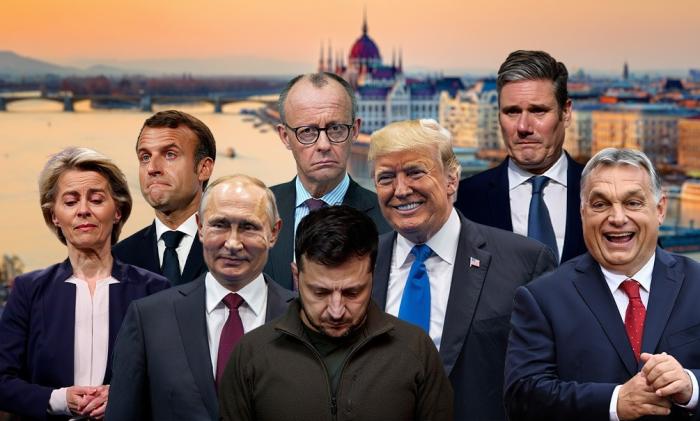
 southfront.press
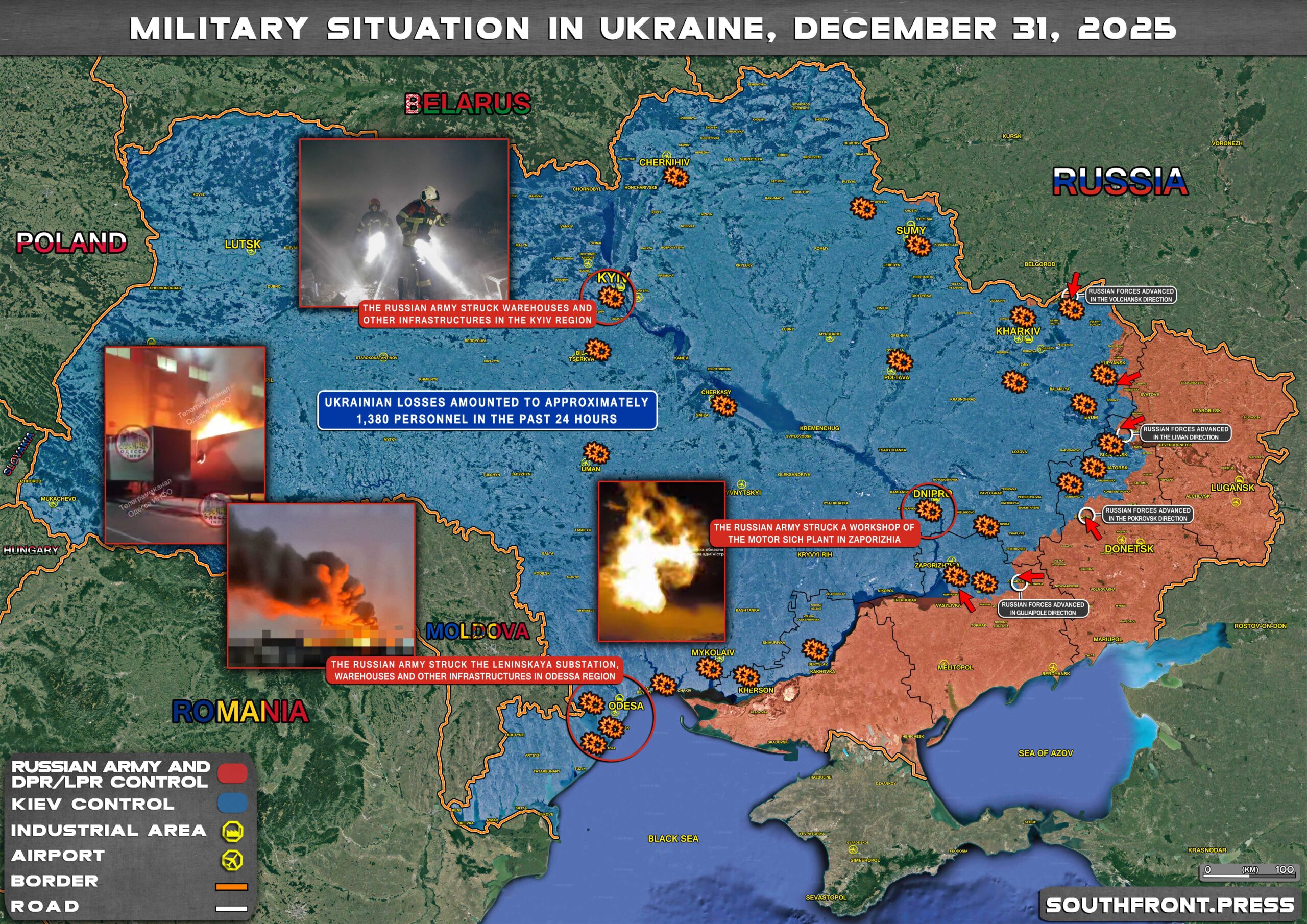 southfront.press
 sputnikglobe.com
 sputnikglobe.com
 sputnikglobe.com
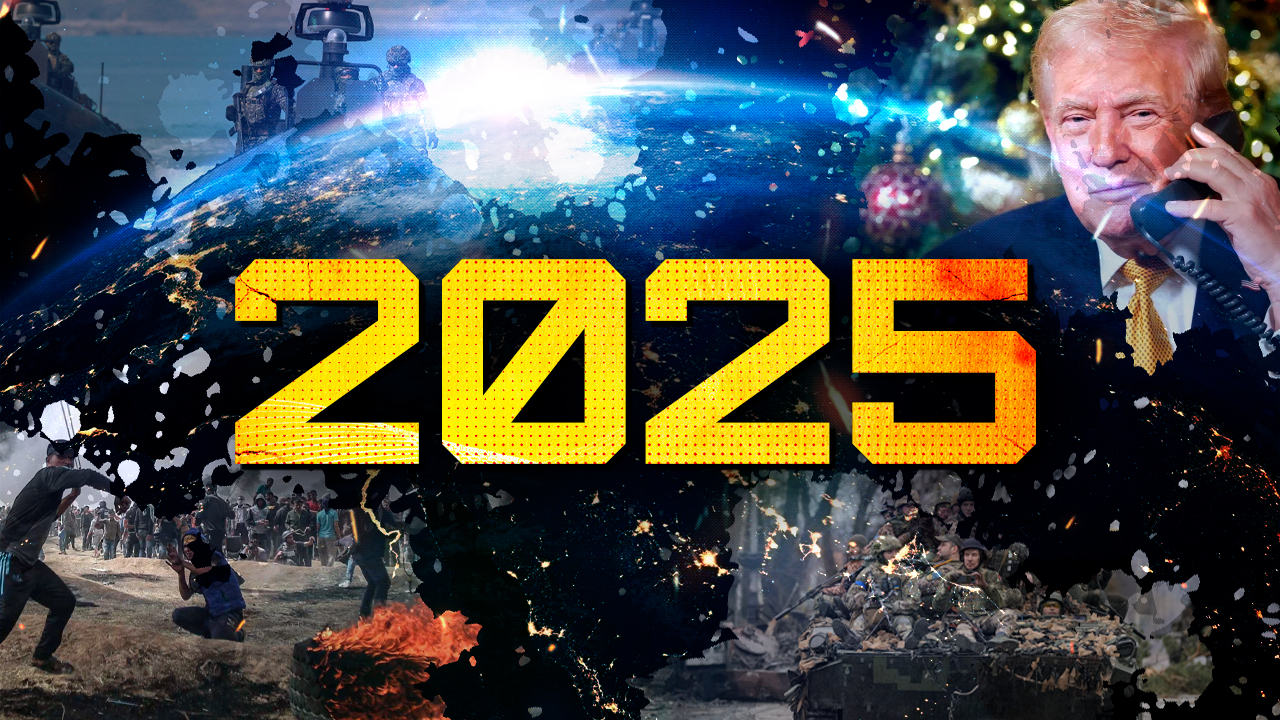 southfront.press
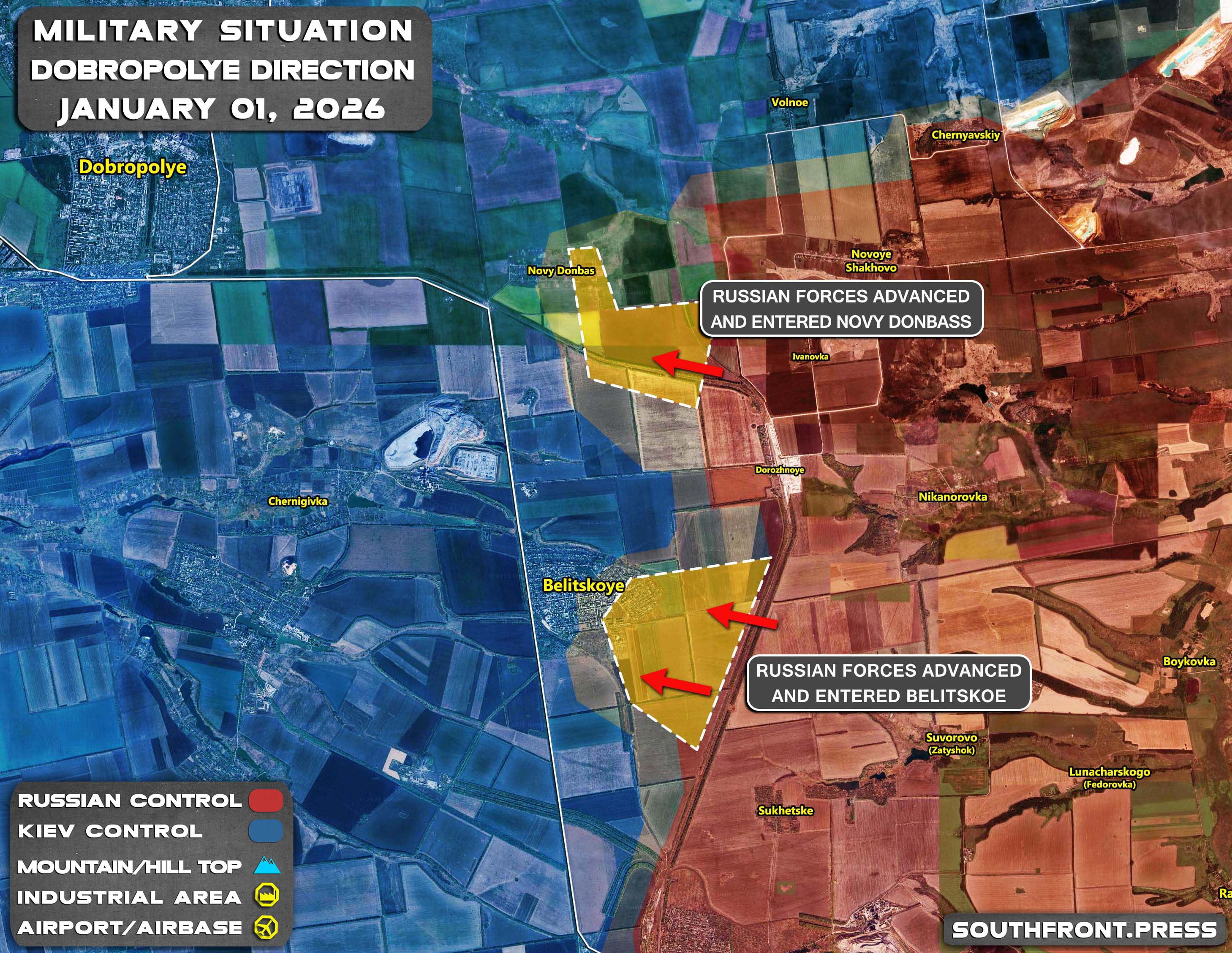 southfront.press
The Geopolitical Tipping Point: A Review Of 2025
The United States’ shift from transatlantic solidarity to isolationism, Russia’s decisive successes in Ukraine, and the formation of a new...
