EURUSD Technical Analysis – 28 JULY, 2026
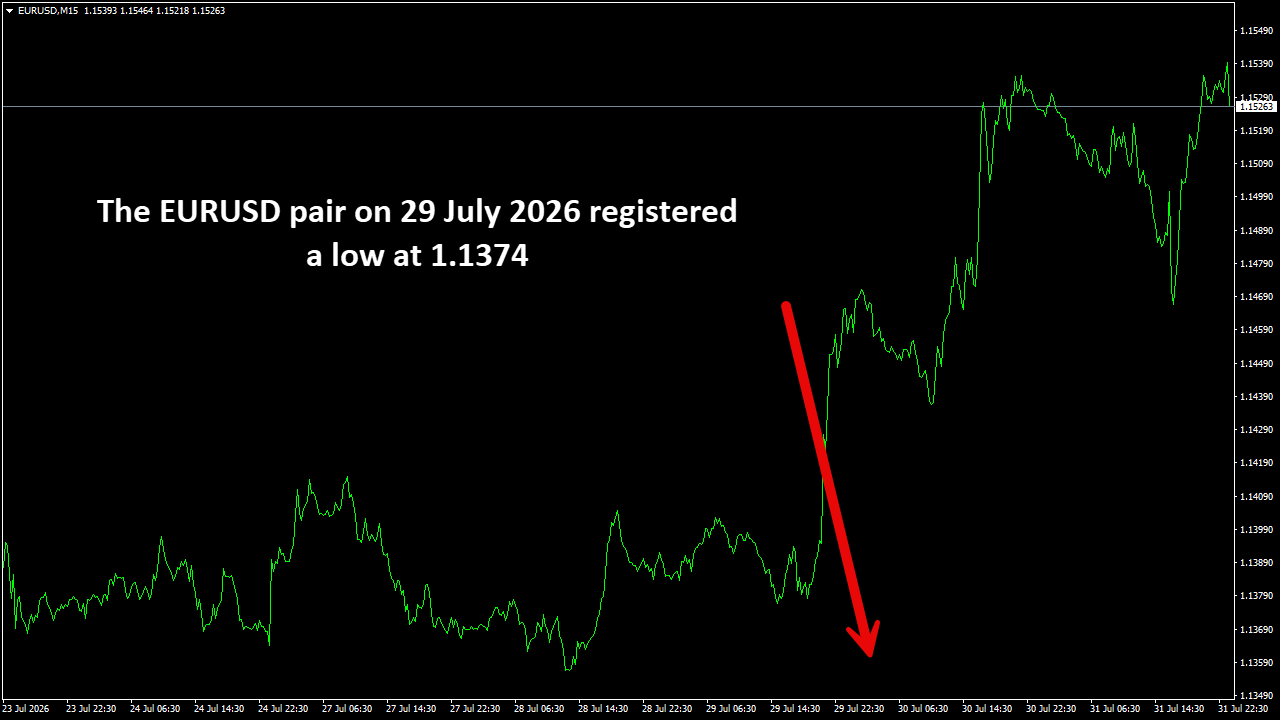
EURUSD – The EURUSD pair on 28 July 2026 registered a low at 1.1353
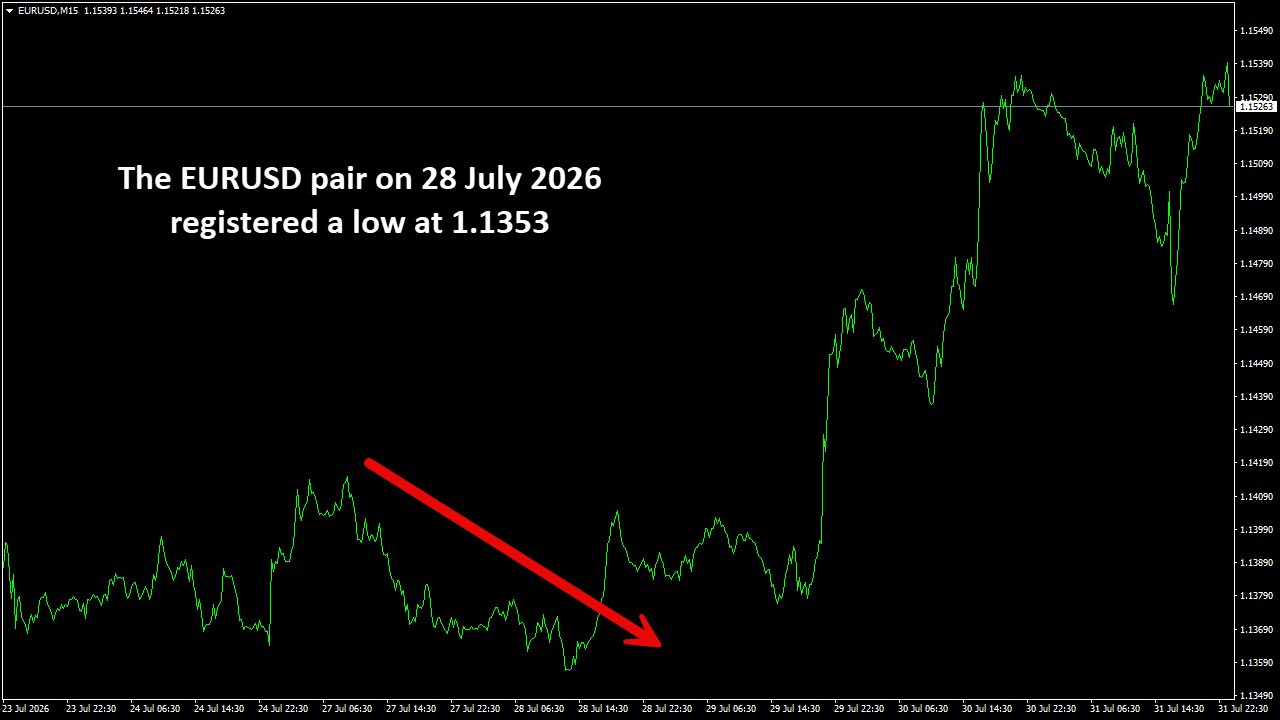
The EURUSD pair on 28 July 2026 registered a low at 1.1353, a level that reflects renewed dollar strength against the euro and highlights the corrective pressure that has emerged after the pair’s recent rally. This low is technically significant because it marks a retreat beneath the mid-July support zone around 1.1370–1.1380, where buyers had previously defended the downside. The move down to 1.1353 suggests that sellers have regained control, testing the resilience of support levels that have underpinned the euro’s recovery attempts.
On the daily chart, EURUSD remains within a moderately ascending channel that has guided price action since late June, but the 1.1353 low coincides with the lower boundary of this channel, reinforcing its importance as a technical marker. Momentum indicators reflect the cooling of bullish momentum: RSI has slipped into the 45–50 range, signalling growing downside pressure without yet reaching oversold conditions. The MACD histogram has narrowed, with convergence between the MACD and signal lines, suggesting that momentum is fading and that bearish sentiment is beginning to dominate. These readings point to vulnerability, with the potential for deeper declines if support levels fail to hold.
Support zones are clearly defined and critical to monitor. The immediate cushion lies around 1.1340–1.1350, a region that aligns with prior demand clusters and the 50-day moving average. A decisive break below this area would expose the pair to deeper retracement toward 1.1300, a psychological level that represents both structural support and a historical pivot. On the upside, resistance is now set at 1.1390–1.1410, where failed rallies have repeatedly stalled. A sustained close above this zone would be required to neutralize the bearish bias and reestablish bullish momentum. Until then, rallies are likely to be capped, with sellers viewing them as opportunities to re-enter short positions.
Fundamentally, the euro’s weakness against the dollar reflects a combination of monetary policy divergence and shifting risk sentiment. The European Central Bank’s cautious stance has provided limited support, while the Federal Reserve’s restrictive policy continues to bolster dollar demand through elevated yields. Global risk sentiment has also played a role, with investors showing renewed preference for the dollar amid concerns about slowing European growth and geopolitical uncertainty. This macro backdrop explains why EURUSD has struggled to sustain gains above 1.1400, with the 1.1353 low serving as a manifestation of these underlying forces.
In broader context, the 1.1353 low represents both a test of resilience and a potential springboard. For bears, it confirms the resumption of downward momentum and opens the path toward deeper retracement, potentially extending toward 1.1300 in the medium term. For bulls, it serves as a challenge, highlighting the need to defend key support zones to prevent a more pronounced decline. The coming sessions will determine whether EURUSD stabilizes above 1.1350 or continues to slide, with the outcome likely shaped by central bank commentary and global risk appetite. Ultimately, the 1.1353 low encapsulates the balance between euro fragility and dollar dominance, a dynamic that continues to define the pair’s near-term outlook.
#fxopen #forex #forexanalysis
Disclaimer: This analysis represents my own opinion only. It is not to be construed as an opinion, offer, solicitation, recommendation, or financial advice of the Companies operating under the FXOpen brand.
EURUSD – The EURUSD pair on 28 July 2026 registered a low at 1.1353
The EURUSD pair on 28 July 2026 registered a low at 1.1353, a level that reflects renewed dollar strength against the euro and highlights the corrective pressure that has emerged after the pair’s recent rally. This low is technically significant because it marks a retreat beneath the mid-July support zone around 1.1370–1.1380, where buyers had previously defended the downside. The move down to 1.1353 suggests that sellers have regained control, testing the resilience of support levels that have underpinned the euro’s recovery attempts.
On the daily chart, EURUSD remains within a moderately ascending channel that has guided price action since late June, but the 1.1353 low coincides with the lower boundary of this channel, reinforcing its importance as a technical marker. Momentum indicators reflect the cooling of bullish momentum: RSI has slipped into the 45–50 range, signalling growing downside pressure without yet reaching oversold conditions. The MACD histogram has narrowed, with convergence between the MACD and signal lines, suggesting that momentum is fading and that bearish sentiment is beginning to dominate. These readings point to vulnerability, with the potential for deeper declines if support levels fail to hold.
Support zones are clearly defined and critical to monitor. The immediate cushion lies around 1.1340–1.1350, a region that aligns with prior demand clusters and the 50-day moving average. A decisive break below this area would expose the pair to deeper retracement toward 1.1300, a psychological level that represents both structural support and a historical pivot. On the upside, resistance is now set at 1.1390–1.1410, where failed rallies have repeatedly stalled. A sustained close above this zone would be required to neutralize the bearish bias and reestablish bullish momentum. Until then, rallies are likely to be capped, with sellers viewing them as opportunities to re-enter short positions.
Fundamentally, the euro’s weakness against the dollar reflects a combination of monetary policy divergence and shifting risk sentiment. The European Central Bank’s cautious stance has provided limited support, while the Federal Reserve’s restrictive policy continues to bolster dollar demand through elevated yields. Global risk sentiment has also played a role, with investors showing renewed preference for the dollar amid concerns about slowing European growth and geopolitical uncertainty. This macro backdrop explains why EURUSD has struggled to sustain gains above 1.1400, with the 1.1353 low serving as a manifestation of these underlying forces.
In broader context, the 1.1353 low represents both a test of resilience and a potential springboard. For bears, it confirms the resumption of downward momentum and opens the path toward deeper retracement, potentially extending toward 1.1300 in the medium term. For bulls, it serves as a challenge, highlighting the need to defend key support zones to prevent a more pronounced decline. The coming sessions will determine whether EURUSD stabilizes above 1.1350 or continues to slide, with the outcome likely shaped by central bank commentary and global risk appetite. Ultimately, the 1.1353 low encapsulates the balance between euro fragility and dollar dominance, a dynamic that continues to define the pair’s near-term outlook.
#fxopen #forex #forexanalysis
Disclaimer: This analysis represents my own opinion only. It is not to be construed as an opinion, offer, solicitation, recommendation, or financial advice of the Companies operating under the FXOpen brand.