Daily Market Analytics - Forex

NZDUSD Technical Analysis – 26th JAN, 2026
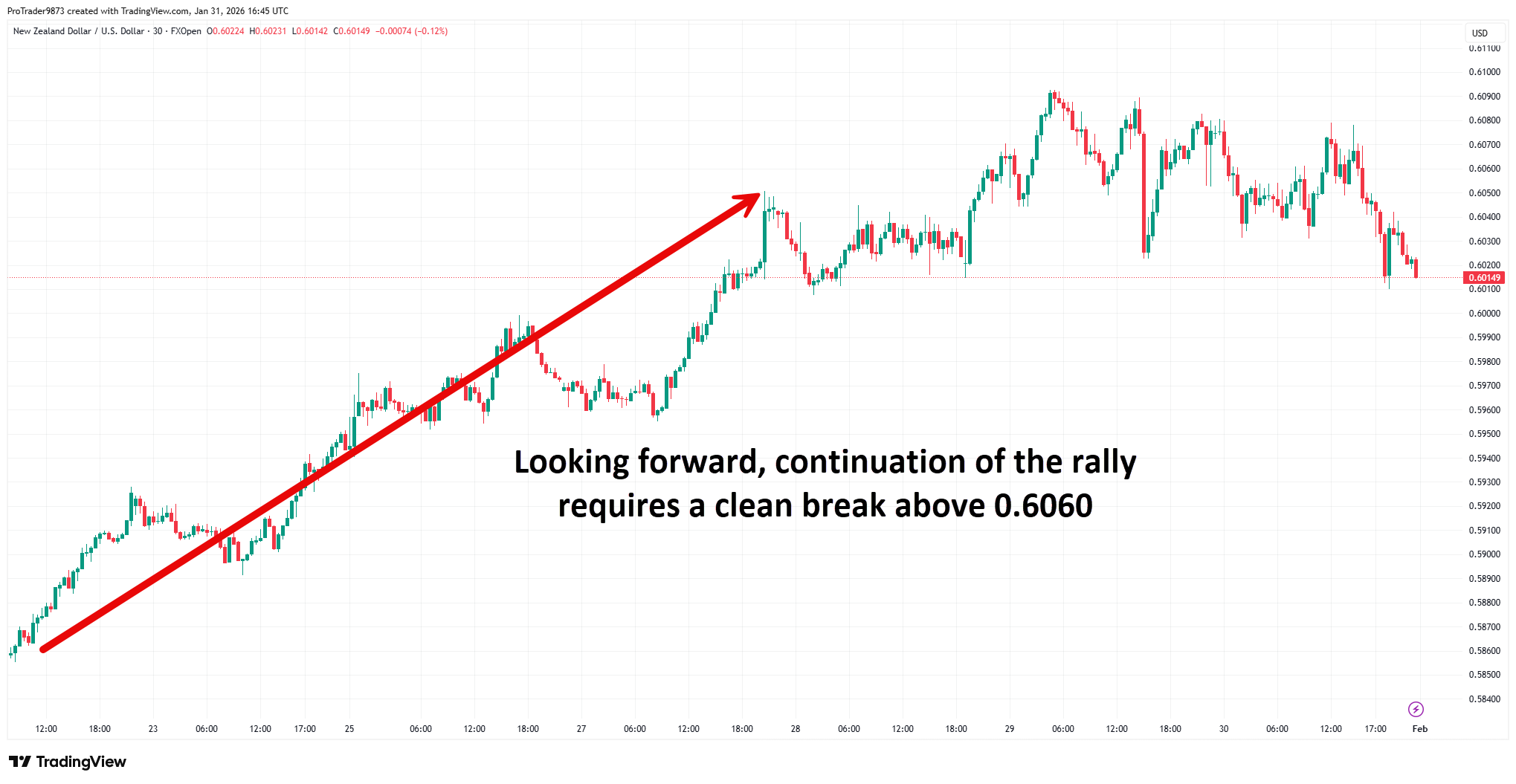
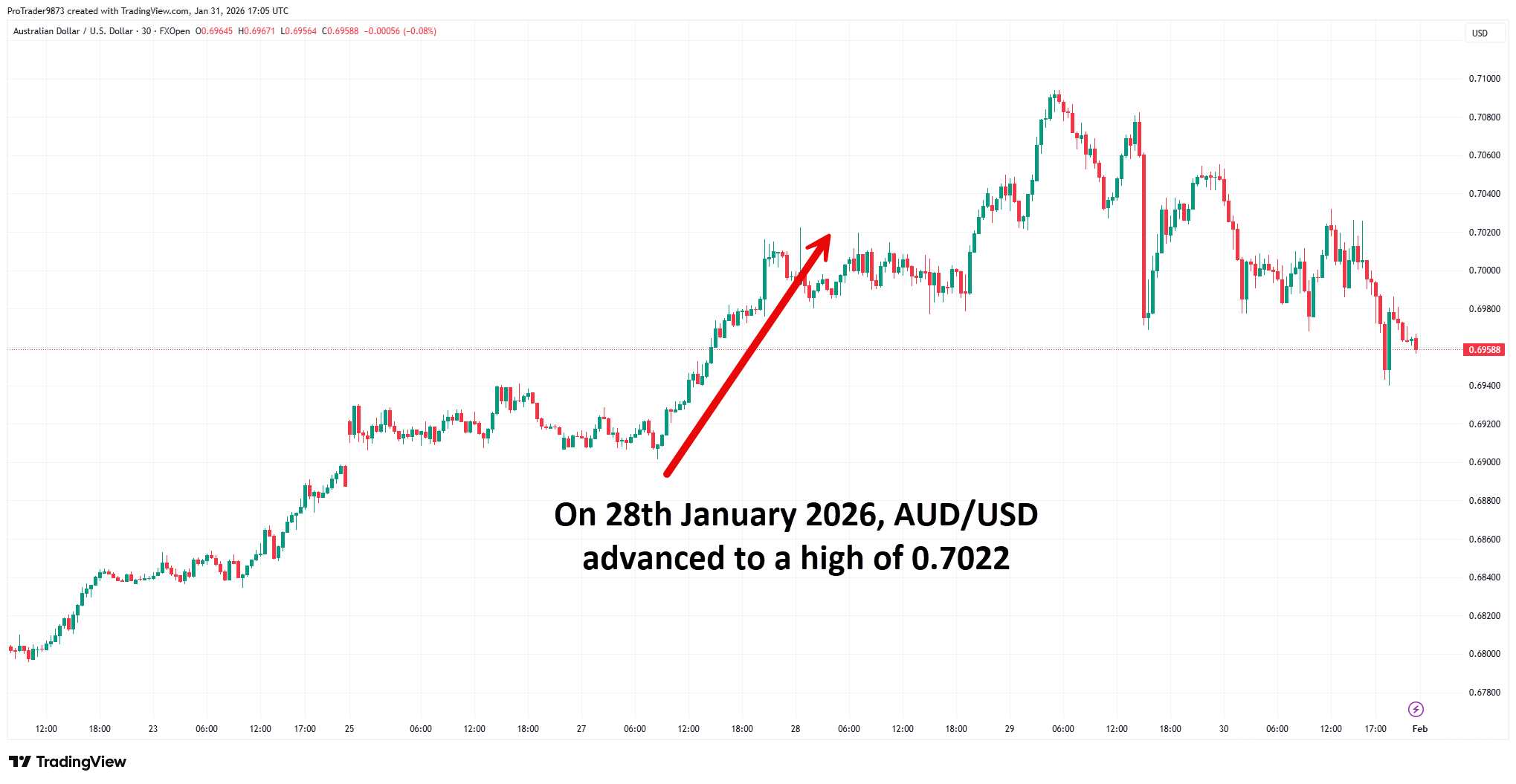
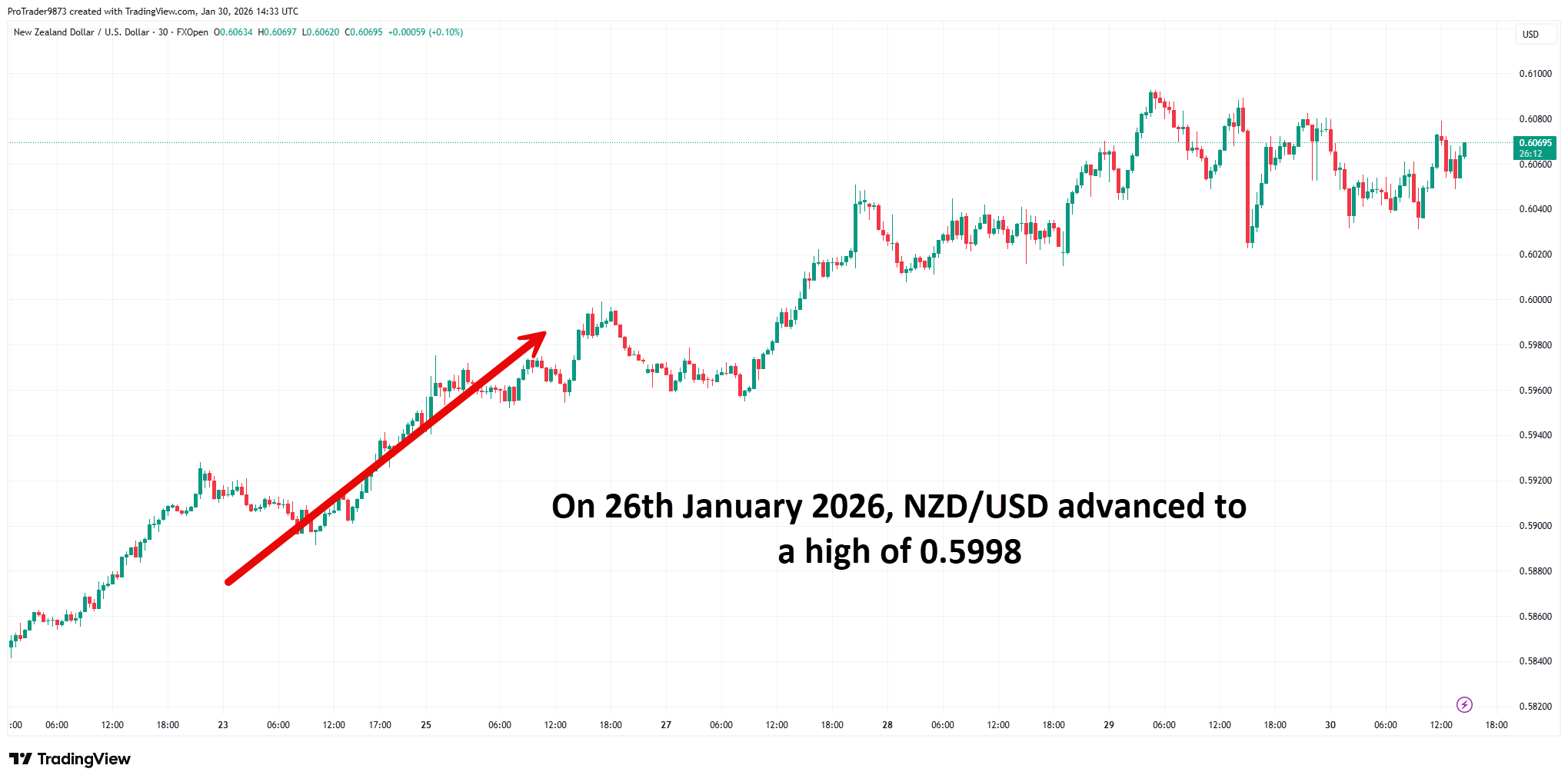
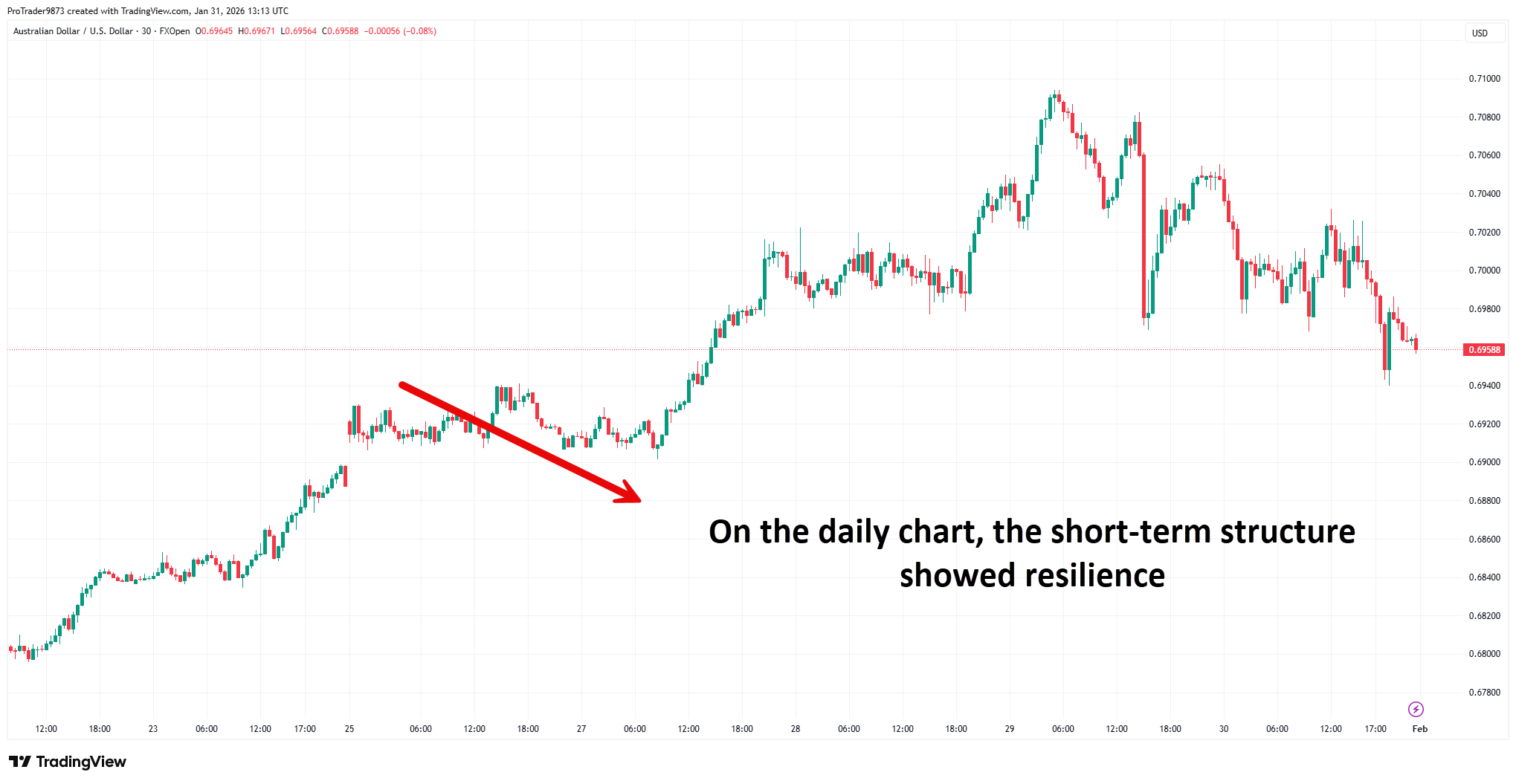
NZDUSD – On 26th January 2026, NZD/USD advanced to a high of 0.5998
NZDUSD-2026-01-30-20-03-48.png


NZD/USD Technical Analysis – 26th January 2026

On 26th January 2026, NZD/USD advanced to a high of 0.5998, a level that underscored the strength of its ongoing recovery but simultaneously highlighted the presence of firm supply near the 0.6000 psychological barrier. The candle structure was wide ranged with a pronounced upper wick, reflecting how buyers initially drove momentum but were met with resistance as sellers re entered to cap the advance. This rejection suggested that while the broader trend remained constructive, intraday enthusiasm was beginning to fade as the market approached overhead resistance.

On the daily chart, the short term structure remained supportive, with the 20 day moving average positioned around 0.5935, cushioning the advance. The 50 day average, rising from 0.5860, reinforced medium term bullish momentum, while the 200 day average at 0.5650 confirmed the longer term uptrend. Momentum indicators hinted at caution: RSI readings hovered near 67, edging into overbought territory, while MACD values were positive but beginning to flatten, suggesting that upside strength was losing intensity.

Intraday dynamics on the four hour chart revealed stretched conditions. Stochastic oscillators climbed into the upper 70s, flashing overbought signals. Price stalled as sellers defended the 0.5995–0.6000 band, while immediate support was layered at 0.5935 and 0.5900. Volatility compressed into a narrowing corridor, often a precursor to breakout attempts, but the balance of flows suggested hesitation rather than conviction.

The weekly perspective provided broader context. Since the October 2025 trough near 0.5520, NZD/USD has carved a rising channel, with successive higher lows confirming the resilience of the bullish framework. Average True Range readings around 0.0060 reflected controlled but directional swings. Fibonacci retracement mapping from the July 2025 peak at 0.6050 to the October low at 0.5520 highlighted key checkpoints: 38.2% at 0.5725, 50% at 0.5785, and 61.8% at 0.5845. The 0.5998 high extended well beyond these retracement markers, reinforcing its role as a decisive resistance zone where sellers were expected to regroup.

Sentiment at this juncture was shaped by the tension between short term overextension and longer term bullish conviction. Institutional flows appeared to fade near the 0.6000 barrier, while retail positioning remained cautious given the proximity to stretched oscillator readings. The ability of the pair to sustain above 0.5935 was critical, as holding this level would preserve the bullish narrative and invite renewed buying interest.

Looking forward, continuation of the rally requires a clean break above 0.6000, which would open the path toward 0.6050 and eventually 0.6100, aligning with prior swing highs. Conversely, a slip back below 0.5935 would expose the pair to corrective pressure toward 0.5900 and 0.5845, levels that coincide with retracement support and medium term averages. Until a decisive breakout occurs, range bound trading between 0.5935 and 0.6000 is likely to dominate, offering tactical opportunities for short term traders while the broader uptrend remains intact.

In summary, NZD/USD’s climb to 0.5998 on 26th January 2026 was not a clean breakout but rather a reaffirmation of overhead resistance. The interplay of moving averages, Fibonacci retracement, and momentum signals pointed to a market pausing at a critical juncture, with sellers defending supply and buyers awaiting confirmation for the next leg higher.

#fxopen #forex #forexanalysis

Disclaimer: This analysis represents my own opinion only. It is not to be construed as an opinion, offer, solicitation, recommendation, or financial advice of the Companies operating under the FXOpen brand.

For in-depth analysis, please check ...
 
USDCAD Technical Analysis – 26th JAN, 2026
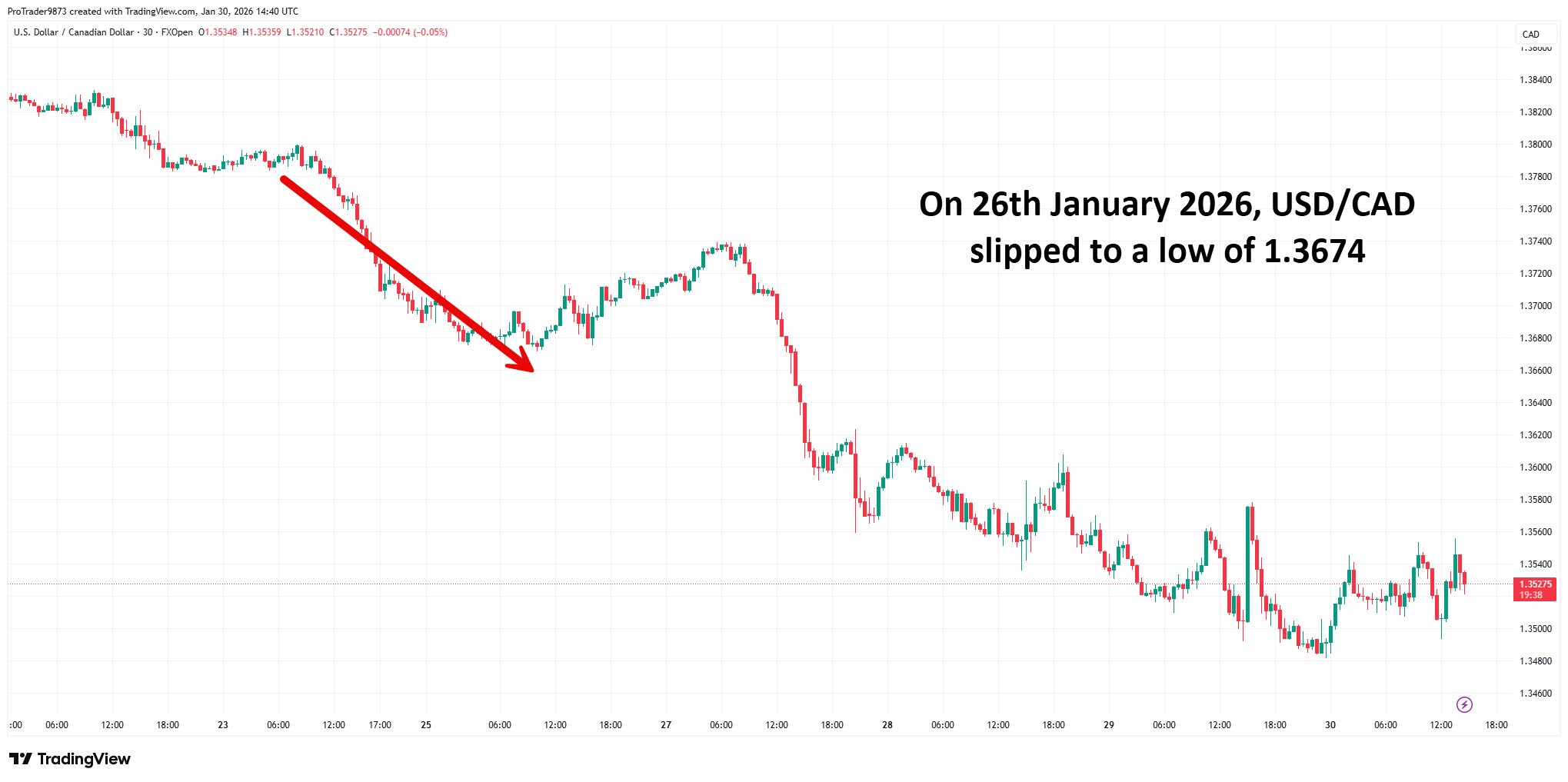
USDCAD – On 26th January 2026, USD/CAD slipped to a low of 1.3674

USDCAD-2026-01-30-20-10-22.png


USD/CAD Technical Analysis – 26th January 2026
On 26th January 2026, USD/CAD slipped to a low of 1.3674, a level that underscored the pair’s corrective pressure while simultaneously highlighting the presence of defensive bids near the 1.3670 psychological threshold. The candle structure was broad ranged with a pronounced lower wick, reflecting how sellers initially pressed momentum but were met with firm demand as buyers stepped in to absorb supply. This rejection suggested that while the broader trend remained constructive, short term exhaustion was beginning to emerge at this support zone.

On the daily chart, the short term structure showed resilience. The 20 day moving average hovered near 1.3710, cushioning the downside and acting as immediate support. The 50 day average, positioned around 1.3655, was sloping gently upward, reinforcing medium term bullish undertones. The 200 day average at 1.3565 confirmed that the longer term framework remained constructive, with the broader trend still favoring buyers despite the corrective dip. Momentum readings reflected caution: RSI values hovered near 43, leaning toward neutral to bearish territory, while MACD lines were marginally negative but beginning to flatten, suggesting that downside strength was losing intensity.

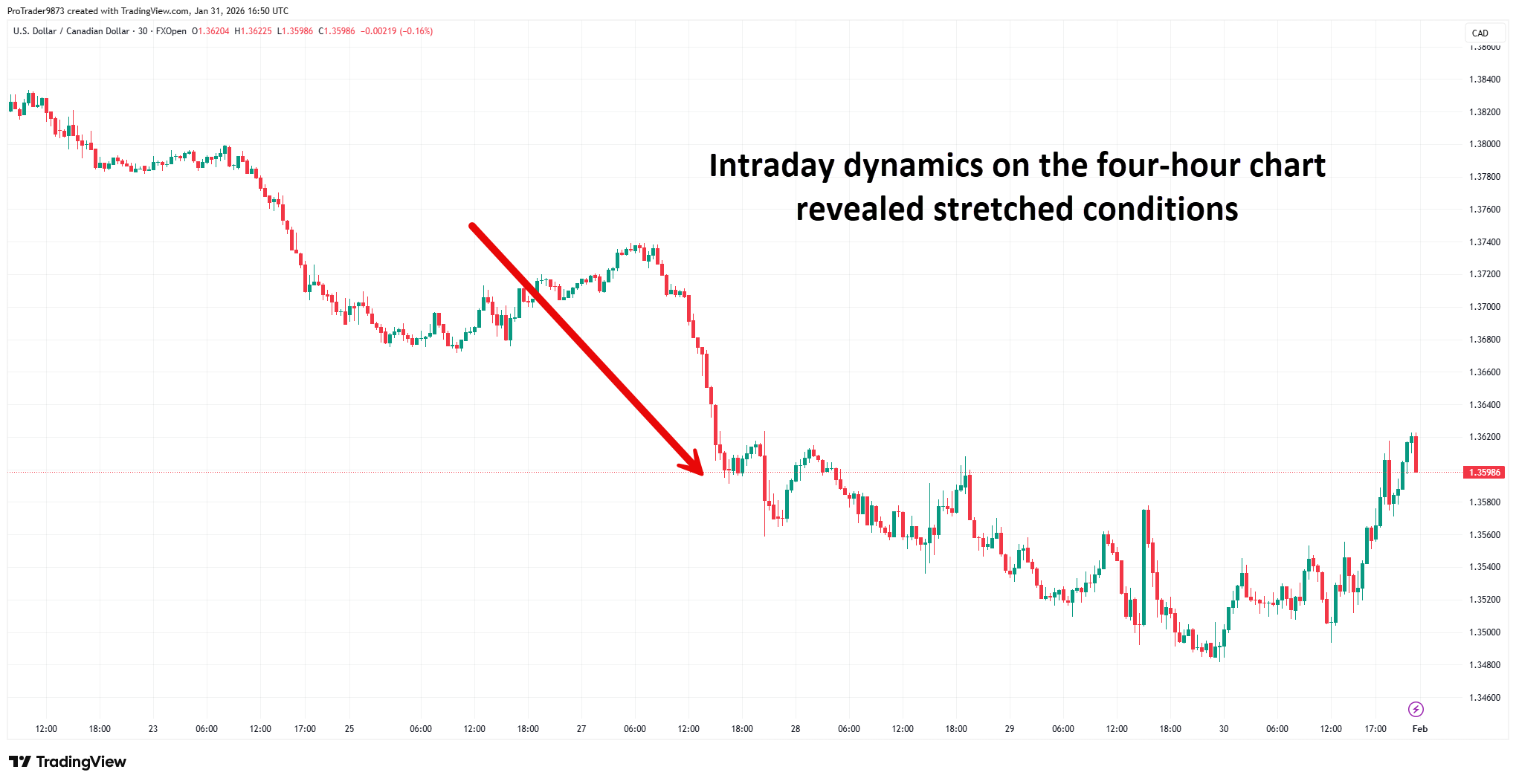
Intraday dynamics on the four hour chart revealed stretched conditions. Stochastic oscillators dipped into the low 30s, flashing oversold signals. Price stalled as buyers defended the 1.3670–1.3680 band, while resistance was layered at 1.3710 and 1.3750. Volatility compressed into a narrowing corridor, often a precursor to breakout attempts, but the balance of flows suggested hesitation rather than conviction.

The weekly perspective provided broader context. Since the October 2025 trough near 1.3350, USD/CAD has carved a rising channel, with successive higher lows confirming the resilience of the bullish framework. Average True Range readings around 0.0070 reflected controlled but directional swings. Fibonacci retracement mapping from the July 2025 peak at 1.3860 to the October low at 1.3350 highlighted key checkpoints: 38.2% at 1.3545, 50% at 1.3605, and 61.8% at 1.3665. The 1.3674 low aligned closely with the 61.8% retracement zone, underscoring its importance as a support area where buyers were expected to regroup.

Sentiment at this juncture was shaped by the tension between short term corrective pressure and longer term bullish conviction. Institutional flows appeared to accumulate near retracement support, while retail positioning remained cautious given the proximity to stretched oscillator readings. The ability of the pair to sustain above 1.3670 was critical, as holding this level would preserve the bullish narrative and invite renewed buying interest.

Looking forward, continuation of the recovery requires a clean break above 1.3710, which would open the path toward 1.3750 and eventually 1.3860, aligning with prior swing highs. Conversely, a slip back below 1.3670 would expose the pair to corrective pressure toward 1.3665 and 1.3605, levels that coincide with retracement support and medium term averages. Until a decisive breakout occurs, range bound trading between 1.3670 and 1.3710 is likely to dominate, offering tactical opportunities for short term traders while the broader uptrend remains intact.

In summary, USD/CAD’s dip to 1.3674 on 26th January 2026 was less a breakdown and more a reaffirmation of structural support. The interplay of moving averages, Fibonacci retracement, and momentum signals pointed to a market pausing at a critical juncture, with buyers defending demand and sellers awaiting confirmation for the next directional move.

#fxopen #forex #forexanalysis

Disclaimer: This analysis represents my own opinion only. It is not to be construed as an opinion, offer, solicitation, recommendation, or financial advice of the Companies operating under the FXOpen brand.

For in-depth analysis, please check ...
 
USDCHF Technical Analysis – 26th JAN, 2026
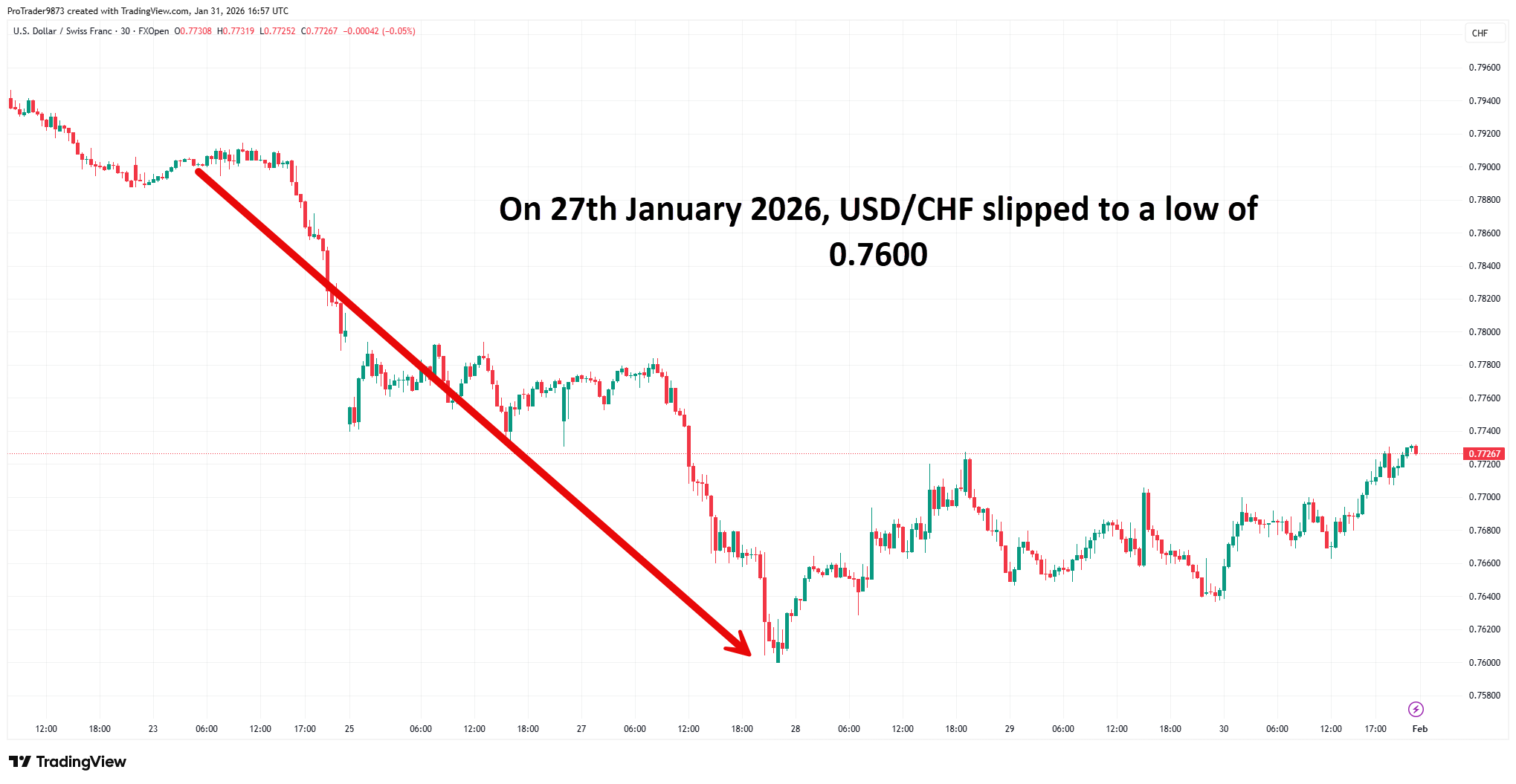
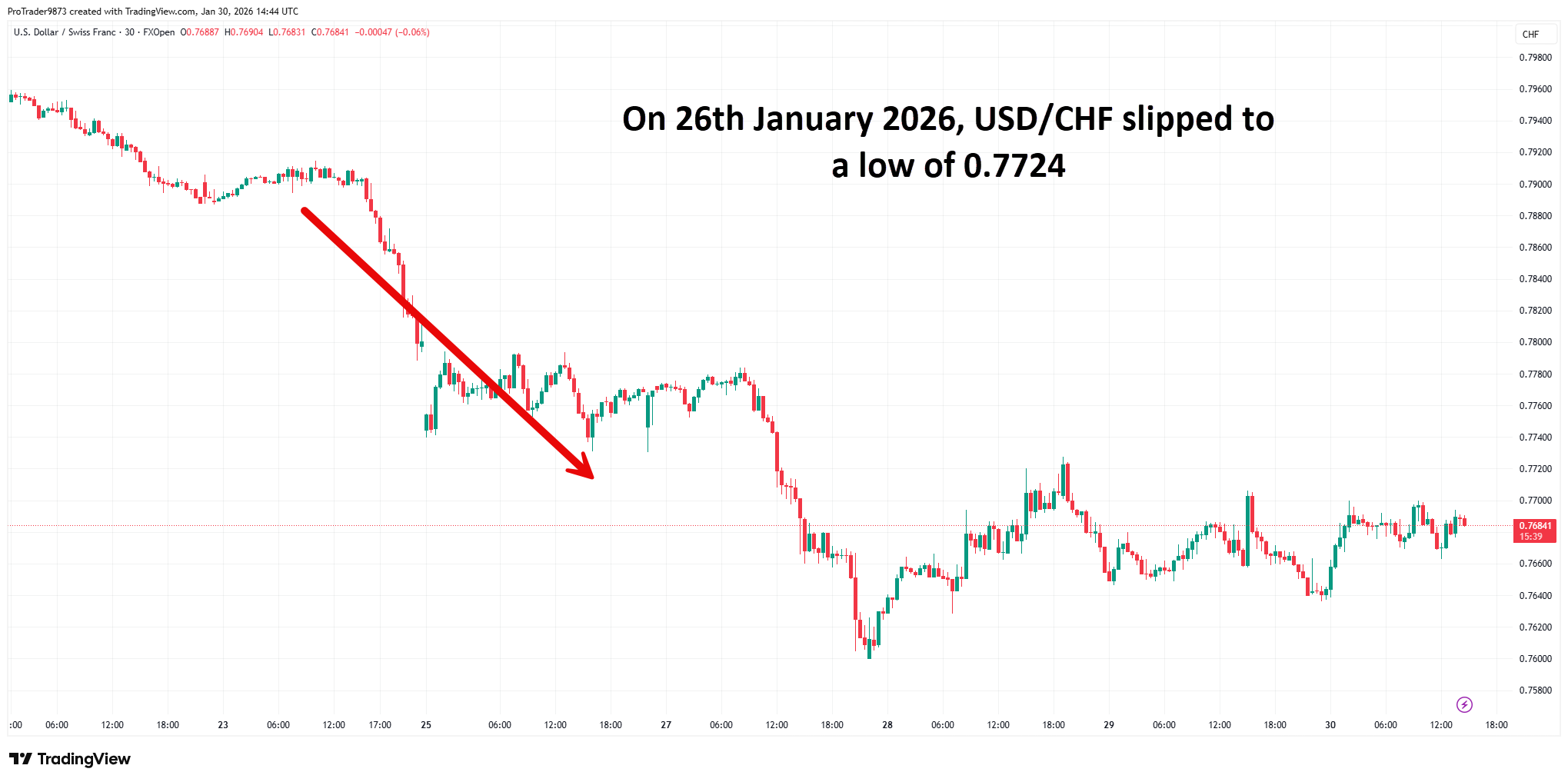
USDCHF – On 26th January 2026, USD/CHF slipped to a low of 0.7724

USDCHF-2026-01-30-20-14-22.png


USD/CHF Technical Analysis – 26th January 2026

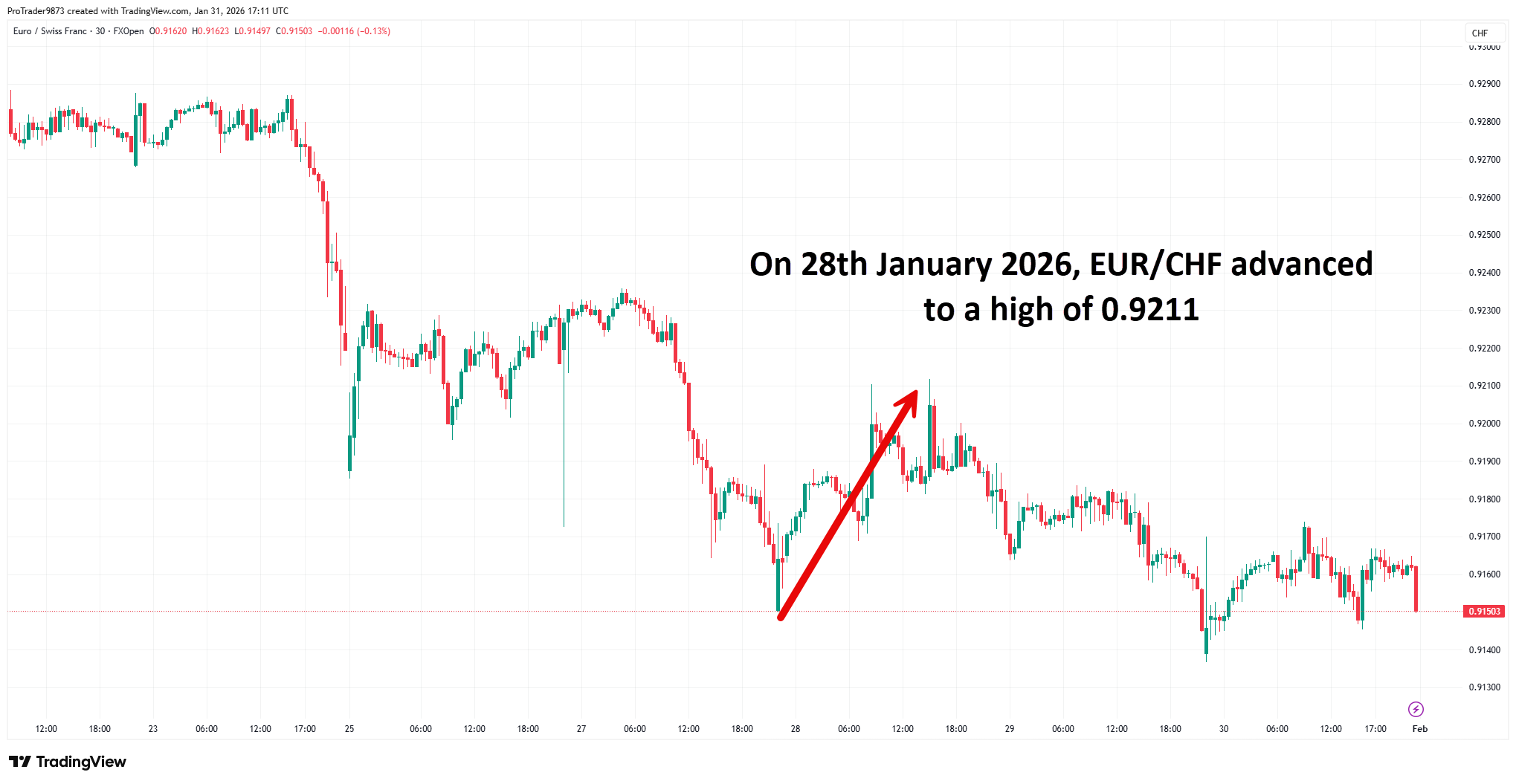
On 26th January 2026, USD/CHF slipped to a low of 0.7724, a level that underscored the pair’s ongoing bearish trajectory and highlighted the presence of defensive bids near the 0.7720 psychological threshold. The candle structure was broad ranged with a pronounced lower wick, reflecting how sellers initially pressed momentum but were met with firm demand as buyers stepped in to absorb supply. This rejection suggested that while the broader trend remained weak, short term exhaustion was beginning to emerge at this support zone.

On the daily chart, the short term structure leaned bearish, with the 20 day moving average positioned around 0.7790, acting as immediate overhead resistance. The 50 day average, sloping downward from 0.7905, reinforced medium term weakness, while the 200 day average at 0.8150 confirmed the longer term bearish bias. Momentum indicators reflected caution: RSI readings hovered near 36, edging into oversold territory, while MACD values remained negative but showed signs of flattening, suggesting that downside strength was losing intensity.

Intraday dynamics on the four hour chart revealed stretched conditions. Stochastic oscillators dipped into the low 30s, flashing oversold signals. Price stalled as buyers defended the 0.7720–0.7725 band, while resistance was layered at 0.7790 and 0.7850. Volatility compressed into a narrowing corridor, often a precursor to breakout attempts, but the balance of flows suggested hesitation rather than conviction.

The weekly perspective provided broader context. Since the August 2025 peak near 0.8520, USD/CHF has carved a descending sequence of lower highs and lower lows, underscoring the resilience of the bearish framework. Average True Range readings around 0.0060 reflected controlled but directional swings. Fibonacci retracement mapping from the August 2025 high at 0.8520 to the January 2026 low at 0.7724 highlighted key checkpoints: 38.2% at 0.8020, 50% at 0.8120, and 61.8% at 0.8220. The 0.7724 low marked the completion of this downward leg, reinforcing its role as a decisive support zone where buyers were expected to regroup.

Sentiment at this juncture was shaped by the tension between short term oversold conditions and longer term bearish conviction. Institutional flows appeared to accumulate cautiously near the 0.7720 floor, while retail positioning remained defensive given the prevailing downtrend. The ability of the pair to sustain above 0.7724 was critical, as holding this level would preserve the corrective narrative and invite renewed buying interest.

Looking forward, continuation of the recovery requires a clean break above 0.7790, which would open the path toward 0.7905 and eventually 0.8020, aligning with Fibonacci retracement checkpoints. Conversely, a slip back below 0.7720 would expose the pair to further downside pressure toward 0.7680 and 0.7600, levels that coincide with prior swing lows and medium term support. Until a decisive breakout occurs, range bound trading between 0.7720 and 0.7790 is likely to dominate, offering tactical opportunities for short term traders while the broader downtrend remains intact.

In summary, USD/CHF’s dip to 0.7724 on 26th January 2026 was less a breakdown and more a reaffirmation of structural support. The interplay of moving averages, Fibonacci retracement, and momentum signals pointed to a market pausing at a critical juncture, with buyers defending demand and sellers awaiting confirmation for the next directional move.

#fxopen #forex #forexanalysis

Disclaimer: This analysis represents my own opinion only. It is not to be construed as an opinion, offer, solicitation, recommendation, or financial advice of the Companies operating under the FXOpen brand.

For in-depth analysis, please check ...
 
USDJPY Technical Analysis – 26th JAN, 2026
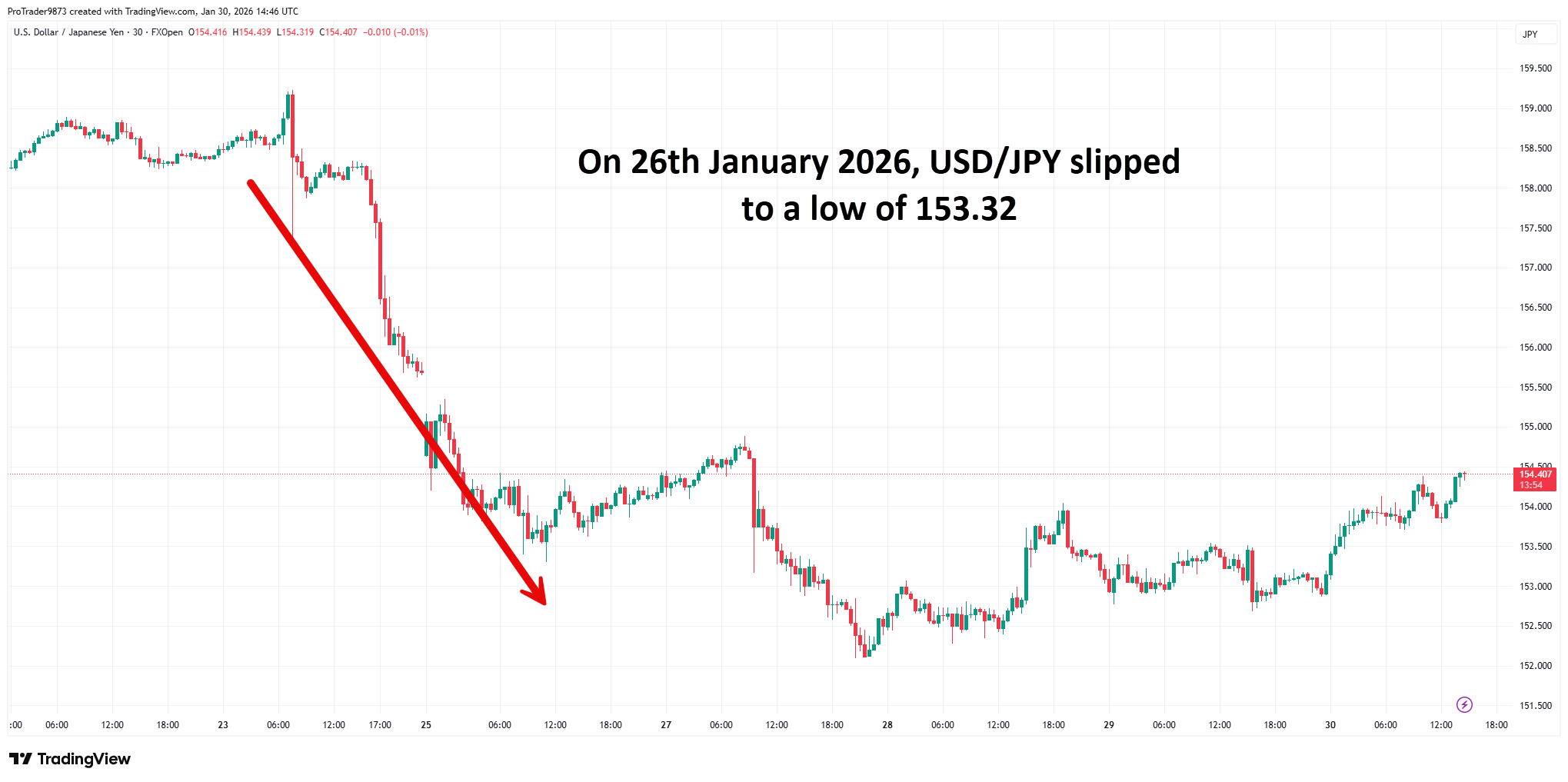
USDJPY - On 26th January 2026, USD/JPY slipped to a low of 153.32

USDJPY-2026-01-30-20-16-05.png


USD/JPY Technical Analysis – 26th January 2026

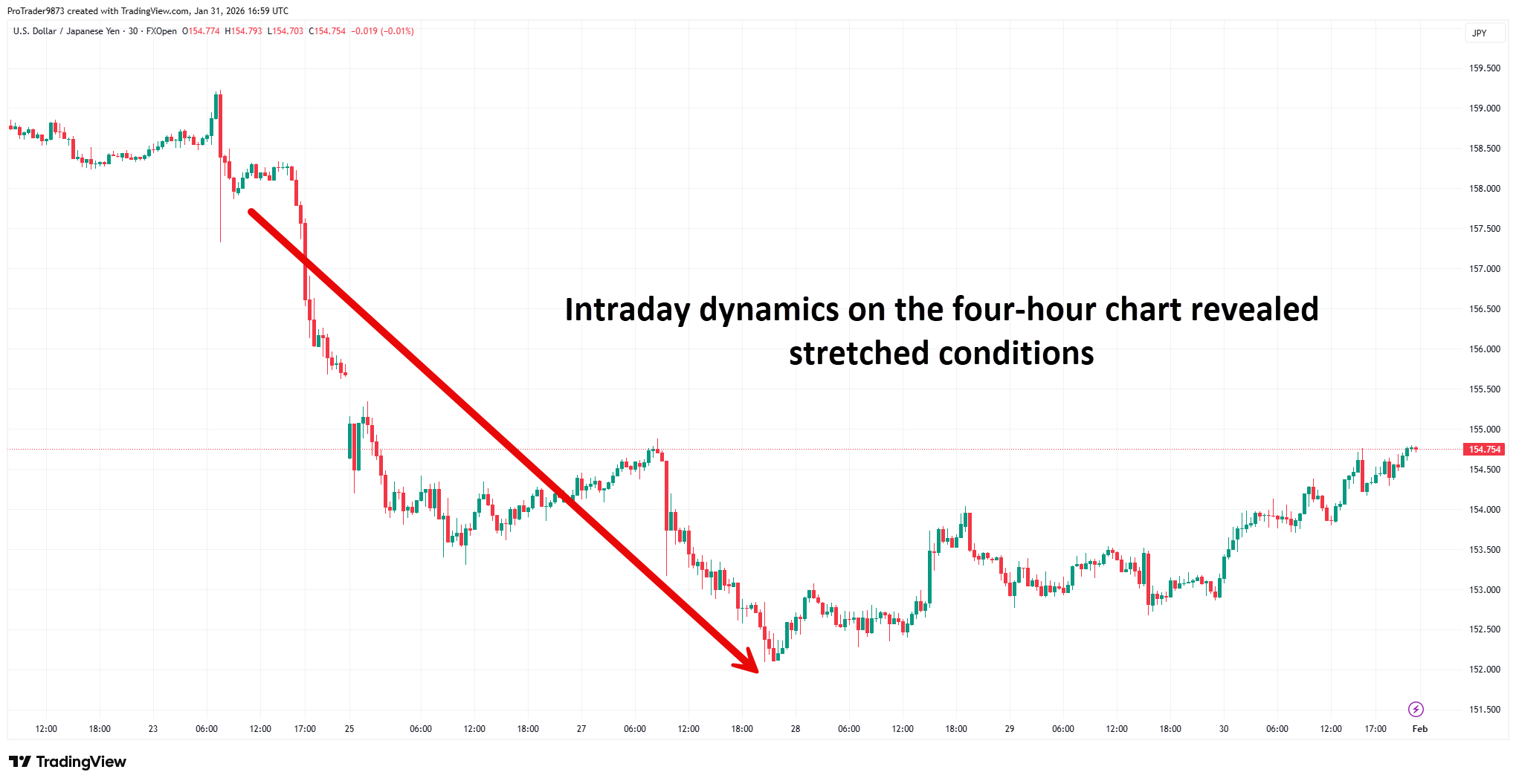
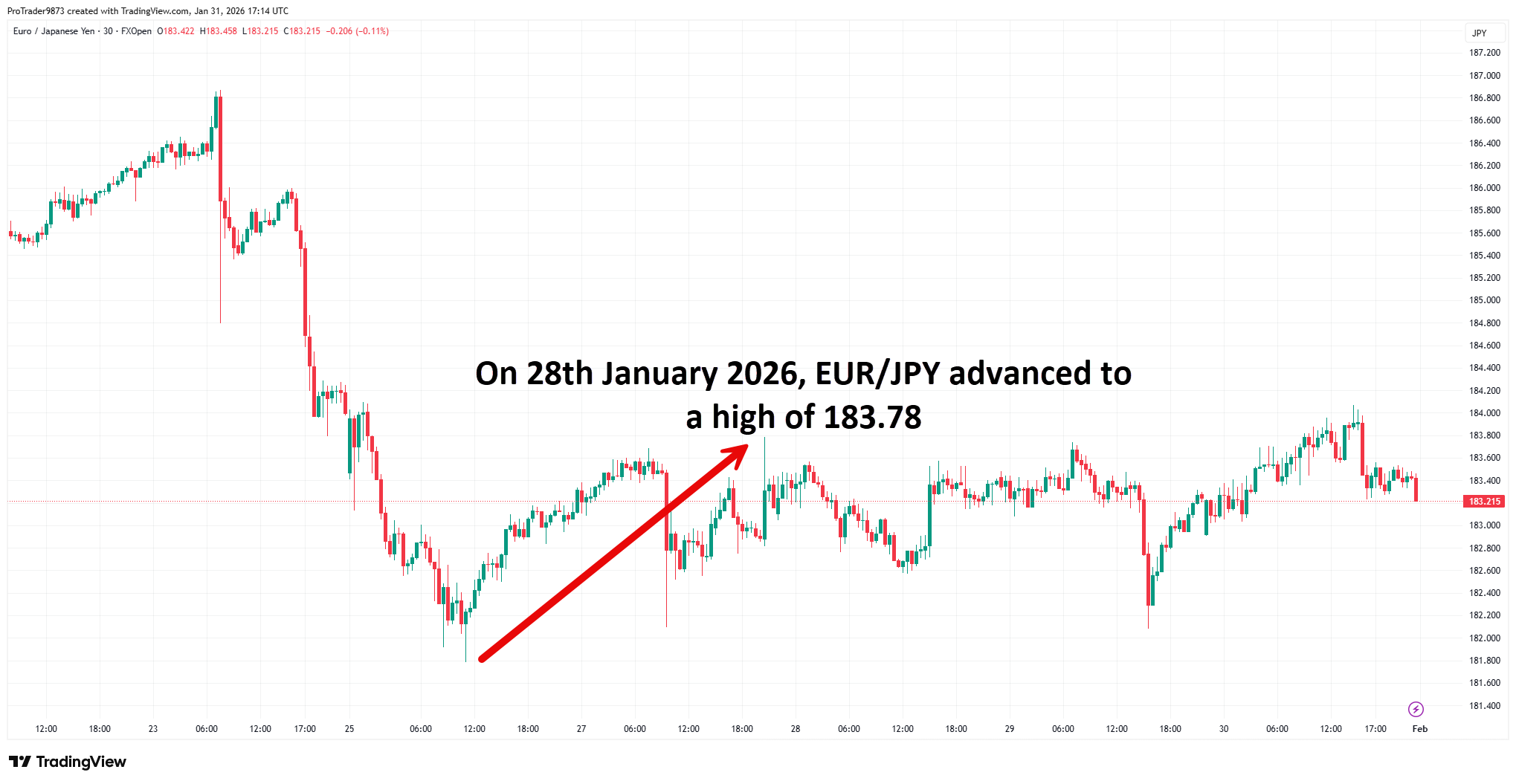
On 26th January 2026, USD/JPY slipped to a low of 153.32, a level that underscored the pair’s corrective pressure while simultaneously highlighting the presence of defensive bids near the 153.30 psychological threshold. The candle structure was broad ranged with a pronounced lower wick, reflecting how sellers initially pressed momentum but were met with firm demand as buyers stepped in to absorb supply. This rejection suggested that while the broader trend remained constructive, short term exhaustion was beginning to emerge at this support zone.

On the daily chart, the short term structure showed resilience. The 20 day moving average hovered near 154.10, cushioning the downside and acting as immediate support. The 50 day average, positioned around 155.40, was sloping gently upward, reinforcing medium term bullish undertones. The 200 day average at 151.20 confirmed that the longer term framework remained constructive, with the broader trend still favoring buyers despite the corrective dip. Momentum readings reflected caution: RSI values hovered near 41, leaning toward neutral to bearish territory, while MACD lines were marginally negative but beginning to flatten, suggesting that downside strength was losing intensity.

Intraday dynamics on the four hour chart revealed stretched conditions. Stochastic oscillators dipped into the low 30s, flashing oversold signals. Price stalled as buyers defended the 153.30–153.40 band, while resistance was layered at 154.10 and 155.00. Volatility compressed into a narrowing corridor, often a precursor to breakout attempts, but the balance of flows suggested hesitation rather than conviction.

The weekly perspective provided broader context. Since the September 2025 trough near 147.50, USD/JPY has carved a rising channel, with successive higher lows confirming the resilience of the bullish framework. Average True Range readings around 1.45 reflected controlled but directional swings. Fibonacci retracement mapping from the July 2025 peak at 160.25 to the September low at 147.50 highlighted key checkpoints: 38.2% at 152.40, 50% at 153.90, and 61.8% at 155.40. The 153.32 low aligned closely with the 50% retracement zone, underscoring its importance as a support area where buyers were expected to regroup.

Sentiment at this juncture was shaped by the tension between short term corrective pressure and longer term bullish conviction. Institutional flows appeared to accumulate near retracement support, while retail positioning remained cautious given the proximity to stretched oscillator readings. The ability of the pair to sustain above 153.30 was critical, as holding this level would preserve the bullish narrative and invite renewed buying interest.

Looking forward, continuation of the recovery requires a clean break above 155.40, which would open the path toward 157.00 and eventually 160.25, aligning with prior swing highs. Conversely, a slip back below 153.30 would expose the pair to corrective pressure toward 152.40 and 150.80, levels that coincide with retracement support and medium term averages. Until a decisive breakout occurs, range bound trading between 153.30 and 155.40 is likely to dominate, offering tactical opportunities for short term traders while the broader uptrend remains intact.

In summary, USD/JPY’s dip to 153.32 on 26th January 2026 was less a breakdown and more a reaffirmation of structural support. The interplay of moving averages, Fibonacci retracement, and momentum signals pointed to a market pausing at a critical juncture, with buyers defending demand and sellers awaiting confirmation for the next directional move.

#fxopen #forex #forexanalysis

Disclaimer: This analysis represents my own opinion only. It is not to be construed as an opinion, offer, solicitation, recommendation, or financial advice of the Companies operating under the FXOpen brand.

For in-depth analysis, please check ...
 
Back
Top