Daily Market Analytics - Forex

EURUSD Technical Analysis – 26 JUNE, 2026
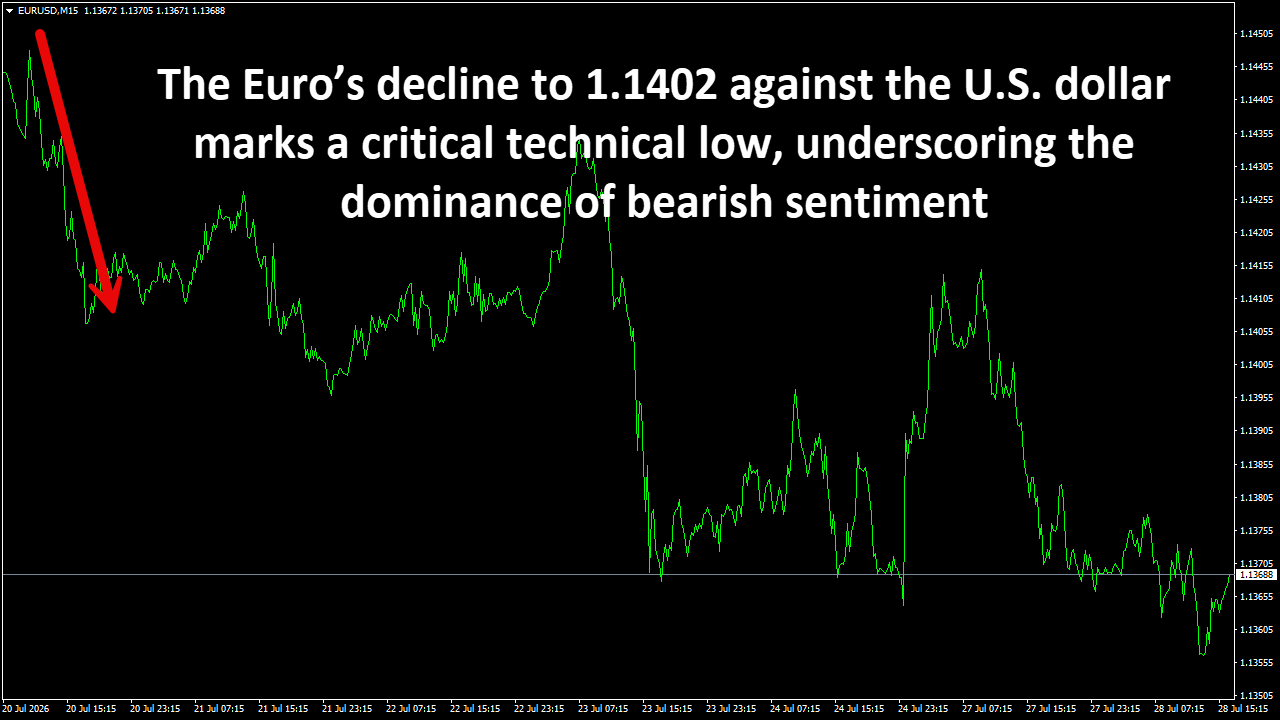
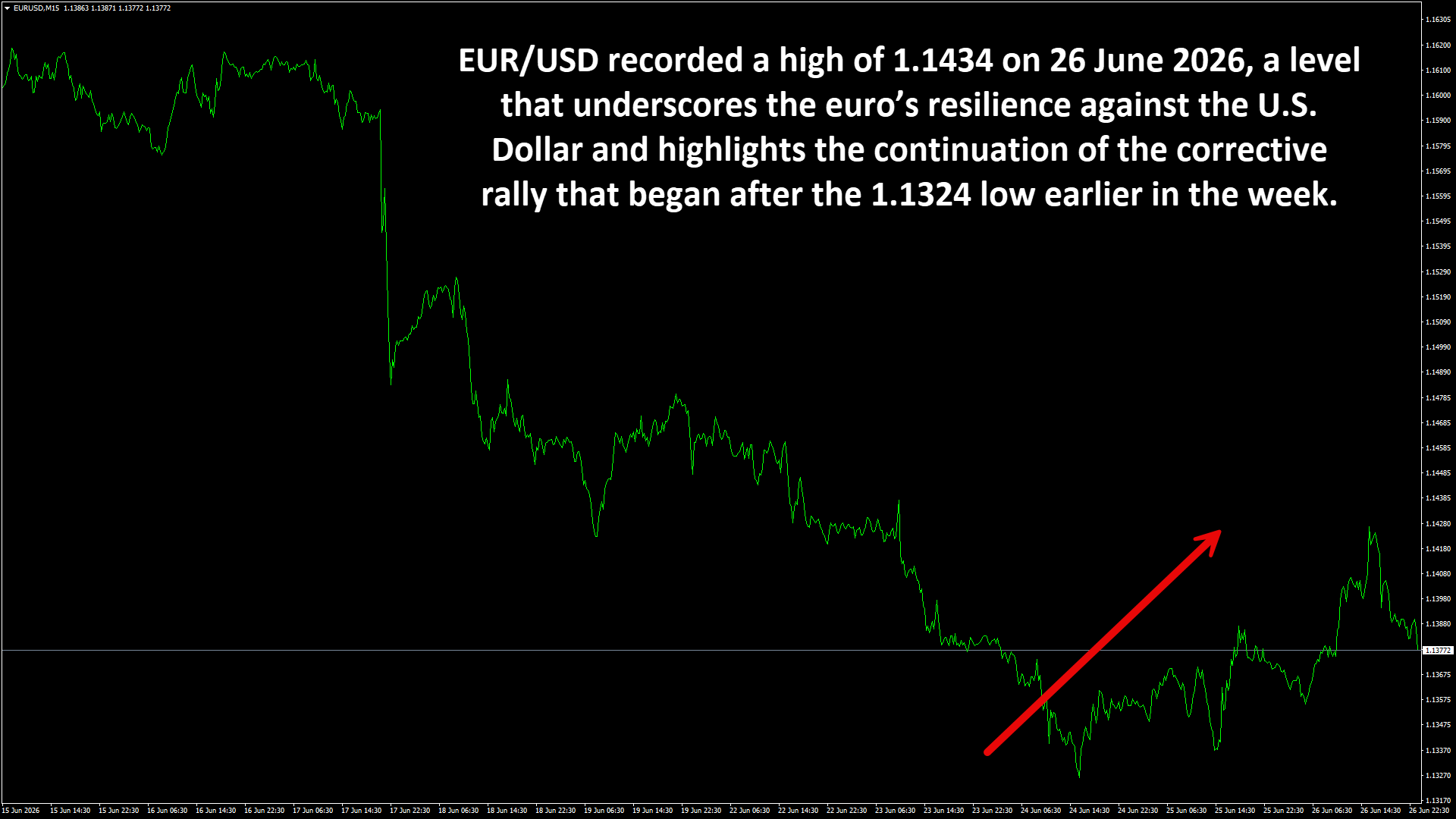
EURUSD – EUR/USD recorded a high of 1.1434 on 26 June 2026, a level that underscores the euro’s resilience against the U.S. Dollar and highlights the continuation of the corrective rally that began after the 1.1324 low earlier in the week.
ZepNGe6c_o.png


EUR/USD recorded a high of 1.1434 on 26 June 2026, a level that underscores the euro’s resilience against the U.S. Dollar and highlights the continuation of the corrective rally that began after the 1.1324 low earlier in the week. This high is significant because it represents a renewed test of resistance within the broader structure, reflecting both technical strength and the macroeconomic divergence between the eurozone and U.S. economies. The move to 1.1434 illustrates the market’s ability to sustain upward momentum while probing levels that have historically capped rallies.

From a technical perspective, the 1.1434 high sits just below the resistance band at 1.1450–1.1500, which has historically acted as a supply zone. The pair has been trading within a fragile ascending channel since mid June, with the lower boundary near 1.1320 and the upper boundary extending toward 1.1500. The rebound from 1.1324 confirmed buyers’ willingness to defend the lower boundary, and the subsequent extension toward 1.1434 suggests that buyers remain firmly in control. A sustained daily close above 1.1450 would be required to unlock upside potential toward 1.1500 and 1.1550, levels last tested in early Q2. On the downside, immediate support lies at 1.1380, followed by the more critical 1.1320 pivot, which has acted as a structural floor during the recent rally. A breakdown below 1.1320 would signal a potential reversal, exposing the pair to retracement risks toward 1.1280.

Momentum indicators provide further clarity. The Relative Strength Index (RSI) on the daily chart is hovering near 57, reflecting neutral to bullish momentum and suggesting that buyers are regaining control. The MACD histogram has turned positive, with the signal line crossing above zero, reinforcing the bullish bias. Volume analysis shows increased participation during the rally toward 1.1434, indicating that the move was supported by conviction rather than thin liquidity, a sign that buyers are committed to sustaining the trend.

The macroeconomic backdrop adds depth to the technical picture. The euro has benefited from stabilizing growth across the eurozone, with inflation moderating and fiscal policy coordination providing a degree of confidence to investors. However, structural challenges remain, limiting the European Central Bank’s ability to adopt a more aggressive stance. Meanwhile, the U.S. Dollar’s trajectory is shaped by shifting expectations around Federal Reserve policy. With inflation showing signs of moderation, markets are increasingly pricing in the possibility of a rate cut later in 2026. This has softened USD demand, but the Fed’s cautious stance prevents a wholesale bearish shift. The divergence between eurozone resilience and U.S. caution has reinforced EUR/USD’s bullish bias, even as corrective dips emerge.

Trading implications are clear. Short term traders may look to capitalize on momentum by buying dips near 1.1380–1.1320 with tight stops, targeting extensions toward 1.1450–1.1500. Swing traders may adopt a more patient stance, waiting for confirmation above 1.1450 to position for a medium term extension toward 1.1550. Conversely, a failure to hold above 1.1320 would shift bias toward bearish retracement, with 1.1280 as the next key battleground.

In conclusion, the EUR/USD high of 1.1434 on 26 June 2026 reflects a market firmly in bullish control, supported by both technical breakout and macroeconomic divergence. Unless the dollar finds renewed fundamental support, the path of least resistance remains higher, with 1.1450 serving as the next critical target for buyers.

#fxopen #forex #forexanalysis

Disclaimer: This analysis represents my own opinion only. It is not to be construed as an opinion, offer, solicitation, recommendation, or financial advice of the Companies operating under the FXOpen brand.

For in-depth analysis, please check ...
 
GBPJPY Technical Analysis – 26 JUNE, 2026
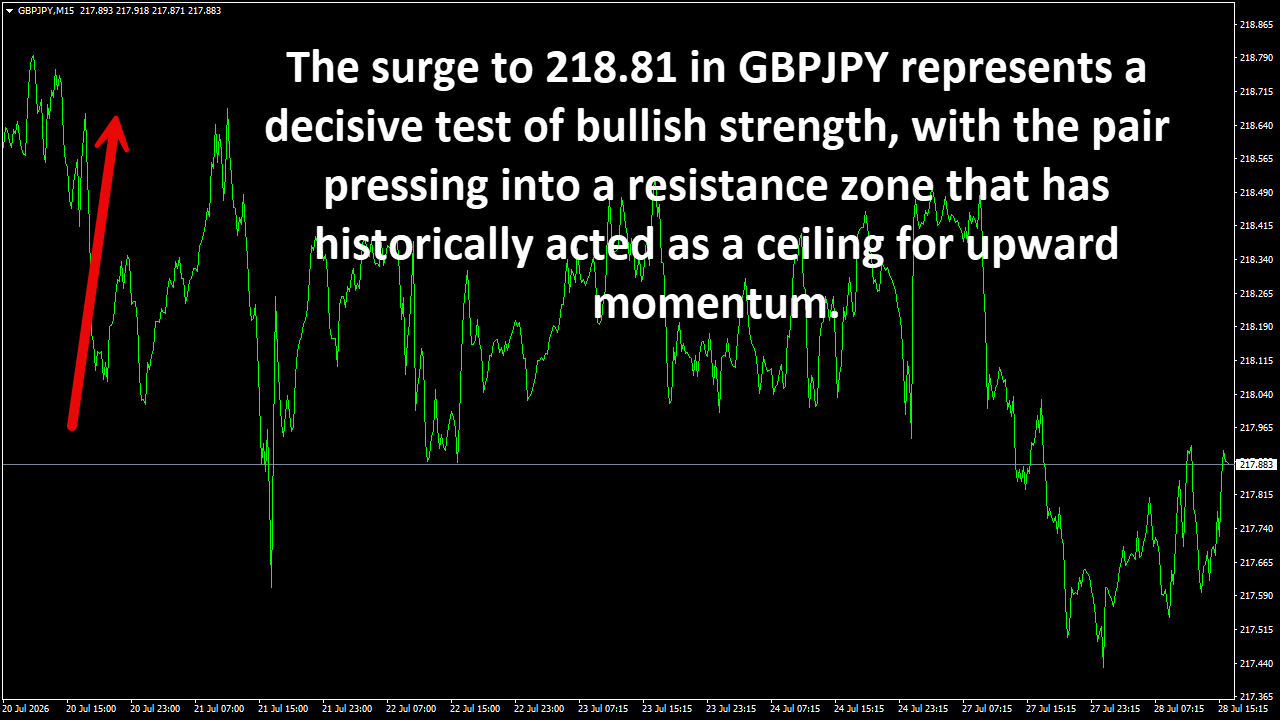
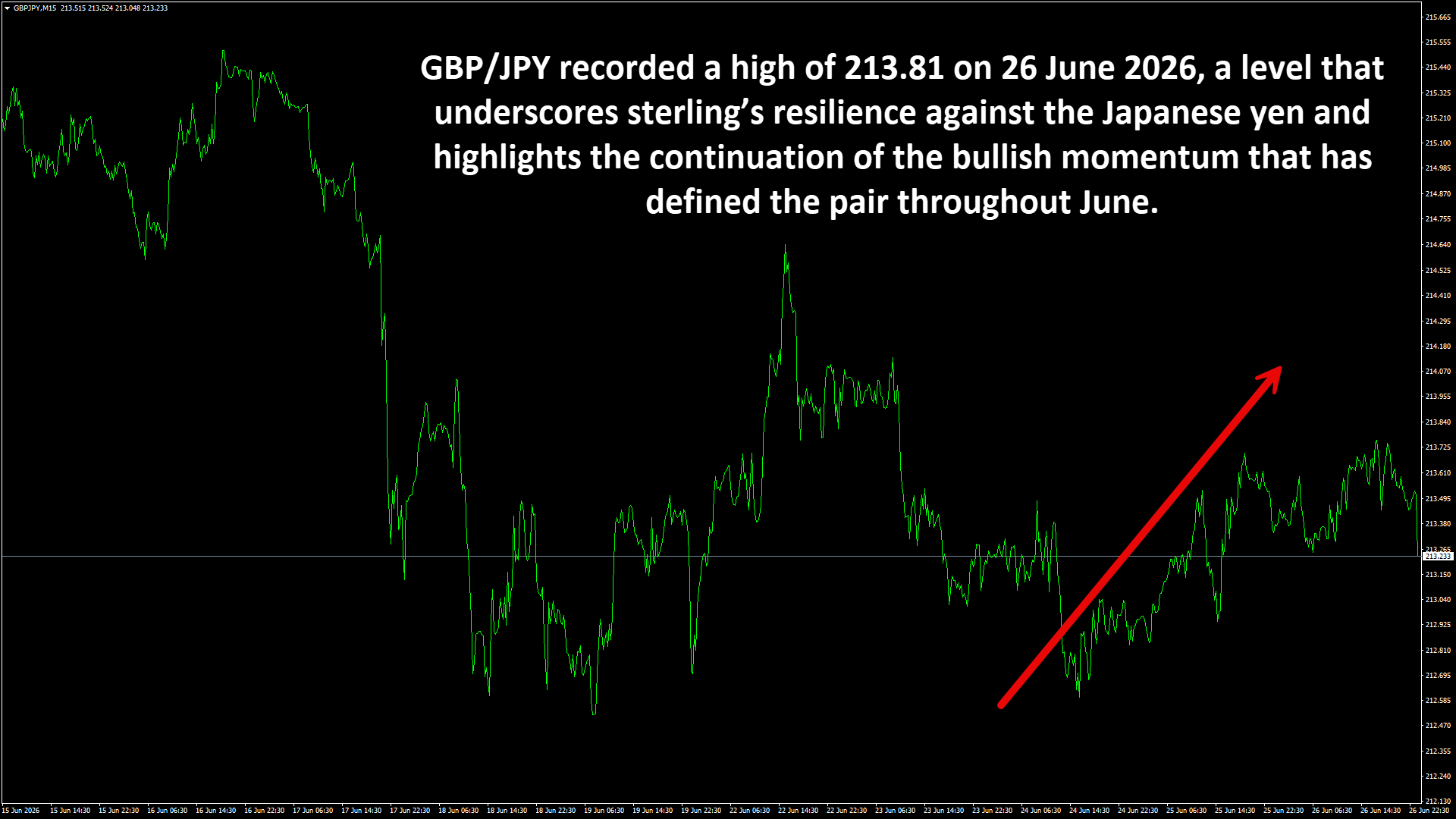
GBPJPY – GBP/JPY recorded a high of 213.81 on 26 June 2026, a level that underscores sterling’s resilience against the Japanese yen and highlights the continuation of the bullish momentum that has defined the pair throughout June.

1FYs3fCX_o.png


GBP/JPY recorded a high of 213.81 on 26 June 2026, a level that underscores sterling’s resilience against the Japanese yen and highlights the continuation of the bullish momentum that has defined the pair throughout June. This high is significant because it represents a renewed test of resistance after the 212.57 low earlier in the week, reflecting both technical strength and the macroeconomic divergence between the UK and Japan. The move to 213.81 illustrates the market’s ability to sustain upward momentum while probing levels that have historically capped rallies.

From a technical perspective, the 213.81 high sits just below the resistance band at 214.00–216.00, which has historically acted as a supply zone. The pair has been trading within a rising channel since late May, with the lower boundary near 211.00 and the upper boundary extending toward 216.00. The rebound from 212.57 confirmed buyers’ willingness to defend the lower boundary, and the subsequent extension toward 213.81 suggests that buyers remain firmly in control. A sustained daily close above 214.00 would be required to unlock upside potential toward 216.50 and 218.50, levels last tested in early Q2. On the downside, immediate support lies at 212.50, followed by the more critical 211.00 pivot, which has acted as a structural floor during the recent rally. A breakdown below 211.00 would signal a potential reversal, exposing the pair to retracement risks toward 209.50.

Momentum indicators provide further clarity. The Relative Strength Index (RSI) on the daily chart is hovering near 64, reflecting strong bullish momentum but not yet in extreme overbought territory. This suggests that while buyers remain in control, there is still room for further gains before exhaustion sets in. The MACD histogram remains firmly positive, with the signal line diverging above the zero axis, reinforcing the bullish bias. Volume analysis shows increased participation during the rally toward 213.81, indicating that the move was supported by conviction rather than thin liquidity, a sign that buyers are committed to sustaining the trend.

The macroeconomic backdrop adds depth to the technical picture. The British pound has benefited from stabilizing growth in the UK economy, with inflation moderating and the Bank of England maintaining a cautious but steady policy stance. Fiscal uncertainty remains, but improved investor sentiment has lent support to sterling. Meanwhile, the Japanese yen continues to suffer from the Bank of Japan’s ultra loose monetary policy, which has kept interest rates near zero despite rising global yields. This divergence in monetary policy has widened yield differentials, making the pound more attractive relative to the yen. Additionally, global risk appetite has diminished the yen’s safe haven appeal, further weakening its position against higher yielding currencies.

Trading implications are clear. Short term traders may look to capitalize on momentum by buying dips near 212.50–212.00 with tight stops, targeting extensions toward 214.00–216.00. Swing traders may adopt a more patient stance, waiting for confirmation above 214.00 to position for a medium term extension toward 218.50. Conversely, a failure to hold above 211.00 would shift bias toward bearish retracement, with 209.50 as the next key battleground.

In conclusion, the GBP/JPY high of 213.81 on 26 June 2026 reflects a market firmly in bullish control, supported by both technical breakout and macroeconomic divergence. Unless the yen finds renewed fundamental support, the path of least resistance remains higher, with 214.00 serving as the next critical target for buyers.

#fxopen #forex #forexanalysis

Disclaimer: This analysis represents my own opinion only. It is not to be construed as an opinion, offer, solicitation, recommendation, or financial advice of the Companies operating under the FXOpen brand.

For in-depth analysis, please check ...
 
GBPUSD Technical Analysis – 26 JUNE, 2026
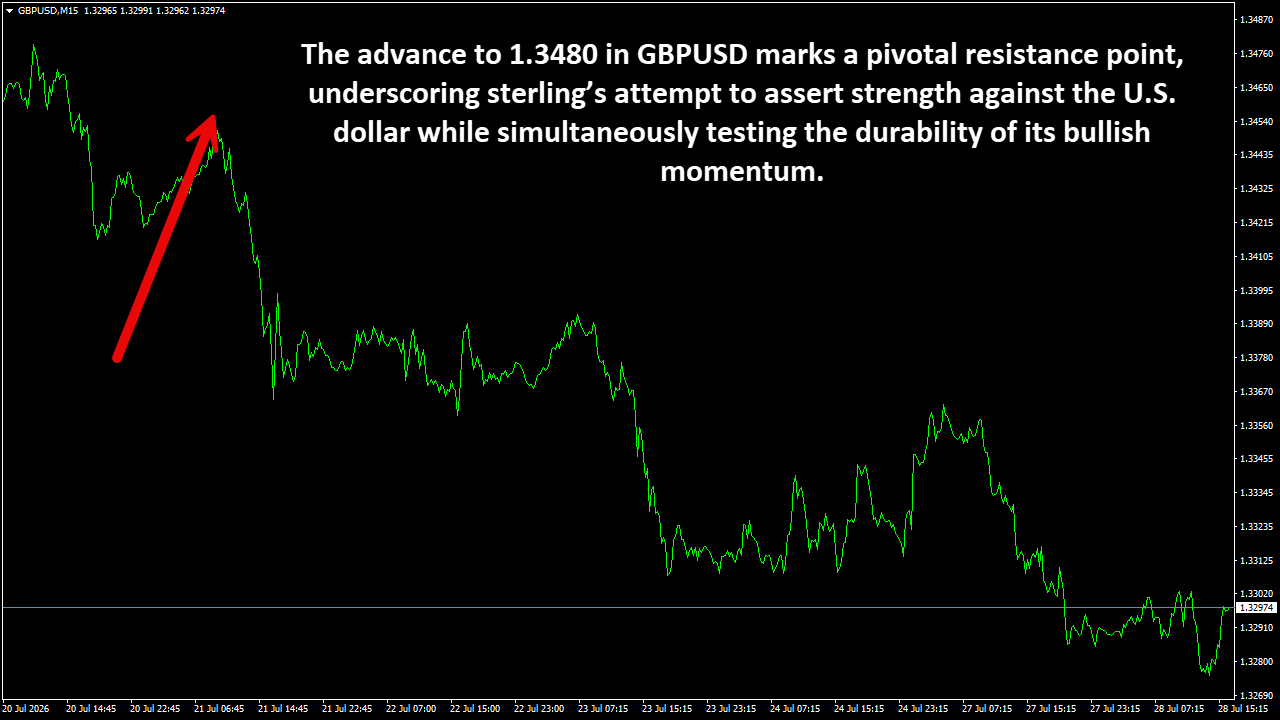
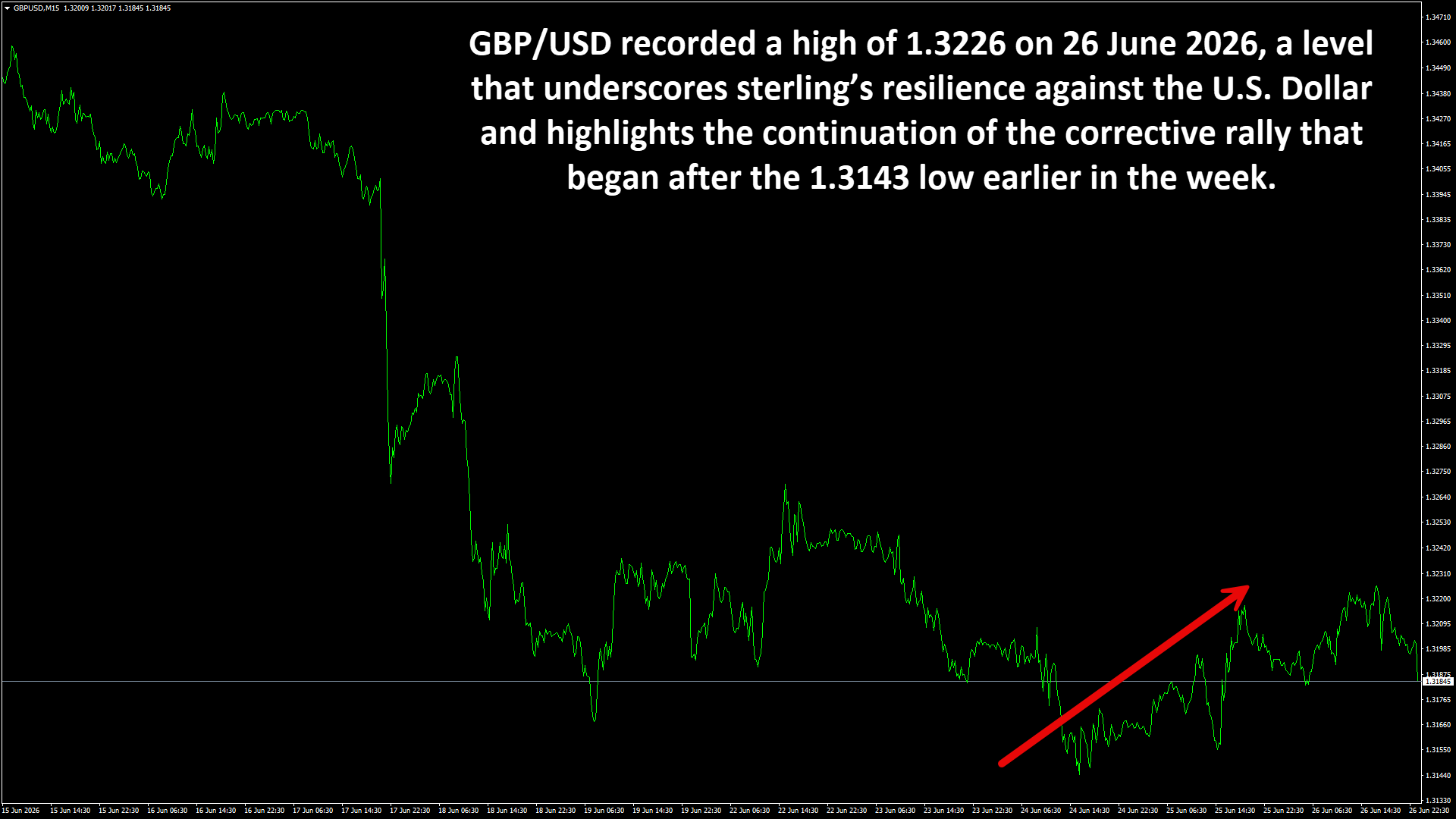
GBPUSD – GBP/USD recorded a high of 1.3226 on 26 June 2026, a level that underscores sterling’s resilience against the U.S. Dollar and highlights the continuation of the corrective rally that began after the 1.3143 low earlier in the week.

pB52Zk3k_o.png


GBP/USD recorded a high of 1.3226 on 26 June 2026, a level that underscores sterling’s resilience against the U.S. Dollar and highlights the continuation of the corrective rally that began after the 1.3143 low earlier in the week. This high is significant because it represents a renewed test of resistance within the broader structure, reflecting both technical strength and the macroeconomic divergence between the UK and U.S. economies. The move to 1.3226 illustrates the market’s ability to sustain upward momentum while probing levels that have historically capped rallies.

From a technical perspective, the 1.3226 high sits just below the resistance band at 1.3250–1.3300, which has historically acted as a supply zone. The pair has been trading within a fragile ascending channel since mid June, with the lower boundary near 1.3140 and the upper boundary extending toward 1.3300. The rebound from 1.3143 confirmed buyers’ willingness to defend the lower boundary, and the subsequent extension toward 1.3226 suggests that buyers remain firmly in control. A sustained daily close above 1.3250 would be required to unlock upside potential toward 1.3300 and 1.3350, levels last tested in early Q2. On the downside, immediate support lies at 1.3180, followed by the more critical 1.3140 pivot, which has acted as a structural floor during the recent rally. A breakdown below 1.3140 would signal a potential reversal, exposing the pair to retracement risks toward 1.3090.

Momentum indicators provide further clarity. The Relative Strength Index (RSI) on the daily chart is hovering near 56, reflecting neutral to bullish momentum and suggesting that buyers are regaining control. The MACD histogram has turned positive, with the signal line crossing above zero, reinforcing the bullish bias. Volume analysis shows increased participation during the rally toward 1.3226, indicating that the move was supported by conviction rather than thin liquidity, a sign that buyers are committed to sustaining the trend.

The macroeconomic backdrop adds depth to the technical picture. The British pound has benefited from stabilizing growth in the UK economy, with inflation moderating and the Bank of England maintaining a cautious but steady policy stance. Fiscal uncertainty remains, but improved investor sentiment has lent support to sterling. Meanwhile, the U.S. Dollar’s trajectory is shaped by shifting expectations around Federal Reserve policy. With inflation showing signs of moderation, markets are increasingly pricing in the possibility of a rate cut later in 2026. This has softened USD demand, but the Fed’s cautious stance prevents a wholesale bearish shift. The divergence between UK resilience and U.S. caution has reinforced GBP/USD’s bullish bias, even as corrective dips emerge.

Trading implications are clear. Short term traders may look to capitalize on momentum by buying dips near 1.3180–1.3140 with tight stops, targeting extensions toward 1.3250–1.3300. Swing traders may adopt a more patient stance, waiting for confirmation above 1.3250 to position for a medium term extension toward 1.3350. Conversely, a failure to hold above 1.3140 would shift bias toward bearish retracement, with 1.3090 as the next key battleground.

In conclusion, the GBP/USD high of 1.3226 on 26 June 2026 reflects a market firmly in bullish control, supported by both technical breakout and macroeconomic divergence. Unless the dollar finds renewed fundamental support, the path of least resistance remains higher, with 1.3250 serving as the next critical target for buyers.

#fxopen #forex #forexanalysis

Disclaimer: This analysis represents my own opinion only. It is not to be construed as an opinion, offer, solicitation, recommendation, or financial advice of the Companies operating under the FXOpen brand.

For in-depth analysis, please check ...
 
NZDUSD Technical Analysis – 26 JUNE, 2026
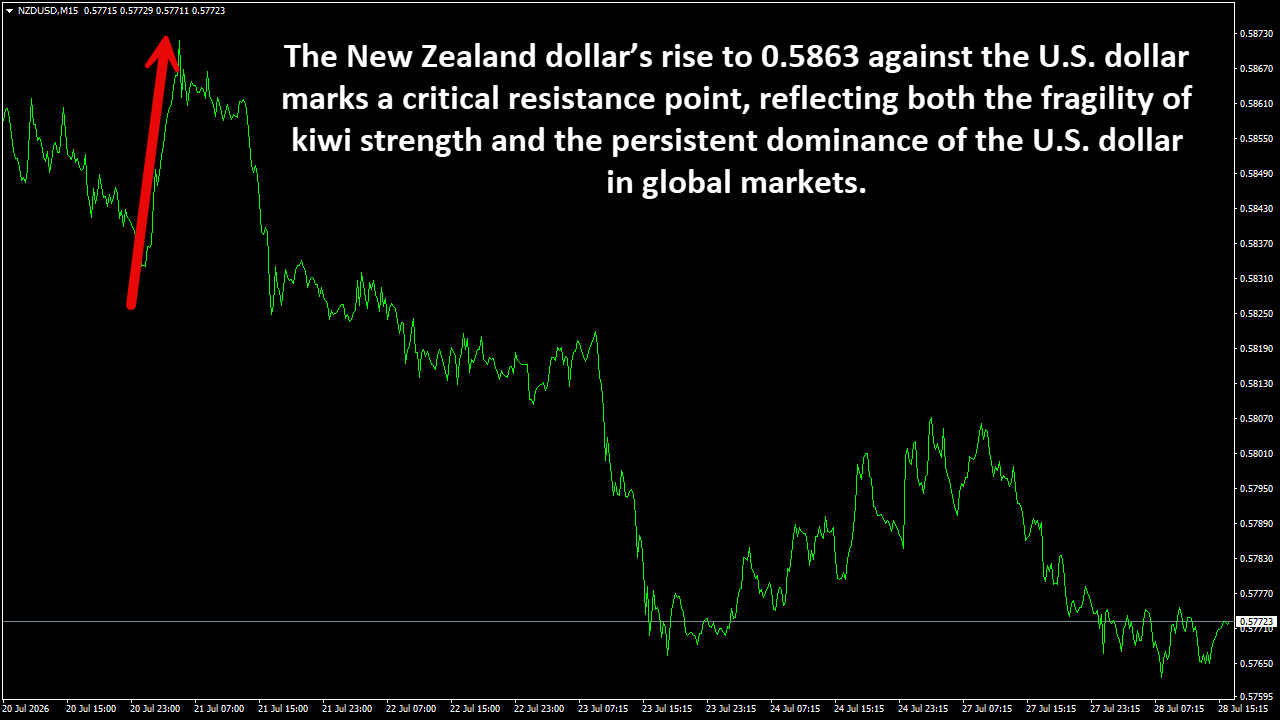
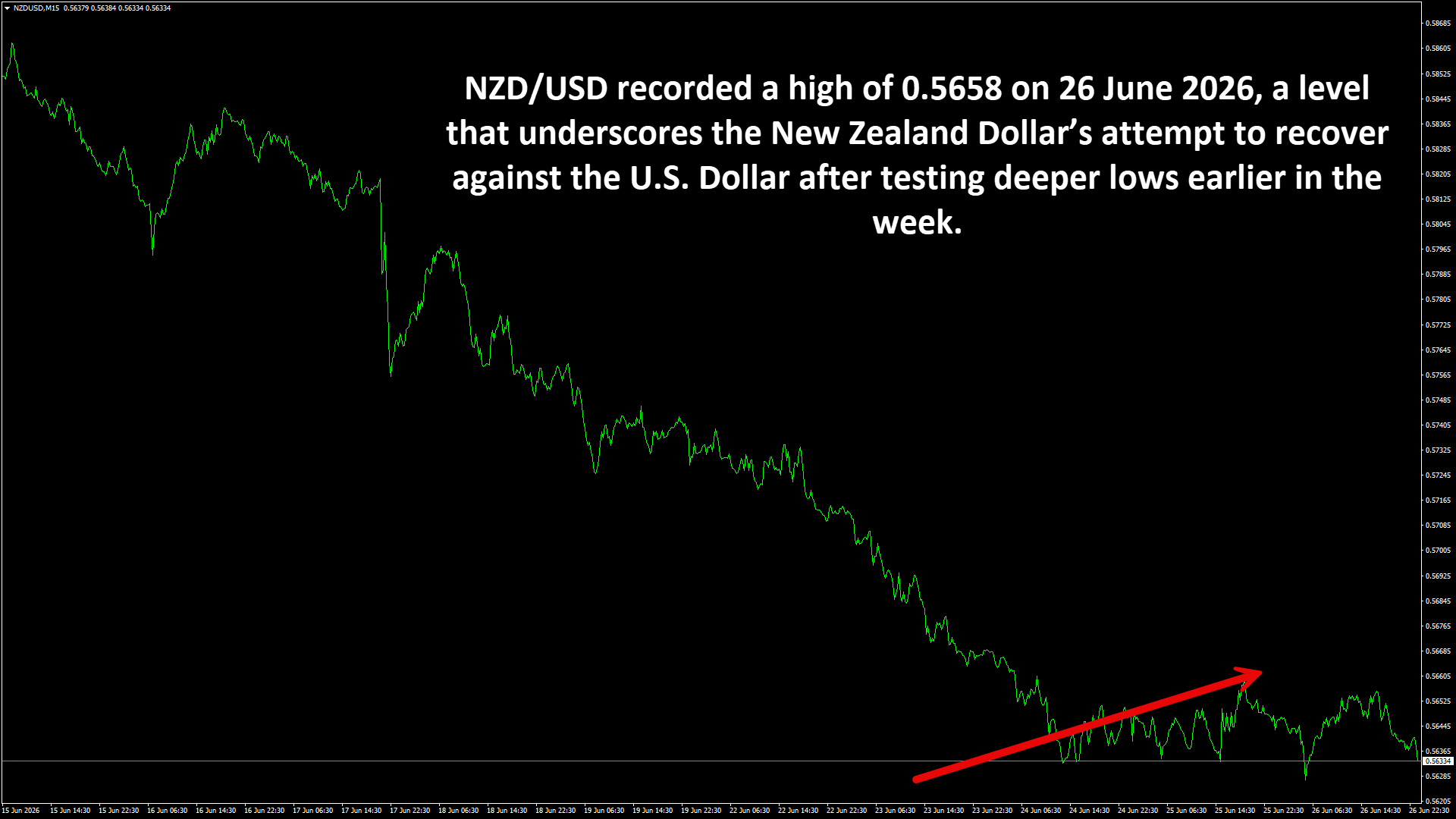
NZDUSD – NZD/USD recorded a high of 0.5658 on 26 June 2026, a level that underscores the New Zealand Dollar’s attempt to recover against the U.S. Dollar after testing deeper lows earlier in the week.

uNn8W8bT_o.png


NZD/USD recorded a high of 0.5658 on 26 June 2026, a level that underscores the New Zealand Dollar’s attempt to recover against the U.S. Dollar after testing deeper lows earlier in the week. This high is significant because it represents a rebound from the 0.5630 region, reflecting renewed buying interest and short covering, though the broader structure still shows the pair struggling to establish a sustained bullish trend. The move to 0.5658 illustrates the market’s sensitivity to resistance levels while underscoring the macroeconomic divergence shaping the pair.

From a technical perspective, the 0.5658 high sits just below the resistance band at 0.5670–0.5700, which has historically acted as a supply zone. The pair has been trading within a descending channel since late May, with the lower boundary near 0.5570 and the upper boundary extending toward 0.5750. The rebound from 0.5630 confirmed buyers’ willingness to defend the lower boundary, but the inability to break above 0.5700 highlights the persistence of sellers at higher levels. This level now serves as immediate resistance, with any decisive break above it likely to expose the pair to further upside toward 0.5750, a structural pivot that would signal a more sustained bullish recovery. On the downside, immediate support lies at 0.5630, followed by the more critical 0.5570 zone, which has acted as a demand floor during the recent downtrend.

Momentum indicators provide additional clarity. The Relative Strength Index (RSI) on the daily chart sits near 48, reflecting neutral to bearish momentum and suggesting that the market is consolidating rather than trending strongly. The MACD histogram remains slightly negative, though the signal line is beginning to flatten, hinting at a potential shift toward bullish momentum if buying pressure persists. Volume analysis shows moderate activity during the rally toward 0.5658, indicating that the move was driven more by opportunistic buying than by aggressive accumulation, a sign that conviction remains limited.

The macroeconomic backdrop adds depth to the technical picture. The New Zealand Dollar has been weighed down by subdued domestic growth and cautious Reserve Bank of New Zealand policy, which has kept interest rates steady despite global shifts. Commodity exports, particularly dairy and agricultural products, remain supportive, but weaker demand from key trading partners has limited upside potential. Meanwhile, the U.S. Dollar’s trajectory is shaped by shifting expectations around Federal Reserve policy. With inflation showing signs of moderation, markets are increasingly pricing in the possibility of a rate cut later in 2026. This has softened USD demand, but the Fed’s cautious stance prevents a wholesale bearish shift. The divergence between New Zealand’s commodity linked economy and U.S. resilience has reinforced the structural pressure on NZD/USD, making rallies difficult to sustain.

Trading implications are clear. Short term traders may look to capitalize on range bound strategies, selling rallies near 0.5670–0.5700 with tight stops while targeting retracements toward 0.5630. Swing traders may prefer to wait for a confirmed break above 0.5700 to position for a medium term extension toward 0.5750. Conversely, a failure to hold above 0.5630 would shift bias toward bearish retracement, with 0.5570 as the next key battleground.
In conclusion, the NZD/USD high of 0.5658 on 26 June 2026 reflects a market undergoing short term recovery within a broader consolidative framework. Technical indicators, price structure, and macro fundamentals collectively suggest that while corrective rallies are possible, the path of least resistance remains sideways to lower unless buyers can decisively reclaim the 0.5700–0.5750 zone.

#fxopen #forex #forexanalysis

Disclaimer: This analysis represents my own opinion only. It is not to be construed as an opinion, offer, solicitation, recommendation, or financial advice of the Companies operating under the FXOpen brand.

For in-depth analysis, please check ...
 
USDCAD Technical Analysis – 26 JUNE, 2026
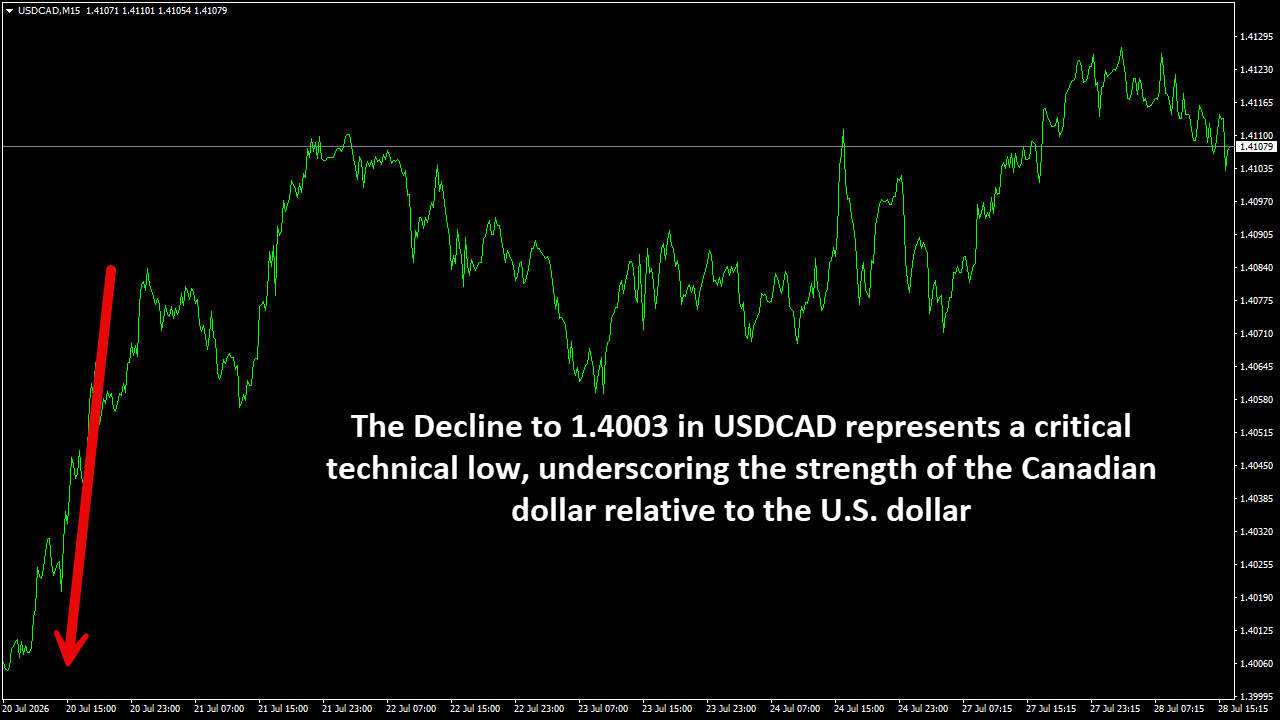
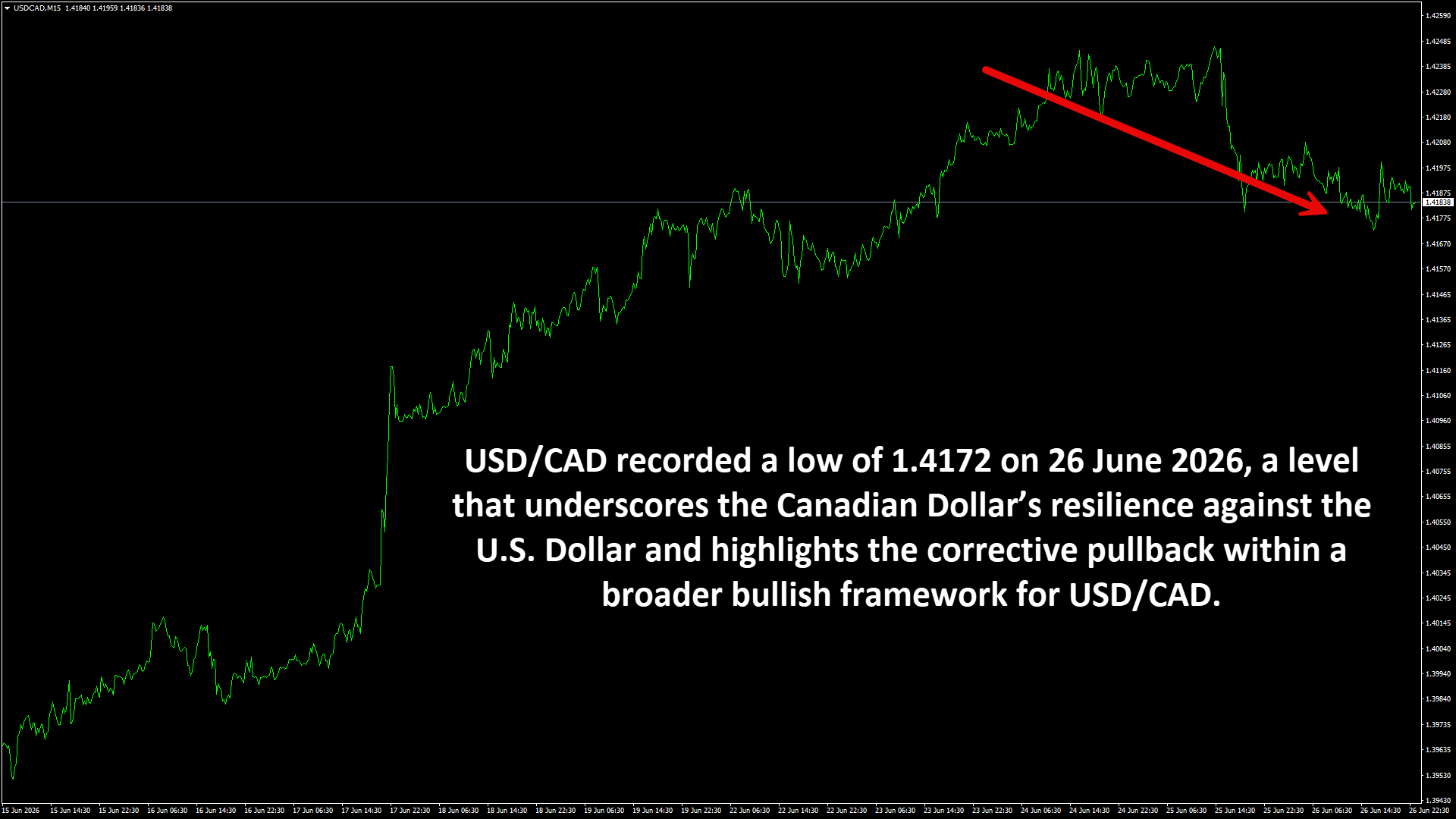
USDCAD – USD/CAD recorded a low of 1.4172 on 26 June 2026, a level that underscores the Canadian Dollar’s resilience against the U.S. Dollar and highlights the corrective pullback within a broader bullish framework for USD/CAD.

1QZPiUV0_o.png


USD/CAD recorded a low of 1.4172 on 26 June 2026, a level that underscores the Canadian Dollar’s resilience against the U.S. Dollar and highlights the corrective pullback within a broader bullish framework for USD/CAD. This low is significant because it represents a rejection of higher levels seen earlier in the week, reflecting profit taking and renewed CAD demand, particularly as crude oil prices remained firm. The move to 1.4172 illustrates the market’s sensitivity to support levels while underscoring the macroeconomic divergence shaping the pair.

From a technical perspective, the 1.4172 low sits just above the critical support band at 1.4150–1.4120, which has historically acted as a demand zone. The pair has been trading within a rising channel since late May, with the lower boundary near 1.4120 and the upper boundary extending toward 1.4300. The inability to sustain momentum above 1.4240 earlier in the week reinforced the presence of sellers at higher levels, leading to the corrective dip toward 1.4172. This level now serves as immediate support, with any decisive break below it likely to expose the pair to further downside toward 1.4120, a structural pivot that has repeatedly acted as a floor. On the upside, resistance is clearly defined at 1.4220, followed by 1.4260, which represents a key barrier to recovery and continuation of the uptrend.

Momentum indicators provide additional clarity. The Relative Strength Index (RSI) on the daily chart sits near 52, reflecting neutral to bullish momentum and suggesting that buyers remain in control despite the corrective dip. The MACD histogram remains positive, though the signal line is beginning to flatten, hinting at a potential slowdown in momentum if corrective pressures persist. Volume analysis shows increased participation during the dip to 1.4172, indicating that the move was supported by conviction rather than thin liquidity, a sign that sellers are committed to defending higher levels.

The macroeconomic backdrop adds depth to the technical picture. The U.S. Dollar has benefited from stabilizing growth and expectations around Federal Reserve policy. With inflation showing signs of moderation, markets are increasingly pricing in the possibility of a rate cut later in 2026, but the Fed’s cautious stance has prevented a wholesale bearish shift. Meanwhile, the Canadian Dollar continues to draw support from resilient crude oil prices, which remain elevated due to supply constraints and steady global demand. The Bank of Canada’s cautious monetary stance, combined with slower domestic growth, has limited CAD’s ability to mount a sustained rally, but commodity strength has provided a buffer against USD dominance. This divergence in fundamentals has created a tug of war, with USD/CAD’s trajectory highly sensitive to shifts in oil prices and Fed policy expectations.

Trading implications are clear. Short term traders may look to capitalize on range bound strategies, buying dips near 1.4172–1.4150 with tight stops while targeting rebounds toward 1.4220. Swing traders may prefer to wait for a confirmed break above 1.4260 to position for a medium term extension toward 1.4300. Conversely, a failure to hold above 1.4120 would shift bias toward bearish retracement, with 1.4070 as the next key battleground.
In conclusion, the USD/CAD low of 1.4172 on 26 June 2026 reflects a market undergoing short term consolidation within a broader bullish trend. Technical indicators, price structure, and macro fundamentals collectively suggest that while corrective pressures are present, the path of least resistance remains higher, with 1.4220–1.4260 serving as the next critical targets for buyers.

#fxopen #forex #forexanalysis

Disclaimer: This analysis represents my own opinion only. It is not to be construed as an opinion, offer, solicitation, recommendation, or financial advice of the Companies operating under the FXOpen brand.

For in-depth analysis, please check ...
 
USDCHF Technical Analysis – 26 JUNE, 2026
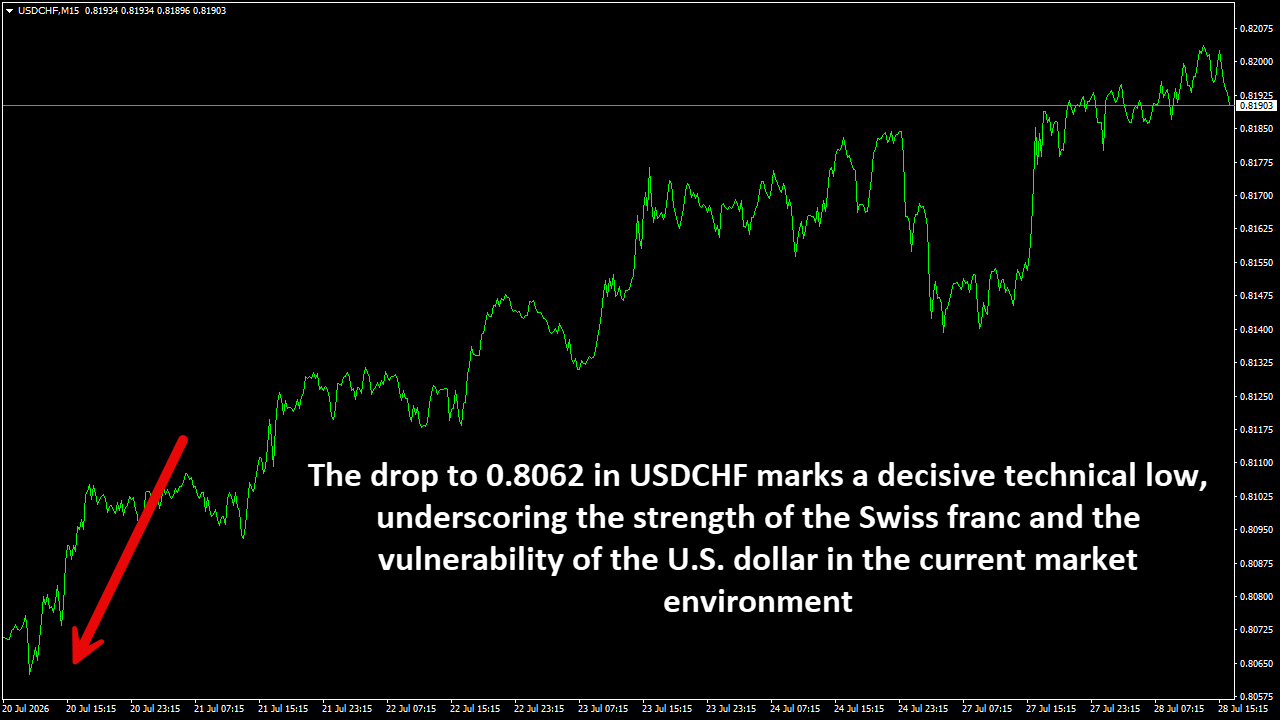
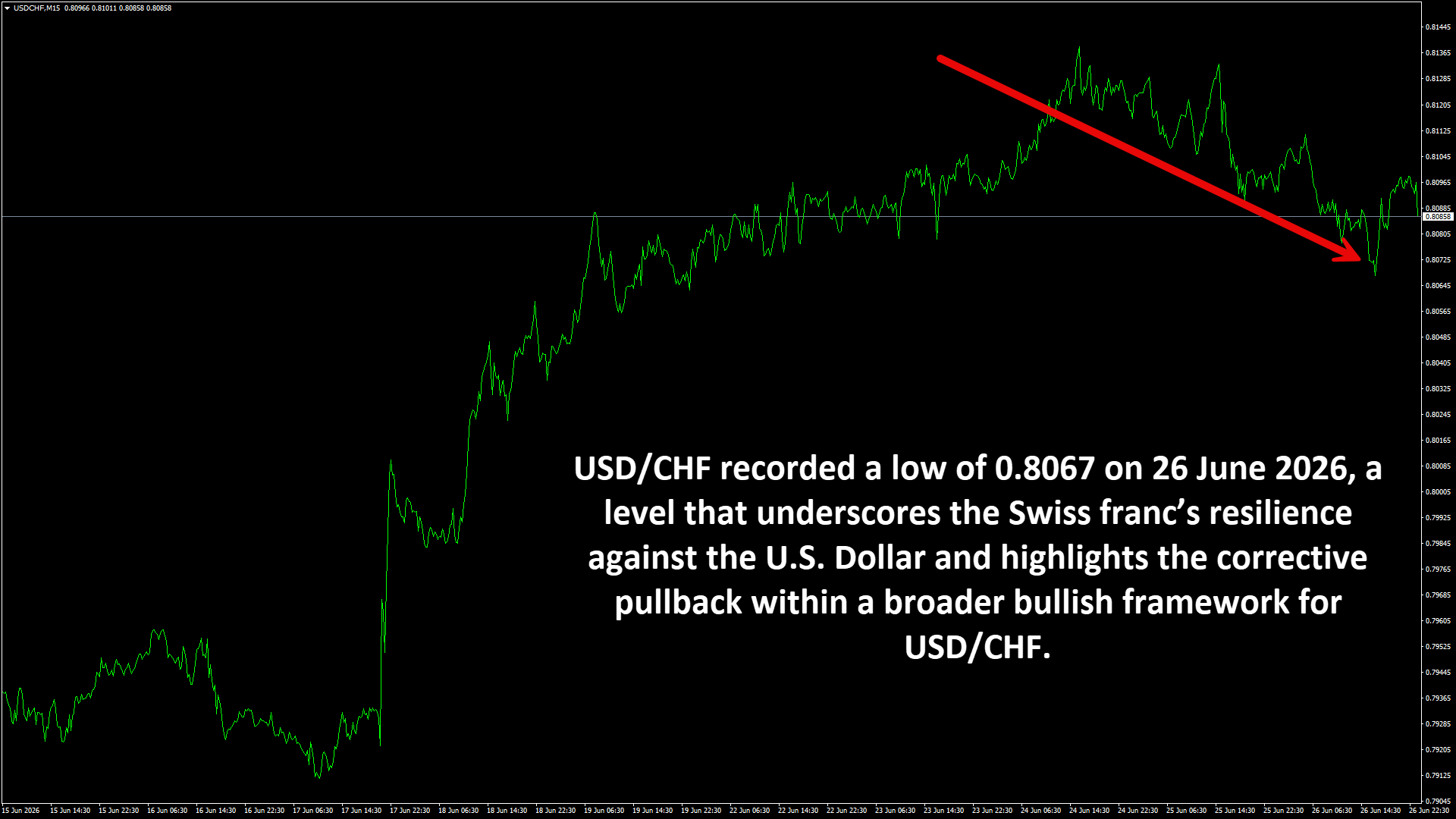
USDCHF – USD/CHF recorded a low of 0.8067 on 26 June 2026, a level that underscores the Swiss franc’s resilience against the U.S. Dollar and highlights the corrective pullback within a broader bullish framework for USD/CHF.

a3DdQhN6_o.png


USD/CHF recorded a low of 0.8067 on 26 June 2026, a level that underscores the Swiss franc’s resilience against the U.S. Dollar and highlights the corrective pullback within a broader bullish framework for USD/CHF. This low is significant because it represents a rejection of higher levels seen earlier in the week, reflecting profit taking and renewed franc demand, particularly as safe haven flows re emerged. The move to 0.8067 illustrates the market’s sensitivity to support levels while underscoring the macroeconomic divergence shaping the pair.

From a technical perspective, the 0.8067 low sits just above the critical support band at 0.8050–0.8000, which has historically acted as a demand zone. The pair has been trading within a rising channel since early June, with the lower boundary near 0.8050 and the upper boundary extending toward 0.8180. The inability to sustain momentum above 0.8139 earlier in the week reinforced the presence of sellers at higher levels, leading to the corrective dip toward 0.8067. This level now serves as immediate support, with any decisive break below it likely to expose the pair to further downside toward 0.8050, a structural pivot that has repeatedly acted as a floor. On the upside, resistance is clearly defined at 0.8130, followed by 0.8150, which represents a key barrier to recovery and continuation of the uptrend.

Momentum indicators provide additional clarity. The Relative Strength Index (RSI) on the daily chart sits near 47, reflecting neutral to bearish momentum and suggesting that sellers are regaining control. The MACD histogram remains slightly positive, though the signal line is beginning to flatten, hinting at a potential slowdown in momentum if corrective pressures persist. Volume analysis shows increased participation during the dip to 0.8067, indicating that the move was supported by conviction rather than thin liquidity, a sign that sellers are committed to defending higher levels.

The macroeconomic backdrop adds depth to the technical picture. The U.S. Dollar has benefited from stabilizing growth and expectations around Federal Reserve policy. With inflation showing signs of moderation, markets are increasingly pricing in the possibility of a rate cut later in 2026, but the Fed’s cautious stance has prevented a wholesale bearish shift. Meanwhile, the Swiss franc continues to retain its safe haven appeal, bolstered by Switzerland’s stable economic outlook and relatively lower inflation compared to the U.S. The Swiss National Bank has maintained a cautious stance, intervening selectively to prevent excessive franc strength but allowing gradual appreciation. This divergence in fundamentals has created a tug of war between USD recovery optimism and franc stability, making USD/CHF’s trajectory highly sensitive to shifts in sentiment.

Trading implications are clear. Short term traders may look to capitalize on range bound strategies, buying dips near 0.8067–0.8050 with tight stops while targeting rebounds toward 0.8130. Swing traders may prefer to wait for a confirmed break above 0.8150 to position for a medium term extension toward 0.8200. Conversely, a failure to hold above 0.8050 would shift bias toward bearish retracement, with 0.8000 as the next key battleground.
In conclusion, the USD/CHF low of 0.8067 on 26 June 2026 reflects a market undergoing short term consolidation within a broader bullish trend. Technical indicators, price structure, and macro fundamentals collectively suggest that while corrective pressures are present, the path of least resistance remains higher, with 0.8130–0.8150 serving as the next critical targets for buyers.

#fxopen #forex #forexanalysis

Disclaimer: This analysis represents my own opinion only. It is not to be construed as an opinion, offer, solicitation, recommendation, or financial advice of the Companies operating under the FXOpen brand.

For in-depth analysis, please check ...
 
USDJPY Technical Analysis – 26 JUNE, 2026
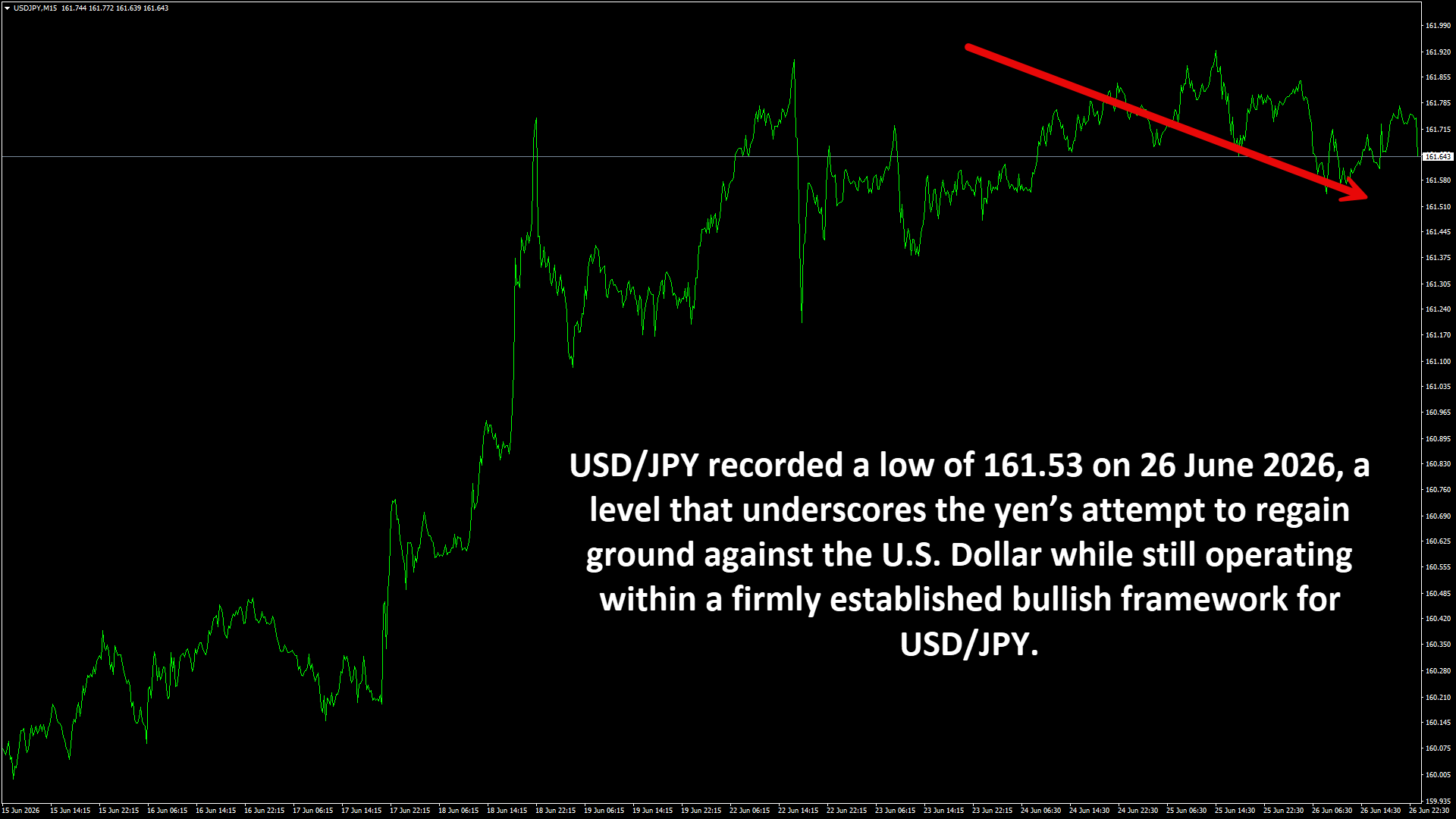
USDJPY - USD/JPY recorded a low of 161.53 on 26 June 2026, a level that underscores the yen’s attempt to regain ground against the U.S. Dollar while still operating within a firmly established bullish framework for USD/JPY.

sAp65Fkx_o.png


USD/JPY recorded a low of 161.53 on 26 June 2026, a level that underscores the yen’s attempt to regain ground against the U.S. Dollar while still operating within a firmly established bullish framework for USD/JPY. This low is significant because it represents a corrective pullback from the 161.82 high seen the previous day, reflecting profit taking and short term consolidation rather than a structural reversal. The move to 161.53 illustrates the market’s sensitivity to resistance levels while underscoring the broader macroeconomic divergence driving the pair.

From a technical perspective, the 161.53 low sits at the lower boundary of the short term consolidation zone that has formed between 161.50 and 162.00. The pair remains firmly within a rising channel that has guided price action since late May, with the lower boundary near 160.50 and the upper boundary extending toward 164.00. The inability to sustain momentum above 162.00 reinforced the presence of sellers at higher levels, leading to the corrective dip toward 161.53. This level now serves as immediate support, with any decisive break below it likely to expose the pair to further downside toward 160.50, a zone last tested in early June. On the upside, resistance is clearly defined at 162.00, followed by 164.00, which represents a key barrier to recovery and continuation of the uptrend.

Momentum indicators provide additional clarity. The Relative Strength Index (RSI) on the daily chart sits near 64, reflecting strong bullish momentum but showing signs of cooling as the pair consolidates. This suggests that while buyers remain in control, the market is pausing to absorb recent gains. The MACD histogram remains positive, though the signal line is beginning to flatten, hinting at a potential slowdown in momentum if corrective pressures persist. Volume analysis shows moderate activity during the dip to 161.53, indicating that the move was driven more by profit taking than by aggressive selling, a sign that the broader bullish bias remains intact.

The macroeconomic backdrop adds depth to the technical picture. The U.S. Dollar has benefited from stabilizing growth and expectations around Federal Reserve policy. With inflation showing signs of moderation, markets are increasingly pricing in the possibility of a rate cut later in 2026, but the Fed’s cautious stance has prevented a wholesale bearish shift. Meanwhile, the Japanese yen continues to suffer from the Bank of Japan’s ultra loose monetary policy, which has kept interest rates near zero despite rising global yields. This divergence in monetary policy has widened yield differentials, making the dollar more attractive relative to the yen. Additionally, global risk appetite has diminished the yen’s safe haven appeal, further weakening its position against higher yielding currencies.

Trading implications are clear. Short term traders may look to capitalize on range bound strategies, buying dips near 161.50 with tight stops while targeting rebounds toward 162.00. Swing traders may prefer to wait for a confirmed break above 162.00 to position for a medium term extension toward 164.00. Conversely, a failure to hold above 160.50 would shift bias toward bearish retracement, with 159.50 as the next key battleground.
In conclusion, the USD/JPY low of 161.53 on 26 June 2026 reflects a market undergoing short term consolidation within a broader bullish trend. Technical indicators, price structure, and macro fundamentals collectively suggest that while corrective pressures are present, the path of least resistance remains higher, with 162.00–164.00 serving as the next critical targets for buyers.

#fxopen #forex #forexanalysis

Disclaimer: This analysis represents my own opinion only. It is not to be construed as an opinion, offer, solicitation, recommendation, or financial advice of the Companies operating under the FXOpen brand.

For in-depth analysis, please check ...
 
Back
Top