EURUSD Technical Analysis – 18 JUNE, 2026
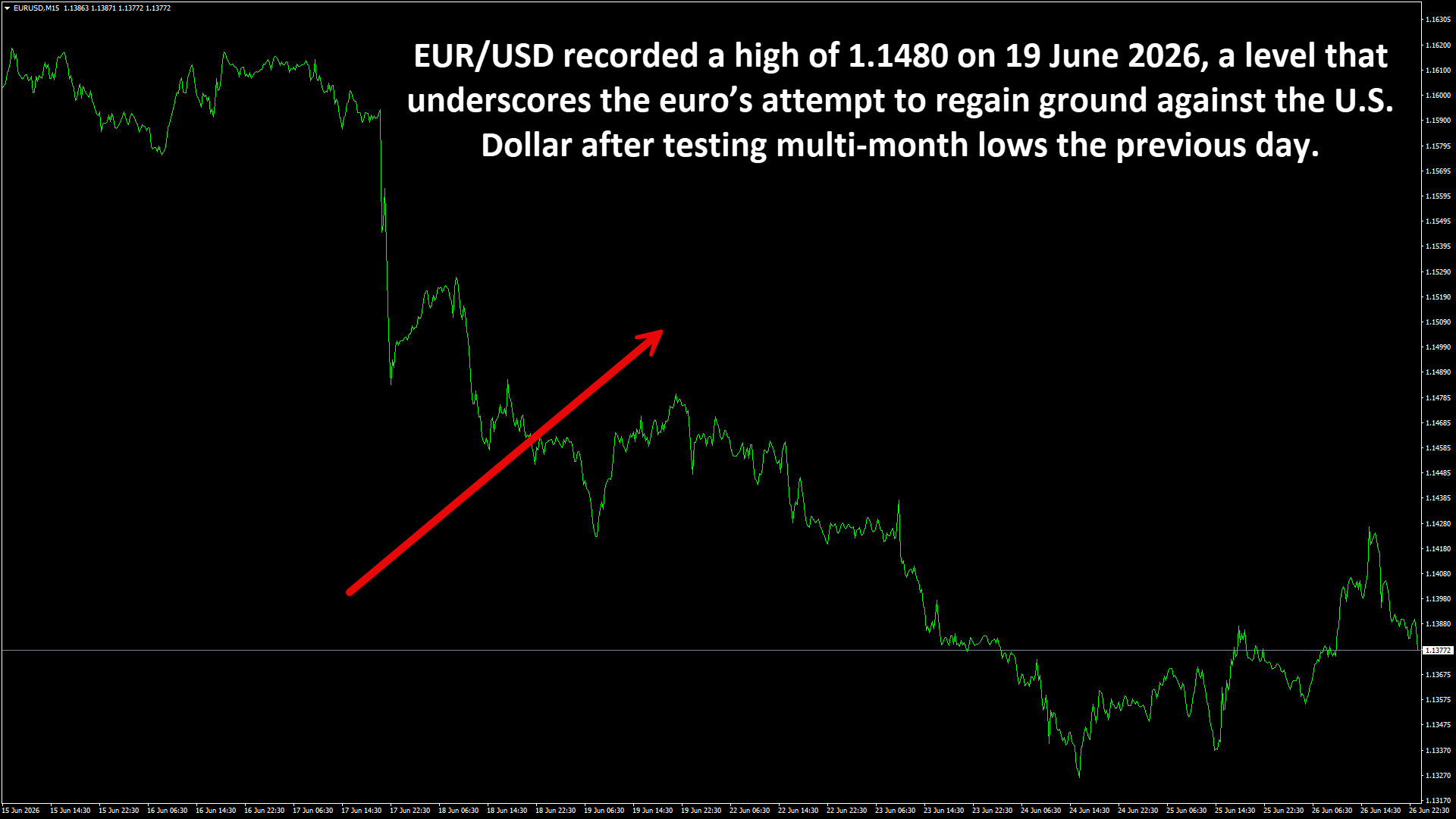
EURUSD – EUR/USD recorded a low of 1.1451 on 18 June 2026, a level that highlights the euro’s vulnerability against the U.S. Dollar and underscores the difficulty in sustaining upward momentum.
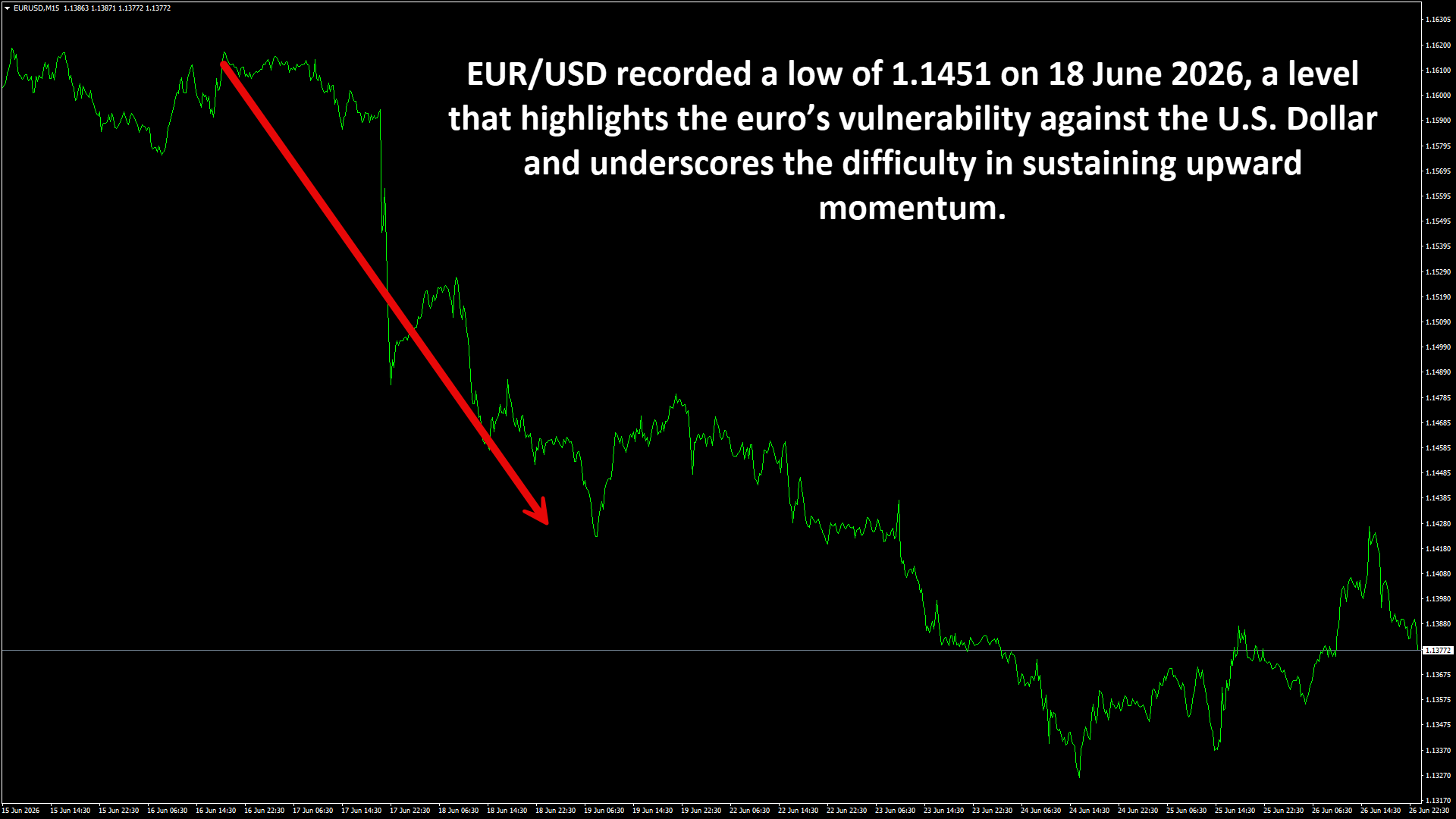
EUR/USD recorded a low of 1.1451 on 18 June 2026, a level that highlights the euro’s vulnerability against the U.S. Dollar and underscores the difficulty in sustaining upward momentum. This low is significant because it represents a test of multi month support and reflects both technical weakness and the broader macroeconomic divergence between the eurozone and the United States. The move to 1.1451 is part of a corrective phase following the failure to break convincingly above the 1.1620 resistance earlier in June.
From a technical perspective, the 1.1451 low sits at the lower boundary of a descending channel that has guided price action since late May. The pair has consistently made lower highs and lower lows, reflecting sustained selling pressure. The inability to hold above the 1.1550 pivot earlier in the week reinforced bearish sentiment, and the subsequent slide toward 1.1451 confirms the dominance of sellers. This level now serves as immediate support, with any decisive break below it likely to expose the pair to further downside toward 1.1400, a zone last tested in early Q1. On the upside, resistance is clearly defined at 1.1550, followed by 1.1620, which coincides with the 50 day moving average and represents a key barrier to recovery.
Momentum indicators provide additional clarity. The Relative Strength Index (RSI) on the daily chart sits near 41, reflecting sustained downward momentum without yet reaching oversold extremes. This suggests that while the pair is under pressure, there remains room for further downside before exhaustion sets in. The MACD histogram remains firmly negative, with the signal line diverging below the zero axis, reinforcing the bearish bias. Volume analysis shows heightened activity during the decline toward 1.1451, indicating that the move was supported by conviction rather than thin liquidity.
The macroeconomic backdrop adds depth to the technical picture. The euro continues to face headwinds from sluggish growth across the eurozone, compounded by uncertainty surrounding fiscal policy coordination among member states. Meanwhile, the U.S. Dollar’s trajectory is shaped by shifting expectations around Federal Reserve policy. With inflation showing signs of moderation, markets are increasingly pricing in the possibility of a rate cut later in 2026. This has softened USD demand, but the Fed’s cautious stance prevents a wholesale bearish shift. The divergence between eurozone weakness and U.S. resilience has reinforced the structural pressure on EUR/USD, making rallies increasingly difficult to sustain.
Trading implications are clear. Short term traders may look to capitalize on range bound strategies, buying dips near 1.1450 with tight stops while targeting rebounds toward 1.1550. However, the broader bias remains bearish, and swing traders may prefer to wait for a confirmed break below 1.1450 to position for a medium term extension toward 1.1400. Conversely, only a sustained daily close above 1.1620 would signal a potential reversal of the downtrend, opening the door for recovery toward 1.1720.
In conclusion, the EUR/USD low of 1.1451 on 18 June 2026 highlights the pair’s entrenched bearish momentum, shaped by both technical structure and macroeconomic divergence. Unless the euro finds renewed fundamental support, the path of least resistance remains lower, with 1.1450 serving as the immediate battleground between buyers and sellers.
#fxopen #forex #forexanalysis
Disclaimer: This analysis represents my own opinion only. It is not to be construed as an opinion, offer, solicitation, recommendation, or financial advice of the Companies operating under the FXOpen brand.
For in-depth analysis, please check ...
EURUSD – EUR/USD recorded a low of 1.1451 on 18 June 2026, a level that highlights the euro’s vulnerability against the U.S. Dollar and underscores the difficulty in sustaining upward momentum.
EUR/USD recorded a low of 1.1451 on 18 June 2026, a level that highlights the euro’s vulnerability against the U.S. Dollar and underscores the difficulty in sustaining upward momentum. This low is significant because it represents a test of multi month support and reflects both technical weakness and the broader macroeconomic divergence between the eurozone and the United States. The move to 1.1451 is part of a corrective phase following the failure to break convincingly above the 1.1620 resistance earlier in June.
From a technical perspective, the 1.1451 low sits at the lower boundary of a descending channel that has guided price action since late May. The pair has consistently made lower highs and lower lows, reflecting sustained selling pressure. The inability to hold above the 1.1550 pivot earlier in the week reinforced bearish sentiment, and the subsequent slide toward 1.1451 confirms the dominance of sellers. This level now serves as immediate support, with any decisive break below it likely to expose the pair to further downside toward 1.1400, a zone last tested in early Q1. On the upside, resistance is clearly defined at 1.1550, followed by 1.1620, which coincides with the 50 day moving average and represents a key barrier to recovery.
Momentum indicators provide additional clarity. The Relative Strength Index (RSI) on the daily chart sits near 41, reflecting sustained downward momentum without yet reaching oversold extremes. This suggests that while the pair is under pressure, there remains room for further downside before exhaustion sets in. The MACD histogram remains firmly negative, with the signal line diverging below the zero axis, reinforcing the bearish bias. Volume analysis shows heightened activity during the decline toward 1.1451, indicating that the move was supported by conviction rather than thin liquidity.
The macroeconomic backdrop adds depth to the technical picture. The euro continues to face headwinds from sluggish growth across the eurozone, compounded by uncertainty surrounding fiscal policy coordination among member states. Meanwhile, the U.S. Dollar’s trajectory is shaped by shifting expectations around Federal Reserve policy. With inflation showing signs of moderation, markets are increasingly pricing in the possibility of a rate cut later in 2026. This has softened USD demand, but the Fed’s cautious stance prevents a wholesale bearish shift. The divergence between eurozone weakness and U.S. resilience has reinforced the structural pressure on EUR/USD, making rallies increasingly difficult to sustain.
Trading implications are clear. Short term traders may look to capitalize on range bound strategies, buying dips near 1.1450 with tight stops while targeting rebounds toward 1.1550. However, the broader bias remains bearish, and swing traders may prefer to wait for a confirmed break below 1.1450 to position for a medium term extension toward 1.1400. Conversely, only a sustained daily close above 1.1620 would signal a potential reversal of the downtrend, opening the door for recovery toward 1.1720.
In conclusion, the EUR/USD low of 1.1451 on 18 June 2026 highlights the pair’s entrenched bearish momentum, shaped by both technical structure and macroeconomic divergence. Unless the euro finds renewed fundamental support, the path of least resistance remains lower, with 1.1450 serving as the immediate battleground between buyers and sellers.
#fxopen #forex #forexanalysis
Disclaimer: This analysis represents my own opinion only. It is not to be construed as an opinion, offer, solicitation, recommendation, or financial advice of the Companies operating under the FXOpen brand.
For in-depth analysis, please check ...