Daily Market Analytics - Forex

EURJPY Technical Analysis – 02 JUNE, 2026
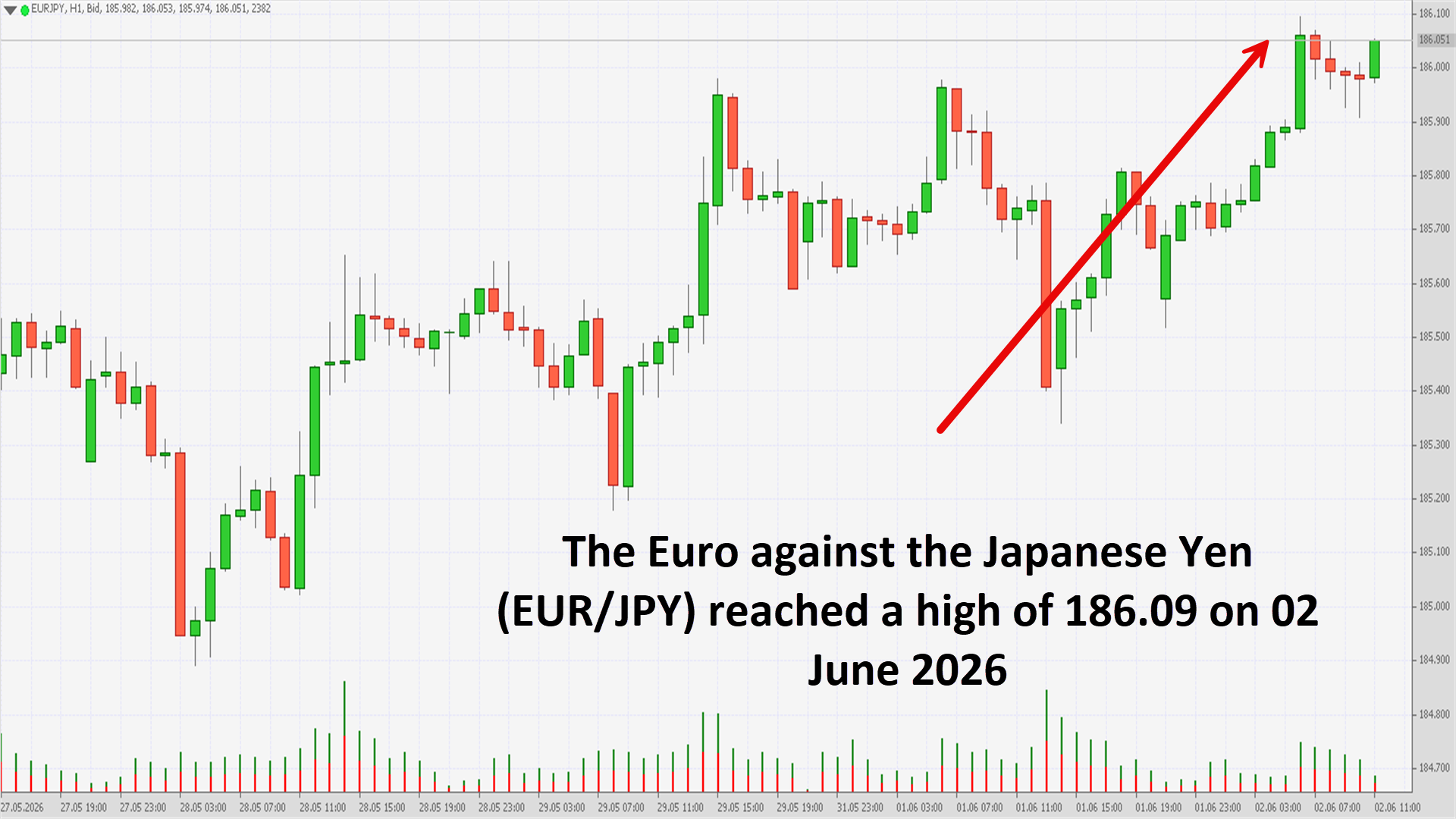
EURJPY – The Euro against the Japanese Yen (EUR/JPY) reached a high of 186.09 on 02 June 2026
3hXs4GjX_o.png


Technical Analysis: EUR/JPY – High 186.09 (02 June 2026)

The Euro against the Japanese Yen (EUR/JPY) reached a high of 186.09 on 02 June 2026, a level that highlights the pair’s strong bullish momentum and its position near multi-year highs. This price action reflects both technical strength and macroeconomic divergence between the eurozone and Japan, where monetary policy differences continue to drive capital flows.

From a technical perspective, the 186.09 high represents an extension of the uptrend that began in late February, when EUR/JPY rebounded from the 178.50 support zone. Since then, the pair has carved out a series of higher lows at 180.20, 182.40, and 184.00, confirming the persistence of bullish sentiment. The current rally has pushed the pair above the 50-day and 100-day moving averages, both of which are sloping upward, reinforcing the strength of the trend. The 200-day moving average, now positioned near 176.00, underscores the long-term bullish structure and provides a wide cushion for any corrective pullbacks.

Momentum indicators remain supportive. The Relative Strength Index (RSI) is currently hovering around 68, approaching overbought territory but not yet flashing exhaustion signals. This suggests that while the pair may be due for short-term consolidation, the broader trend remains intact. The MACD histogram has been firmly positive since mid-April, with the signal line well above zero, confirming the strength of the rally. Volume analysis shows increased participation during upward moves, indicating genuine conviction among buyers rather than speculative spikes.

Key support and resistance levels are clearly defined. Immediate resistance lies at 186.50–187.00, a zone that represents psychological resistance and the upper boundary of the current bullish channel. A decisive break above this area would open the path toward 188.50, a level not seen since 2008. On the downside, initial support rests at 184.50, followed by the more critical 182.40 pivot. A failure to hold above 182.40 would risk a deeper retracement toward 180.20, though such a move would likely be corrective rather than trend-reversing given the broader structure.

The macroeconomic backdrop adds depth to the technical picture. The euro has been supported by signs of stabilization in the eurozone economy, particularly in manufacturing and services, alongside expectations that the European Central Bank will maintain a cautious but steady policy stance. In contrast, the Japanese Yen remains under pressure due to the Bank of Japan’s continued commitment to ultra-loose monetary policy, including yield curve control measures that suppress bond yields. This policy divergence has widened interest rate differentials, encouraging capital flows into the euro and away from the yen, thereby sustaining EUR/JPY’s bullish trajectory.

For traders, the implications are clear. Short-term participants may look to exploit momentum by targeting the 186.50–187.00 resistance zone, while maintaining tight risk controls below 184.50. Swing traders may interpret the 186.09 high as a potential breakout precursor, positioning for a medium-term move toward 188.50, contingent on sustained closes above 186.50. Conversely, a rejection at current levels would signal a period of consolidation, with 182.40 acting as the key battleground for directional bias.

In conclusion, the EUR/JPY high of 186.09 on 02 June 2026 represents a pivotal test of bullish resilience near multi-year highs. Technical indicators, price structure, and macro fundamentals collectively suggest that the pair remains poised for further upside, provided it can decisively clear the 186.50 resistance zone. Until then, traders should remain alert to potential consolidation phases while respecting the dominant bullish trend.

#fxopen #forex #forexanalysis

Disclaimer: This analysis represents my own opinion only. It is not to be construed as an opinion, offer, solicitation, recommendation, or financial advice of the Companies operating under the FXOpen brand.

For in-depth analysis, please check ...
 
GBPJPY Technical Analysis – 02 JUNE, 2026
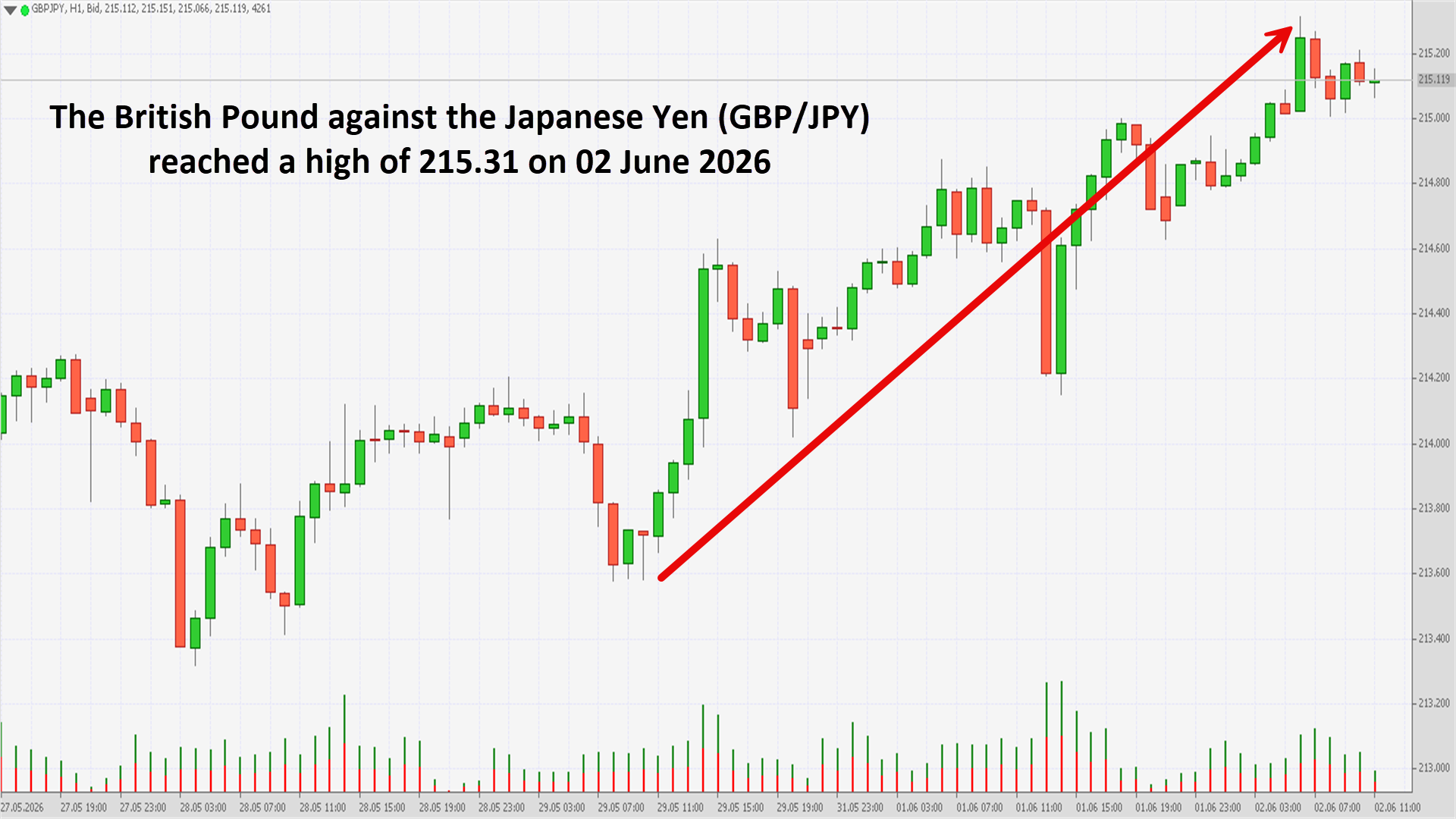
GBPJPY – The British Pound against the Japanese Yen (GBP/JPY) reached a high of 215.31 on 02 June 2026

O3grq0u0_o.png


Technical Analysis: GBP/JPY – High 215.31 (02 June 2026)

The British Pound against the Japanese Yen (GBP/JPY) reached a high of 215.31 on 02 June 2026, a level that underscores the pair’s strong bullish momentum and its position near multi-decade highs. This price action reflects both technical strength and macroeconomic divergence, where the Bank of England’s relatively firm stance contrasts sharply with the Bank of Japan’s continued ultra-loose monetary policy.

From a technical perspective, the 215.31 high represents an extension of the uptrend that began in late March, when GBP/JPY rebounded from the 205.50 support zone. Since then, the pair has carved out a series of higher lows at 208.20, 210.80, and 213.00, confirming the persistence of bullish sentiment. The rally has pushed the pair well above the 50-day and 100-day moving averages, both of which are sloping upward, reinforcing the strength of the trend. The 200-day moving average, now positioned near 200.00, underscores the long-term bullish structure and provides a wide cushion for any corrective pullbacks.

Momentum indicators remain supportive. The Relative Strength Index (RSI) is currently hovering around 70, entering overbought territory but not yet flashing exhaustion signals. This suggests that while the pair may be due for short-term consolidation, the broader trend remains intact. The MACD histogram has been firmly positive since mid-April, with the signal line well above zero, confirming the strength of the rally. Volume analysis shows increased participation during upward moves, indicating genuine conviction among buyers rather than speculative spikes.

Key support and resistance levels are clearly defined. Immediate resistance lies at 216.00–217.00, a zone that represents psychological resistance and the upper boundary of the current bullish channel. A decisive break above this area would open the path toward 220.00, a level not seen since the early 1990s. On the downside, initial support rests at 213.00, followed by the more critical 210.80 pivot. A failure to hold above 210.80 would risk a deeper retracement toward 208.20, though such a move would likely be corrective rather than trend-reversing given the broader structure.

The macroeconomic backdrop adds depth to the technical picture. The British Pound has been supported by signs of resilience in the UK economy, particularly in services and consumer spending, alongside expectations that the Bank of England will maintain a relatively firm policy stance to manage inflationary pressures. In contrast, the Japanese Yen remains under pressure due to the Bank of Japan’s continued commitment to ultra-loose monetary policy, including yield curve control measures that suppress bond yields. This policy divergence has widened interest rate differentials, encouraging capital flows into the pound and away from the yen, thereby sustaining GBP/JPY’s bullish trajectory.

For traders, the implications are clear. Short-term participants may look to exploit momentum by targeting the 216.00–217.00 resistance zone, while maintaining tight risk controls below 213.00. Swing traders may interpret the 215.31 high as a potential breakout precursor, positioning for a medium-term move toward 220.00, contingent on sustained closes above 216.00. Conversely, a rejection at current levels would signal a period of consolidation, with 210.80 acting as the key battleground for directional bias.

In conclusion, the GBP/JPY high of 215.31 on 02 June 2026 represents a pivotal test of bullish resilience near multi-decade highs. Technical indicators, price structure, and macro fundamentals collectively suggest that the pair remains poised for further upside, provided it can decisively clear the 216.00 resistance zone. Until then, traders should remain alert to potential consolidation phases while respecting the dominant bullish trend.

#fxopen #forex #forexanalysis

Disclaimer: This analysis represents my own opinion only. It is not to be construed as an opinion, offer, solicitation, recommendation, or financial advice of the Companies operating under the FXOpen brand.

For in-depth analysis, please check ...
 
EURUSD Technical Analysis – 02 JUNE, 2026
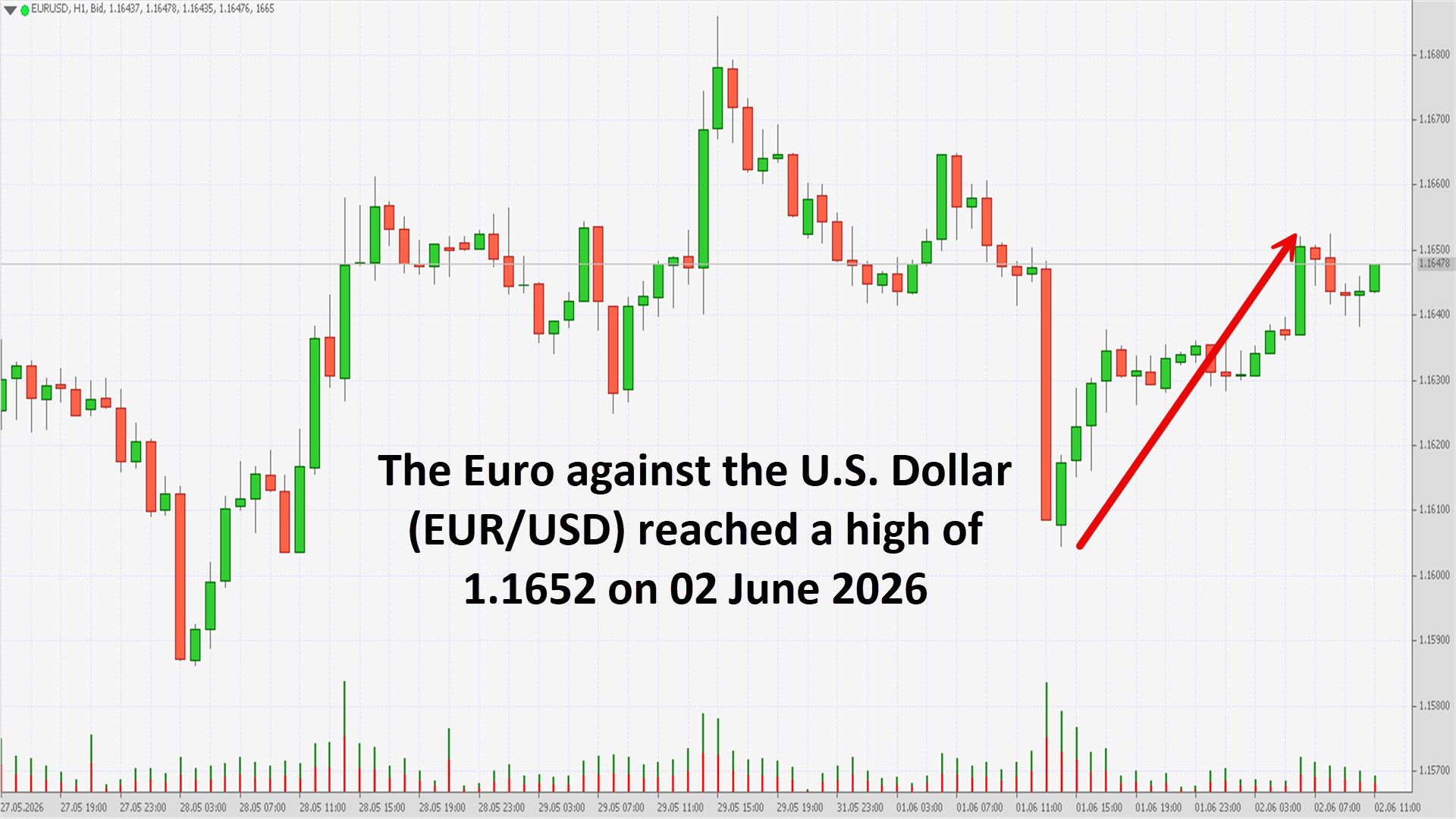
EURUSD – The Euro against the U.S. Dollar (EUR/USD) reached a high of 1.1652 on 02 June 2026

orzubjfH_o.png


Technical Analysis: EUR/USD – High 1.1652 (02 June 2026)

The Euro against the U.S. Dollar (EUR/USD) reached a high of 1.1652 on 02 June 2026, a level that underscores the pair’s ongoing bullish momentum and its attempt to reclaim territory last seen in mid-2024. This price point is technically significant because it represents a continuation of the upward trajectory that began in April, when EUR/USD rebounded from the 1.1350 support zone. Since then, the pair has carved out a series of higher lows, reinforcing the bullish structure and signalling renewed investor confidence in the euro.

From a technical standpoint, the 1.1652 high coincides with the upper boundary of the ascending channel that has guided the pair since early spring. The channel’s slope suggests steady accumulation, with buyers consistently defending dips at 1.1400, 1.1480, and 1.1550. The breakout attempts above 1.1650 is particularly important because it aligns with the 200-day moving average, a widely respected indicator that often separates bearish from bullish regimes. A sustained close above this level would confirm a transition into a more constructive medium-term outlook, potentially opening the path toward 1.1750.

Momentum indicators reinforce this bullish bias. The Relative Strength Index (RSI) is currently hovering around 66, indicating strong momentum but not yet flashing overbought signals. This suggests that the pair has room to extend higher before exhaustion sets in. The MACD histogram has been firmly positive since mid-May, with the signal line well above zero, confirming the strength of the rally. Volume analysis shows increased participation during upward moves, indicating genuine conviction among buyers rather than speculative spikes.

Support and resistance levels are clearly defined. Immediate resistance lies at 1.1670–1.1700, a psychological barrier and prior swing high from late 2024. A decisive break above this zone would open the door to 1.1750, followed by 1.1850, levels that would mark significant milestones in the pair’s recovery. On the downside, initial support rests at 1.1550, followed by the more critical 1.1480 pivot. A failure to hold above 1.1480 would risk a deeper retracement toward 1.1400, potentially undermining the bullish structure.

The macroeconomic backdrop adds depth to the technical picture. The euro has been supported by signs of stabilization in the eurozone economy, particularly in manufacturing and services, alongside expectations that the European Central Bank will maintain a cautious but steady policy stance. Meanwhile, the U.S. Dollar has softened slightly as markets anticipate a gradual easing cycle from the Federal Reserve later in 2026, following signs of moderating inflation. This divergence in monetary policy expectations has tilted sentiment in favour of the euro, providing fundamental backing to the technical breakout attempt.

For traders, the implications are clear. Short-term participants may look to exploit momentum by targeting the 1.1670–1.1700 resistance zone, while maintaining tight risk controls below 1.1550. Swing traders may interpret the 1.1652 high as a potential breakout precursor, positioning for a medium-term move toward 1.1750, contingent on sustained closes above 1.1670. Conversely, a rejection at current levels would signal a period of consolidation, with 1.1480 acting as the key battleground for directional bias.

In conclusion, the EUR/USD high of 1.1652 on 02 June 2026 represents a pivotal test of bullish resilience. Technical indicators, price structure, and macro fundamentals collectively suggest that the pair remains poised for further upside, provided it can decisively clear the 1.1670 resistance zone. Until then, traders should remain alert to potential consolidation phases while respecting the dominant bullish trend.

#fxopen #forex #forexanalysis

Disclaimer: This analysis represents my own opinion only. It is not to be construed as an opinion, offer, solicitation, recommendation, or financial advice of the Companies operating under the FXOpen brand.

For in-depth analysis, please check ...
 
GBPUSD Technical Analysis – 02 JUNE, 2026
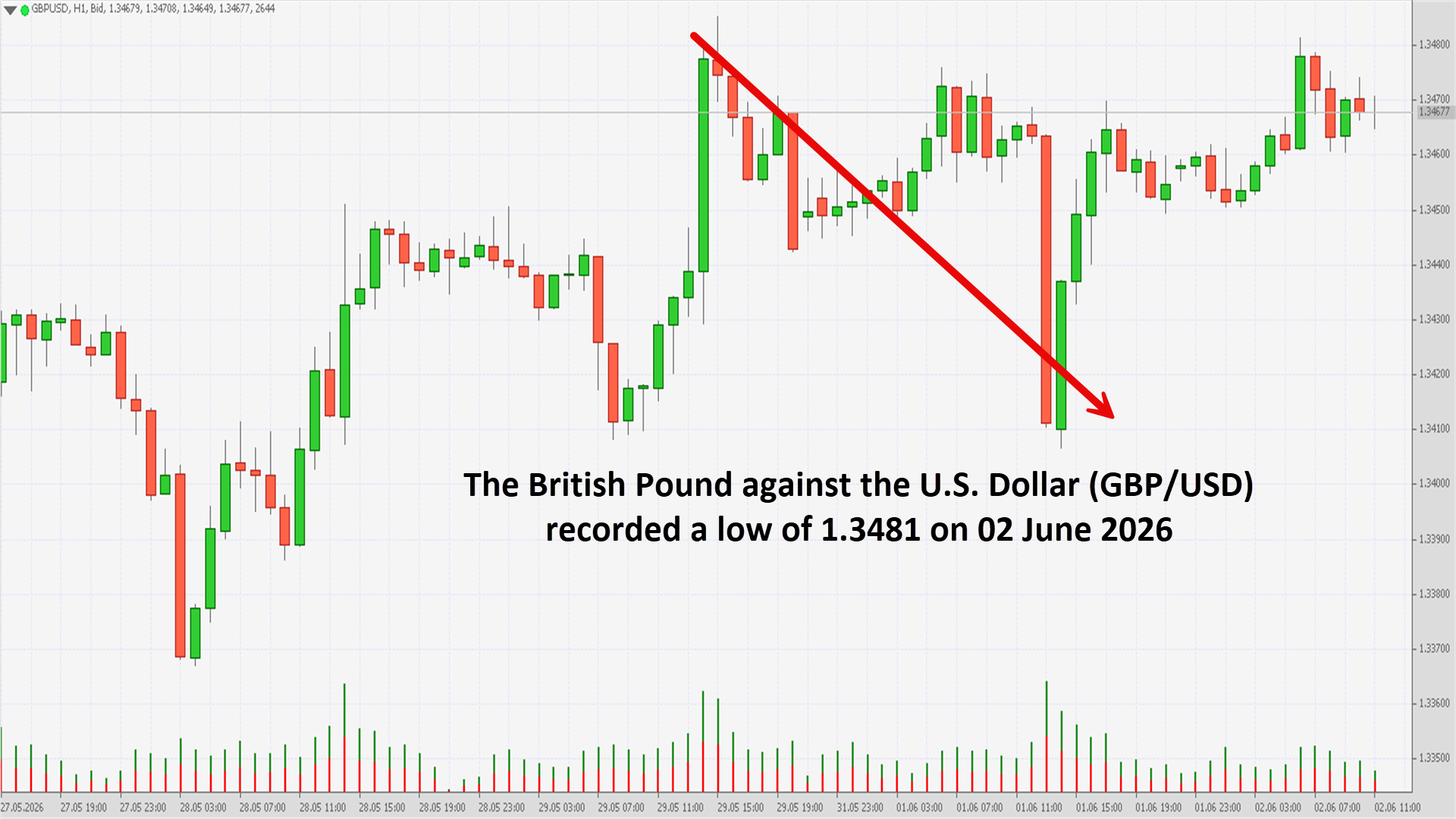
GBPUSD – The British Pound against the U.S. Dollar (GBP/USD) recorded a low of 1.3481 on 02 June 2026

9CWtXVxw_o.png


Technical Analysis: GBP/USD – Low 1.3481 (02 June 2026)

The British Pound against the U.S. Dollar (GBP/USD) recorded a low of 1.3481 on 02 June 2026, a level that highlights the pair’s vulnerability amid shifting macroeconomic dynamics and technical pressures. This price point is significant because it represents a rejection of the bullish attempts seen in late May, when GBP/USD briefly tested the 1.3650 resistance zone before succumbing to renewed selling pressure. The move down to 1.3481 underscores the fragility of sterling’s recovery and the resilience of the U.S. Dollar in the current environment.

From a technical perspective, the 1.3481 low marks a retest of the lower boundary of the descending channel that has guided the pair since mid-April. The channel’s slope reflects persistent bearish sentiment, with sellers consistently defending rallies at 1.3600, 1.3550, and 1.3500. The breach of 1.3500 is particularly important because it represents a psychological threshold and a prior pivot level. A sustained close below 1.3480 would confirm a continuation of the bearish trend, potentially opening the path toward 1.3400 and even 1.3300 in the medium term.

Momentum indicators reinforce the bearish bias. The Relative Strength Index (RSI) is currently hovering around 42, indicating weak momentum and suggesting that sellers remain in control. The MACD histogram has turned negative, with the signal line crossing below zero in late May, confirming the shift toward bearish momentum. Volume analysis shows increased participation during downward moves, highlighting genuine conviction among sellers rather than temporary profit-taking.

Support and resistance levels are clearly defined. Immediate support lies at 1.3480–1.3450, a zone that has historically acted as a base during prior sell-offs. A decisive break below this area would expose the pair to 1.3400, followed by 1.3300, levels that would mark significant milestones in the bearish trajectory. On the upside, initial resistance rests at 1.3550, followed by the more critical 1.3600 pivot. A failure to reclaim 1.3600 would reinforce the bearish structure and limit the scope for recovery.

The macroeconomic backdrop adds depth to the technical picture. The British Pound has been pressured by lingering concerns over UK inflation and growth, with the Bank of England facing a delicate balancing act between maintaining restrictive policy and supporting economic stability. Meanwhile, the U.S. Dollar has benefited from safe-haven flows and expectations that the Federal Reserve will remain cautious in its easing cycle, given persistent inflationary pressures. This divergence in monetary policy expectations has tilted sentiment in favour of the dollar, providing fundamental backing to the technical breakdown in GBP/USD.

For traders, the implications are clear. Short-term participants may look to exploit bearish momentum by targeting the 1.3450–1.3400 support zone, while maintaining tight risk controls above 1.3550. Swing traders may interpret the 1.3481 low as a potential breakdown precursor, positioning for a medium-term move toward 1.3300, contingent on sustained closes below 1.3480. Conversely, a rebound above 1.3550 would signal a corrective phase, with 1.3600 acting as the key battleground for directional bias.

In conclusion, the GBP/USD low of 1.3481 on 02 June 2026 represents a pivotal test of bearish resilience. Technical indicators, price structure, and macro fundamentals collectively suggest that the pair remains vulnerable to further downside, provided it fails to reclaim the 1.3550–1.3600 resistance zone. Until then, traders should respect the dominant bearish trend while remaining alert to potential corrective rebounds.

#fxopen #forex #forexanalysis

Disclaimer: This analysis represents my own opinion only. It is not to be construed as an opinion, offer, solicitation, recommendation, or financial advice of the Companies operating under the FXOpen brand.

For in-depth analysis, please check ...
 
NZDUSD Technical Analysis – 02 JUNE, 2026
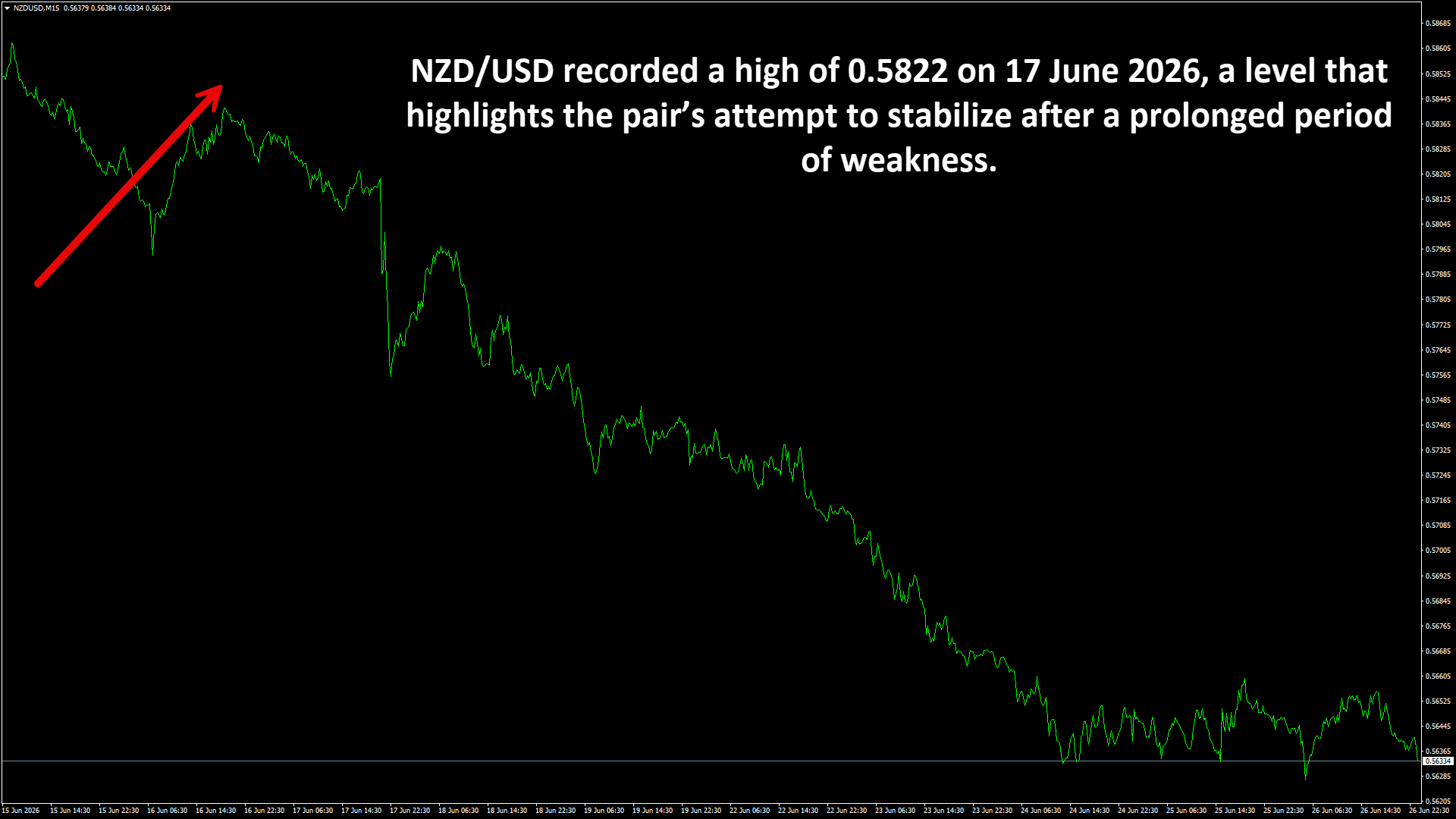
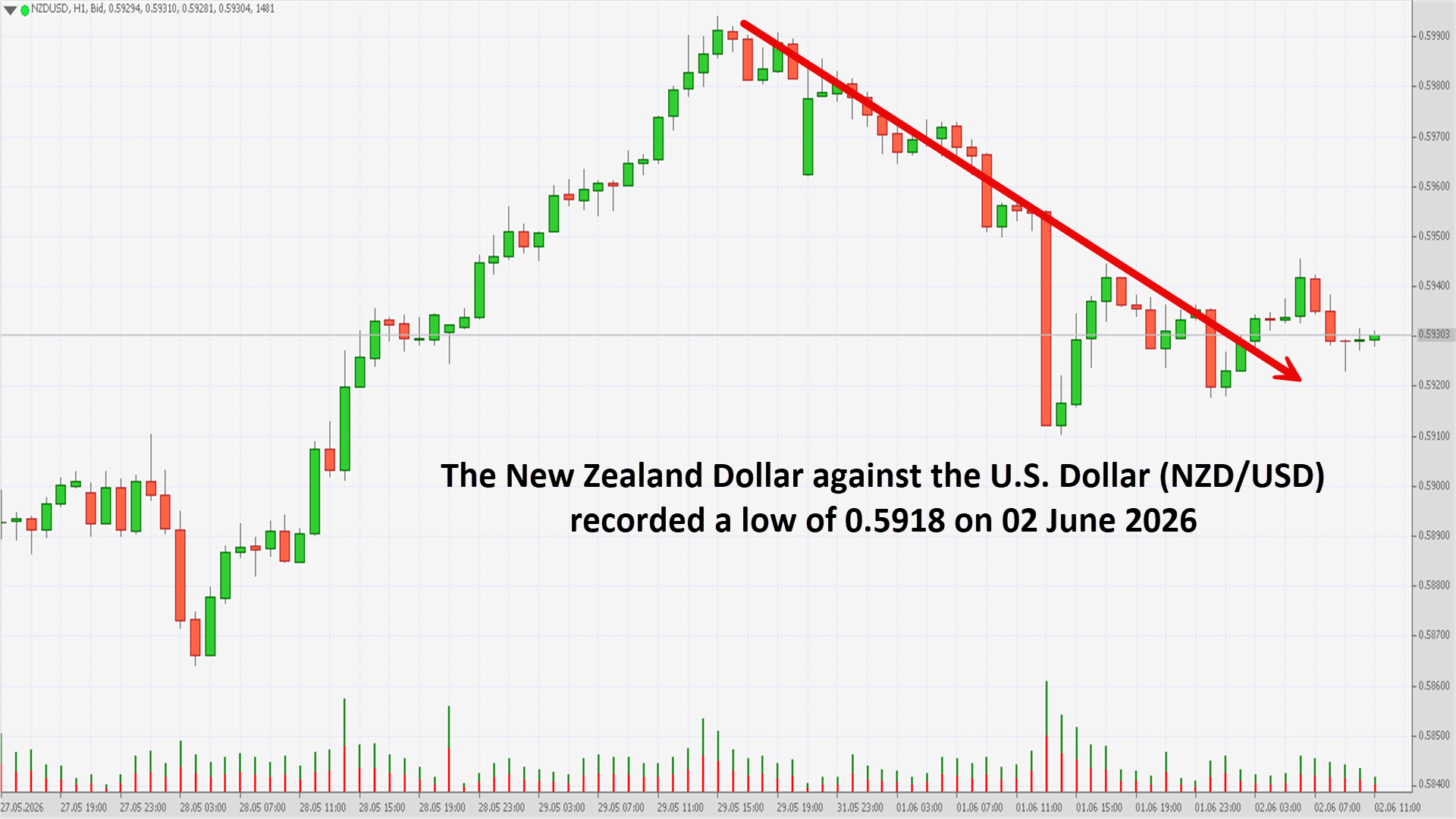
NZDUSD – The New Zealand Dollar against the U.S. Dollar (NZD/USD) recorded a low of 0.5918 on 02 June 2026

jQDaxL6V_o.png


Technical Analysis: NZD/USD – Low 0.5918 (02 June 2026)

The New Zealand Dollar against the U.S. Dollar (NZD/USD) recorded a low of 0.5918 on 02 June 2026, a level that highlights the pair’s vulnerability and underscores the prevailing bearish sentiment. This price action is significant because it represents a rejection of the modest recovery attempts seen in late May, when NZD/USD briefly tested the 0.6050 resistance zone before succumbing to renewed selling pressure. The move down to 0.5918 signals that sellers remain firmly in control, with the pair struggling to sustain any meaningful upside momentum.

From a technical perspective, the 0.5918 low marks a retest of the lower boundary of the descending channel that has guided the pair since March. The channel’s slope reflects persistent bearish sentiment, with rallies consistently capped at 0.6050, 0.6000, and 0.5950. The breach of 0.5950 is particularly important because it represents a psychological threshold and a prior pivot level. A sustained close below 0.5920 would confirm a continuation of the bearish trend, potentially opening the path toward 0.5850 and even 0.5750 in the medium term.

Momentum indicators reinforce the bearish bias. The Relative Strength Index (RSI) is currently hovering around 38, indicating weak momentum and suggesting that sellers remain in control. The MACD histogram has turned negative, with the signal line crossing below zero in late May, confirming the shift toward bearish momentum. Volume analysis shows increased participation during downward moves, highlighting genuine conviction among sellers rather than temporary profit-taking.

Support and resistance levels are clearly defined. Immediate support lies at 0.5900–0.5880, a zone that has historically acted as a base during prior sell-offs. A decisive break below this area would expose the pair to 0.5850, followed by 0.5750, levels that would mark significant milestones in the bearish trajectory. On the upside, initial resistance rests at 0.5950, followed by the more critical 0.6000 pivot. A failure to reclaim 0.6000 would reinforce the bearish structure and limit the scope for recovery.

The macroeconomic backdrop adds depth to the technical picture. The New Zealand Dollar has been pressured by concerns over slowing domestic growth and subdued demand for key exports such as dairy and agricultural products. Meanwhile, the Reserve Bank of New Zealand has maintained a cautious stance, balancing inflationary pressures with the need to support economic stability. In contrast, the U.S. Dollar has benefited from safe-haven flows and expectations that the Federal Reserve will remain cautious in its easing cycle, given persistent inflationary pressures. This divergence in monetary policy expectations has tilted sentiment in favor of the dollar, providing fundamental backing to the technical breakdown in NZD/USD.

For traders, the implications are clear. Short-term participants may look to exploit bearish momentum by targeting the 0.5880–0.5850 support zone, while maintaining tight risk controls above 0.5950. Swing traders may interpret the 0.5918 low as a potential breakdown precursor, positioning for a medium-term move toward 0.5750, contingent on sustained closes below 0.5900. Conversely, a rebound above 0.6000 would signal a corrective phase, with 0.6050 acting as the key battleground for directional bias.

In conclusion, the NZD/USD low of 0.5918 on 02 June 2026 represents a pivotal test of bearish resilience. Technical indicators, price structure, and macro fundamentals collectively suggest that the pair remains vulnerable to further downside, provided it fails to reclaim the 0.6000 resistance zone. Until then, traders should respect the dominant bearish trend while remaining alert to potential corrective rebounds.

#fxopen #forex #forexanalysis

Disclaimer: This analysis represents my own opinion only. It is not to be construed as an opinion, offer, solicitation, recommendation, or financial advice of the Companies operating under the FXOpen brand.

For in-depth analysis, please check ...
 
USDCAD Technical Analysis – 02 JUNE, 2026
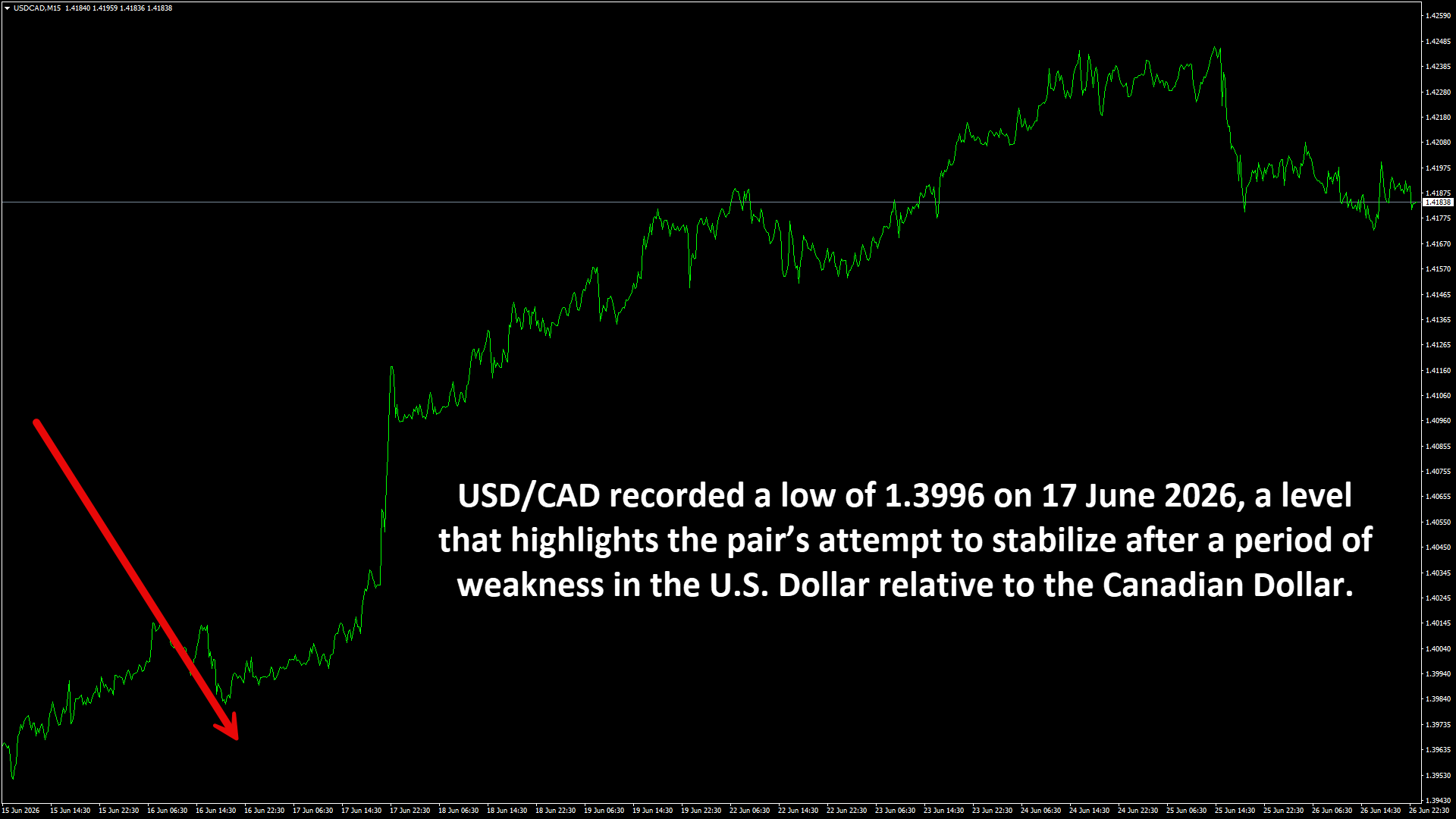
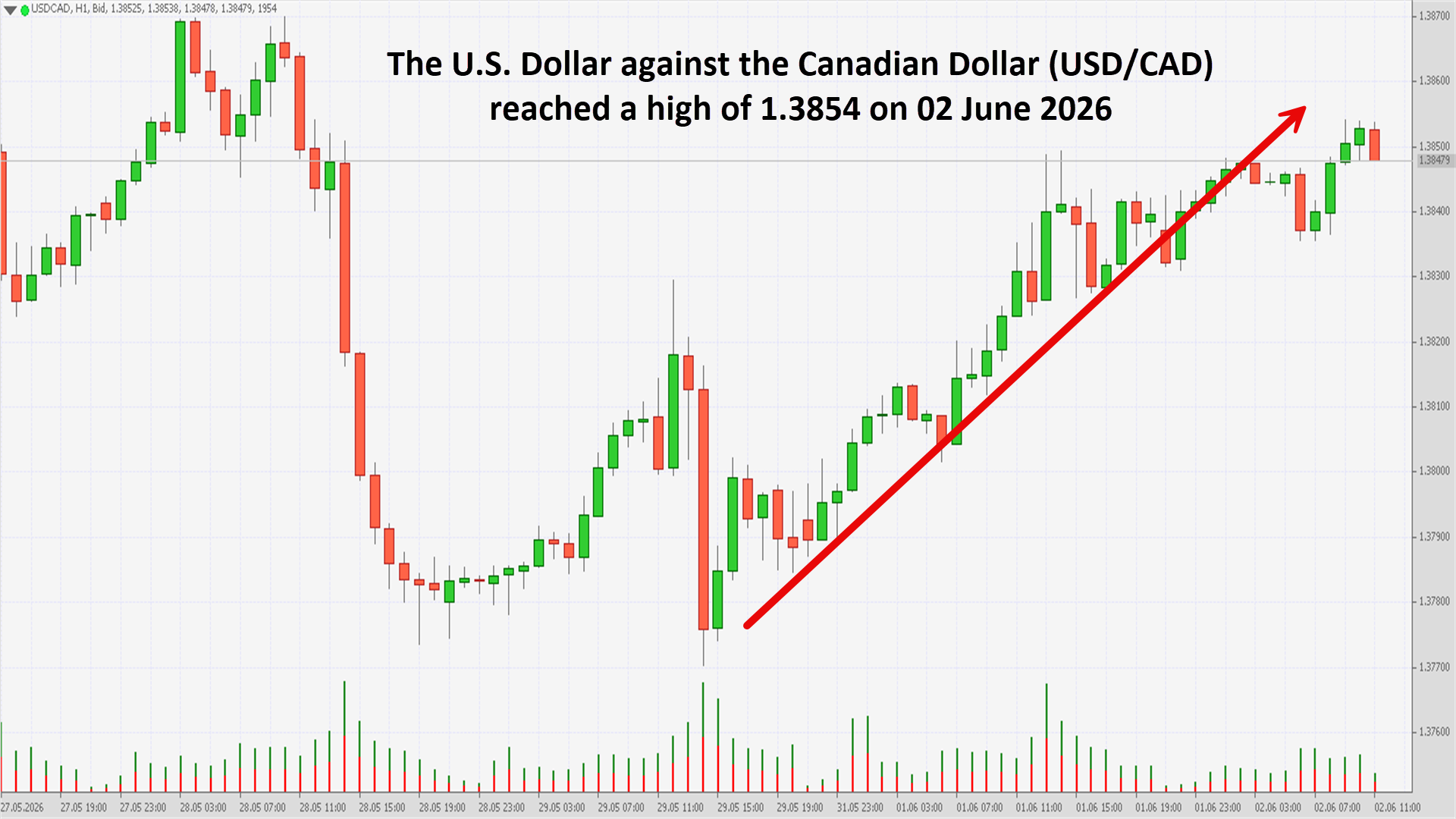
USDCAD – The U.S. Dollar against the Canadian Dollar (USD/CAD) reached a high of 1.3854 on 02 June 2026

ZB1vsadK_o.png


Technical Analysis: USD/CAD – High 1.3854 (02 June 2026)

The U.S. Dollar against the Canadian Dollar (USD/CAD) reached a high of 1.3854 on 02 June 2026, a level that underscores the pair’s strong bullish momentum and its position near the upper boundary of a multi-month trading range. This price action is significant because it reflects both technical strength and macroeconomic divergence, where the U.S. Dollar has benefited from safe-haven demand while the Canadian Dollar has been pressured by commodity-linked volatility.

From a technical perspective, the 1.3854 high represents an extension of the uptrend that began in mid-April, when USD/CAD rebounded from the 1.3600 support zone. Since then, the pair has carved out a series of higher lows at 1.3650, 1.3720, and 1.3780, confirming the persistence of bullish sentiment. The rally has pushed the pair above the 50-day and 100-day moving averages, both of which are sloping upward, reinforcing the strength of the trend. The 200-day moving average, now positioned near 1.3500, underscores the long-term bullish structure and provides a wide cushion for any corrective pullbacks.

Momentum indicators remain supportive. The Relative Strength Index (RSI) is currently hovering around 67, approaching overbought territory but not yet flashing exhaustion signals. This suggests that while the pair may be due for short-term consolidation, the broader trend remains intact. The MACD histogram has been firmly positive since early May, with the signal line well above zero, confirming the strength of the rally. Volume analysis shows increased participation during upward moves, indicating genuine conviction among buyers rather than speculative spikes.

Key support and resistance levels are clearly defined. Immediate resistance lies at 1.3860–1.3900, a zone that represents psychological resistance and the upper boundary of the current bullish channel. A decisive break above this area would open the path toward 1.4000, a level not seen since 2020. On the downside, initial support rests at 1.3780, followed by the more critical 1.3720 pivot. A failure to hold above 1.3720 would risk a deeper retracement toward 1.3650, though such a move would likely be corrective rather than trend-reversing given the broader structure.

The macroeconomic backdrop adds depth to the technical picture. The U.S. Dollar has been supported by safe-haven flows and expectations that the Federal Reserve will remain cautious in its easing cycle, given persistent inflationary pressures. Meanwhile, the Canadian Dollar has been pressured by fluctuations in oil prices, which remain volatile amid global supply concerns and shifting demand dynamics. The Bank of Canada’s cautious stance on monetary policy has also contributed to CAD weakness, limiting its ability to counterbalance USD strength. This divergence in monetary policy expectations and commodity-linked exposure explains the pair’s bullish trajectory.

For traders, the implications are clear. Short-term participants may look to exploit momentum by targeting the 1.3860–1.3900 resistance zone, while maintaining tight risk controls below 1.3780. Swing traders may interpret the 1.3854 high as a potential breakout precursor, positioning for a medium-term move toward 1.4000, contingent on sustained closes above 1.3860. Conversely, a rejection at current levels would signal a period of consolidation, with 1.3720 acting as the key battleground for directional bias.

In conclusion, the USD/CAD high of 1.3854 on 02 June 2026 represents a pivotal test of bullish resilience. Technical indicators, price structure, and macro fundamentals collectively suggest that the pair remains poised for further upside, provided it can decisively clear the 1.3860 resistance zone. Until then, traders should remain alert to potential consolidation phases while respecting the dominant bullish trend.

#fxopen #forex #forexanalysis

Disclaimer: This analysis represents my own opinion only. It is not to be construed as an opinion, offer, solicitation, recommendation, or financial advice of the Companies operating under the FXOpen brand.

For in-depth analysis, please check ...
 
USDCHF Technical Analysis – 02 JUNE, 2026
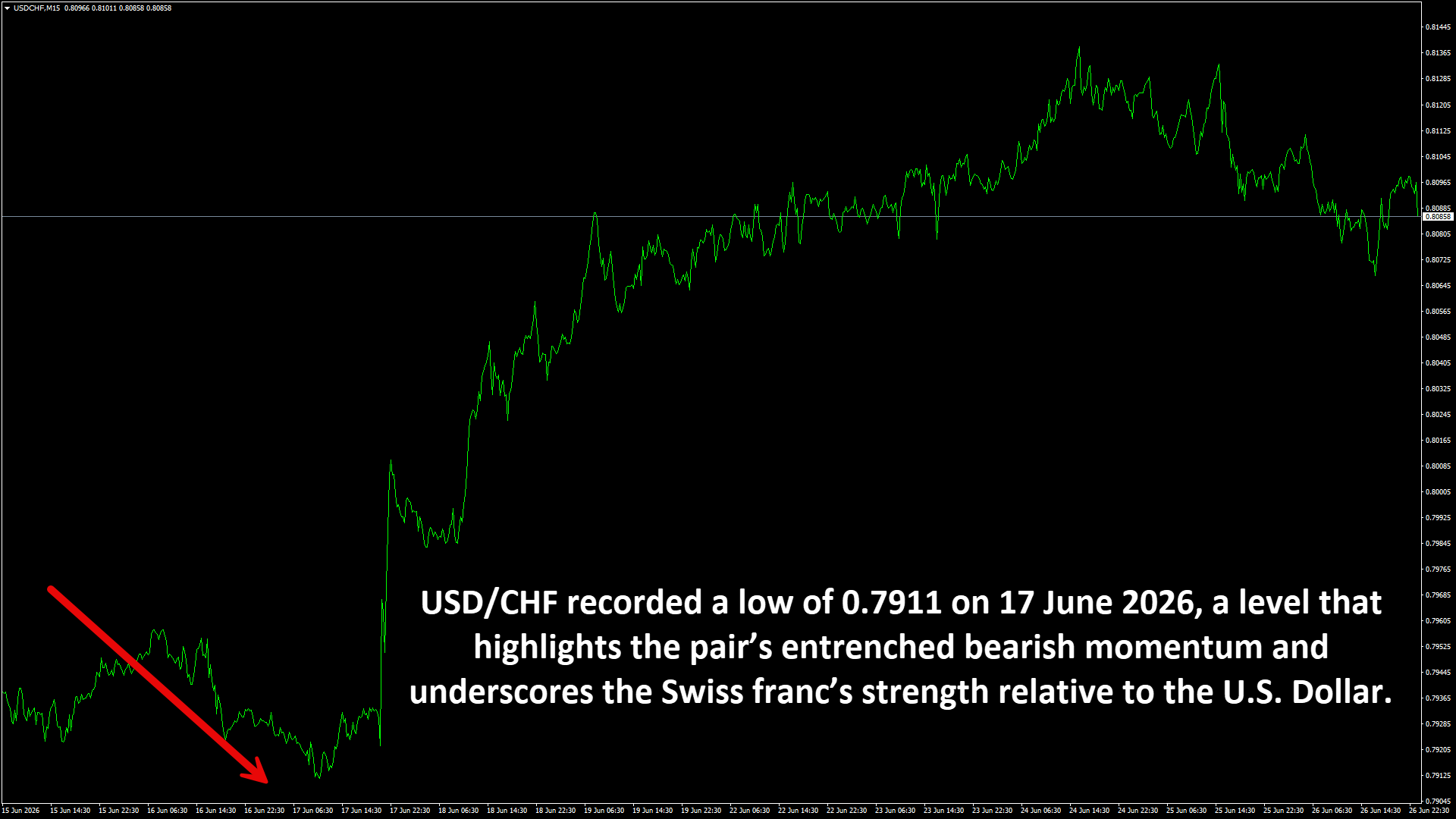
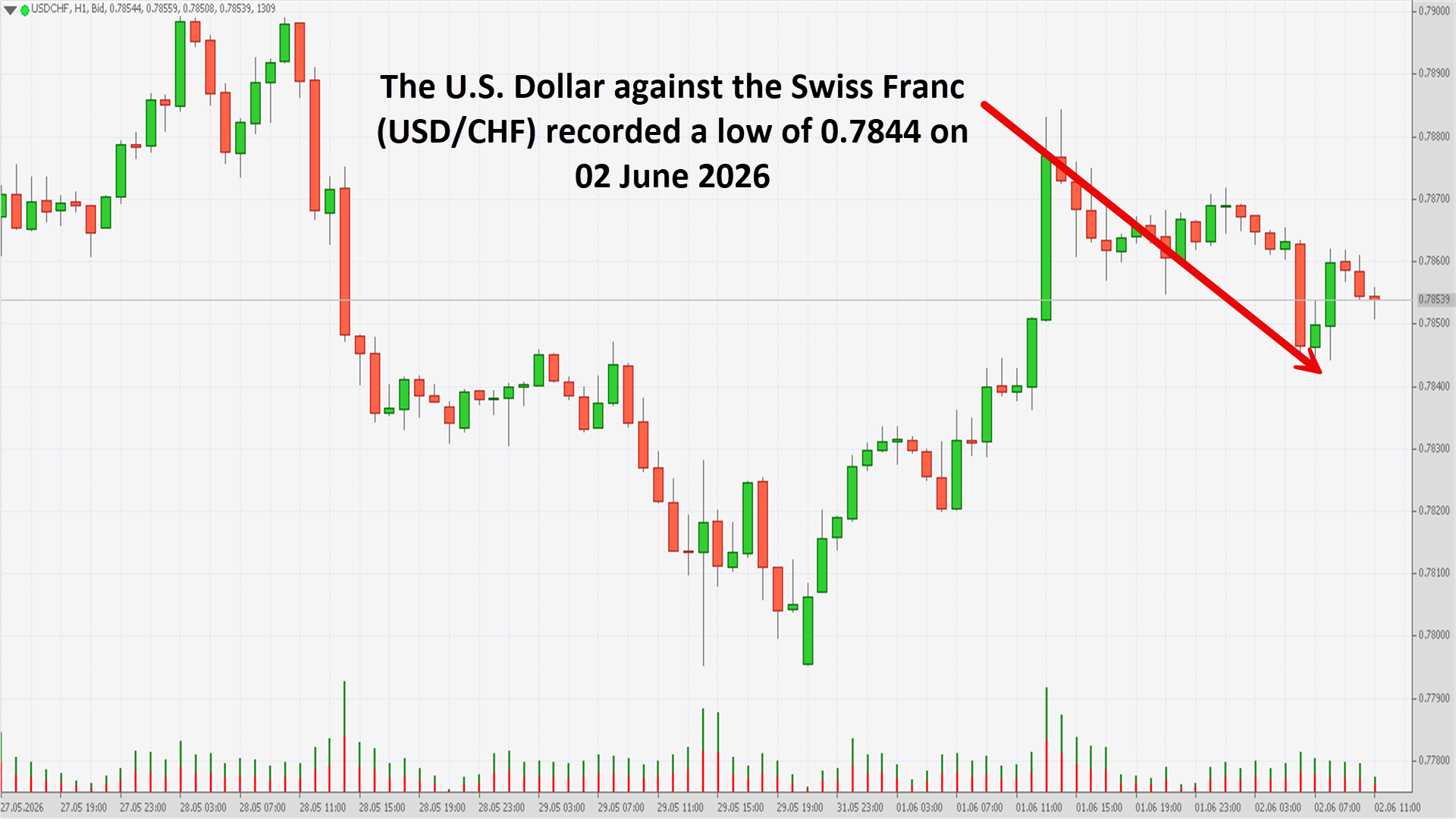
USDCHF – The U.S. Dollar against the Swiss Franc (USD/CHF) recorded a low of 0.7844 on 02 June 2026

a8FXKGhm_o.png


Technical Analysis: USD/CHF – Low 0.7844 (02 June 2026)

The U.S. Dollar against the Swiss Franc (USD/CHF) recorded a low of 0.7844 on 02 June 2026, a level that highlights the pair’s vulnerability and underscores the prevailing bearish sentiment. This price action is significant because it represents a continuation of the downward trajectory that has been in place since mid-April, when USD/CHF failed to sustain momentum above the 0.8100 resistance zone. The move down to 0.7844 signals that sellers remain firmly in control, with the pair struggling to mount any meaningful recovery.

From a technical perspective, the 0.7844 low marks a retest of the lower boundary of the descending channel that has guided the pair for several months. The channel’s slope reflects persistent bearish sentiment, with rallies consistently capped at 0.8050, 0.7980, and 0.7900. The breach of 0.7900 is particularly important because it represents a psychological threshold and a prior pivot level. A sustained close below 0.7850 would confirm a continuation of the bearish trend, potentially opening the path toward 0.7800 and even 0.7700 in the medium term.

Momentum indicators reinforce the bearish bias. The Relative Strength Index (RSI) is currently hovering around 36, indicating weak momentum and suggesting that sellers remain in control. The MACD histogram has turned negative, with the signal line crossing below zero in late May, confirming the shift toward bearish momentum. Volume analysis shows increased participation during downward moves, highlighting genuine conviction among sellers rather than temporary profit-taking.

Support and resistance levels are clearly defined. Immediate support lies at 0.7840–0.7820, a zone that has historically acted as a base during prior sell-offs. A decisive break below this area would expose the pair to 0.7800, followed by 0.7700, levels that would mark significant milestones in the bearish trajectory. On the upside, initial resistance rests at 0.7900, followed by the more critical 0.7980 pivot. A failure to reclaim 0.7980 would reinforce the bearish structure and limit the scope for recovery.

The macroeconomic backdrop adds depth to the technical picture. The U.S. Dollar has been pressured by expectations of a gradual easing cycle from the Federal Reserve later in 2026, following signs of moderating inflation. Meanwhile, the Swiss Franc has benefited from safe-haven flows amid global uncertainty, as well as the Swiss National Bank’s cautious stance on monetary policy. This divergence in sentiment has tilted the balance in favour of CHF, providing fundamental backing to the technical breakdown in USD/CHF.

For traders, the implications are clear. Short-term participants may look to exploit bearish momentum by targeting the 0.7820–0.7800 support zone, while maintaining tight risk controls above 0.7900. Swing traders may interpret the 0.7844 low as a potential breakdown precursor, positioning for a medium-term move toward 0.7700, contingent on sustained closes below 0.7820. Conversely, a rebound above 0.7980 would signal a corrective phase, with 0.8050 acting as the key battleground for directional bias.

In conclusion, the USD/CHF low of 0.7844 on 02 June 2026 represents a pivotal test of bearish resilience. Technical indicators, price structure, and macro fundamentals collectively suggest that the pair remains vulnerable to further downside, provided it fails to reclaim the 0.7980 resistance zone. Until then, traders should respect the dominant bearish trend while remaining alert to potential corrective rebounds.

#fxopen #forex #forexanalysis

Disclaimer: This analysis represents my own opinion only. It is not to be construed as an opinion, offer, solicitation, recommendation, or financial advice of the Companies operating under the FXOpen brand.

For in-depth analysis, please check ...
 
USDJPY Technical Analysis – 02 JUNE, 2026
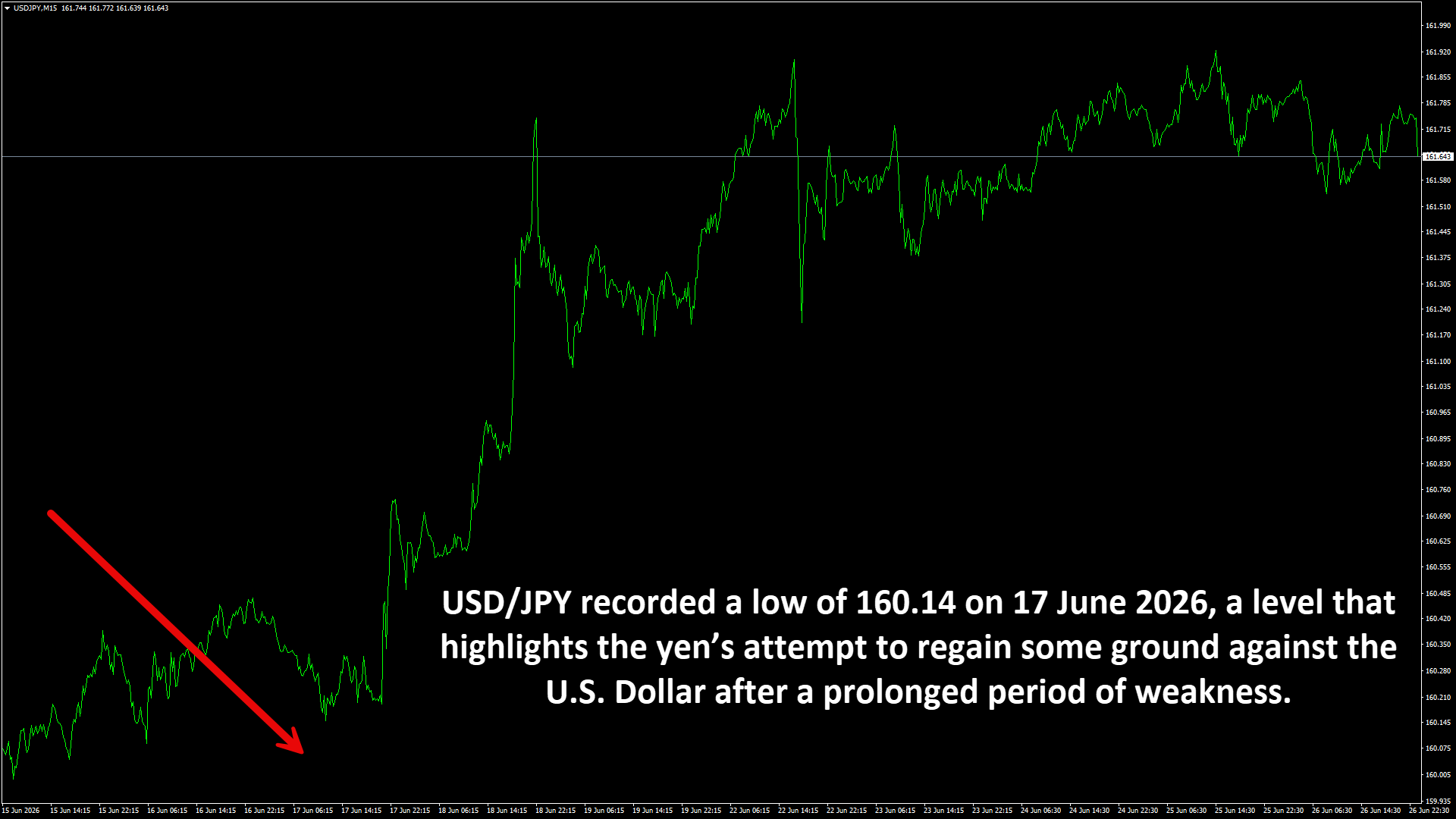
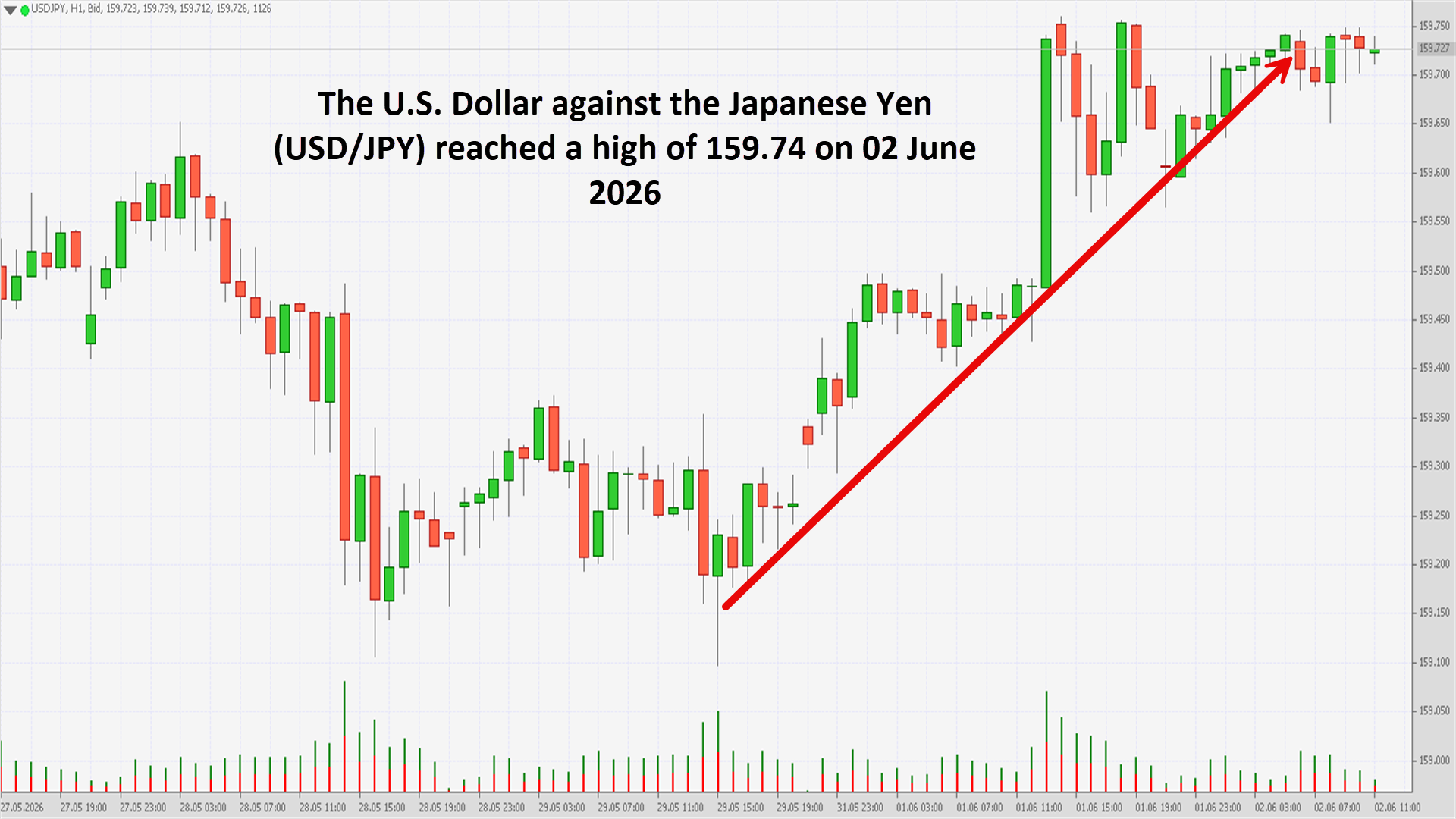
USDJPY - The U.S. Dollar against the Japanese Yen (USD/JPY) reached a high of 159.74 on 02 June 2026

M1q8XTwv_o.png


Technical Analysis: USD/JPY – High 159.74 (02 June 2026)

The U.S. Dollar against the Japanese Yen (USD/JPY) reached a high of 159.74 on 02 June 2026, a level that underscores the pair’s powerful bullish momentum and its position near historic highs. This price action is significant because it reflects both technical strength and macroeconomic divergence, where the Federal Reserve’s cautious stance contrasts sharply with the Bank of Japan’s continued ultra-loose monetary policy.

From a technical perspective, the 159.74 high represents an extension of the uptrend that began in early April, when USD/JPY rebounded from the 152.50 support zone. Since then, the pair has carved out a series of higher lows at 154.80, 156.20, and 158.00, confirming the persistence of bullish sentiment. The rally has pushed the pair well above the 50-day and 100-day moving averages, both of which are sloping upward, reinforcing the strength of the trend. The 200-day moving average, now positioned near 148.00, underscores the long-term bullish structure and provides a wide cushion for any corrective pullbacks.

Momentum indicators remain supportive. The Relative Strength Index (RSI) is currently hovering around 72, firmly in overbought territory, suggesting that while the pair may be due for short-term consolidation, the broader trend remains intact. The MACD histogram has been strongly positive since mid-May, with the signal line well above zero, confirming the strength of the rally. Volume analysis shows increased participation during upward moves, indicating genuine conviction among buyers rather than speculative spikes.

Key support and resistance levels are clearly defined. Immediate resistance lies at 160.00–160.50, a zone that represents psychological resistance and the upper boundary of the current bullish channel. A decisive break above this area would open the path toward 162.00, a level not seen in decades. On the downside, initial support rests at 158.00, followed by the more critical 156.20 pivot. A failure to hold above 156.20 would risk a deeper retracement toward 154.80, though such a move would likely be corrective rather than trend-reversing given the broader structure.

The macroeconomic backdrop adds depth to the technical picture. The U.S. Dollar has been supported by safe-haven flows and expectations that the Federal Reserve will remain cautious in its easing cycle, given persistent inflationary pressures. Meanwhile, the Japanese Yen remains under pressure due to the Bank of Japan’s continued commitment to ultra-loose monetary policy, including yield curve control measures that suppress bond yields. This policy divergence has widened interest rate differentials, encouraging capital flows into the dollar and away from the yen, thereby sustaining USD/JPY’s bullish trajectory.

For traders, the implications are clear. Short-term participants may look to exploit momentum by targeting the 160.00–160.50 resistance zone, while maintaining tight risk controls below 158.00. Swing traders may interpret the 159.74 high as a potential breakout precursor, positioning for a medium-term move toward 162.00, contingent on sustained closes above 160.00. Conversely, a rejection at current levels would signal a period of consolidation, with 156.20 acting as the key battleground for directional bias.

In conclusion, the USD/JPY high of 159.74 on 02 June 2026 represents a pivotal test of bullish resilience near historic highs. Technical indicators, price structure, and macro fundamentals collectively suggest that the pair remains poised for further upside, provided it can decisively clear the 160.00 resistance zone. Until then, traders should remain alert to potential consolidation phases while respecting the dominant bullish trend.

#fxopen #forex #forexanalysis

Disclaimer: This analysis represents my own opinion only. It is not to be construed as an opinion, offer, solicitation, recommendation, or financial advice of the Companies operating under the FXOpen brand.

For in-depth analysis, please check ...
 
Back
Top