
Daily Market Analytics - Forex

EURCHF Technical Analysis – 28 APR, 2026
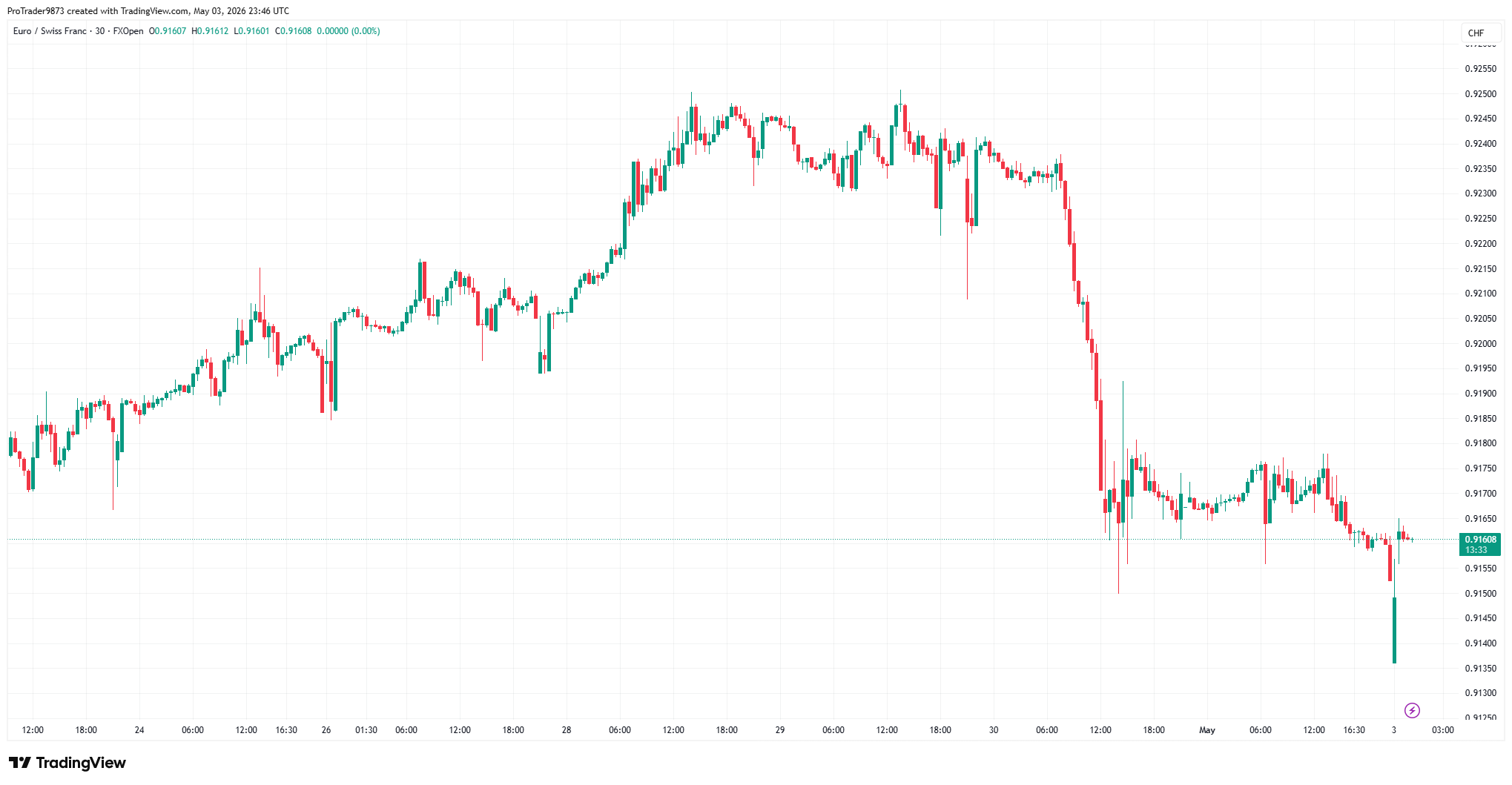
EURCHF – EURCHF touched a low of 0.9249 on 28 April 2026
HTpIGubf_o.png


EURCHF Technical Analysis – 28 April 2026

Low: 0.9249

Multi Timeframe Overview

EURCHF touched a low of 0.9249 on 28 April 2026, underscoring the pair’s persistent bearish undertone. On the daily chart, the pair continues to trade within a descending channel, with successive lower highs and lower lows confirming sustained downside pressure. The weekly structure reflects a broader consolidation phase, but the inability to hold above 0.9300 highlights the dominance of sellers. Intraday charts (H1/H4) reveal sharp downward impulses followed by shallow corrective rebounds, suggesting that bearish momentum remains intact despite intermittent pauses.

Trend Structure and Momentum
The prevailing trend is bearish, reinforced by the alignment of moving averages:
• 20 day moving average is declining near 0.9280, acting as immediate dynamic resistance.
• 50 day moving average sits around 0.9330, further capping upside attempts.
• 200 day moving average at 0.9450 underscores the depth of the current downtrend.

Momentum indicators confirm the bearish bias:
• RSI (14) is at 36, reflecting sustained downside momentum but not yet oversold, leaving room for further weakness.
• MACD remains negative, with the histogram widening, signaling accelerating bearish momentum.
• Stochastic oscillator is hovering near oversold territory, suggesting potential for short term corrective rebounds but not yet a reversal.

Support and Resistance Levels
• Immediate Support: 0.9249 (session low), followed by 0.9225 and 0.9200.
• Key Resistance: 0.9280 (20 day MA), 0.9330 (50 day MA), and 0.9350 (psychological barrier).
• Broader Structure: Sustained closes below 0.9249 would expose 0.9225 and 0.9200, while recovery above 0.9280 could trigger corrective rallies toward 0.9330.

Scenario Implications
• Bearish Case: A decisive break below 0.9249 could accelerate downside momentum, targeting 0.9225 initially and extending toward 0.9200. This scenario aligns with persistent euro weakness and Swiss franc demand as a safe haven currency.
• Bullish Case: A rebound above 0.9280 would signal short term corrective strength, potentially testing 0.9330. However, unless price sustains above 0.9350, the broader bearish bias remains intact.
• Neutral/Consolidation: The pair may oscillate between 0.9249–0.9280, forming a consolidation band before the next decisive move.

Macro Considerations
The euro remains pressured by dovish expectations surrounding the European Central Bank, with markets anticipating prolonged accommodative policy. In contrast, the Swiss franc continues to benefit from safe haven flows amid global uncertainty, particularly in equity markets. Divergent monetary policy stances and risk sentiment reinforce the bearish tilt in EURCHF. Any shift in ECB rhetoric or stabilization in global risk appetite could provide temporary relief, but structural factors favor continued franc strength.

Conclusion
EURCHF’s low at 0.9249 on 28 April 2026 highlights the pair’s entrenched bearish momentum. Technical signals point toward further downside, with 0.9225 and 0.9200 emerging as critical support levels. Resistance at 0.9280 and 0.9330 will likely cap corrective rebounds unless broader sentiment shifts decisively. The narrative remains one of euro weakness against franc resilience, with traders advised to monitor 0.9249 closely as the pivot for near term directional bias.

#fxopen #forex #forexanalysis

Disclaimer: This analysis represents my own opinion only. It is not to be construed as an opinion, offer, solicitation, recommendation, or financial advice of the Companies operating under the FXOpen brand.

For in-depth analysis, please check ...
 
EURJPY Technical Analysis – 28 APR, 2026
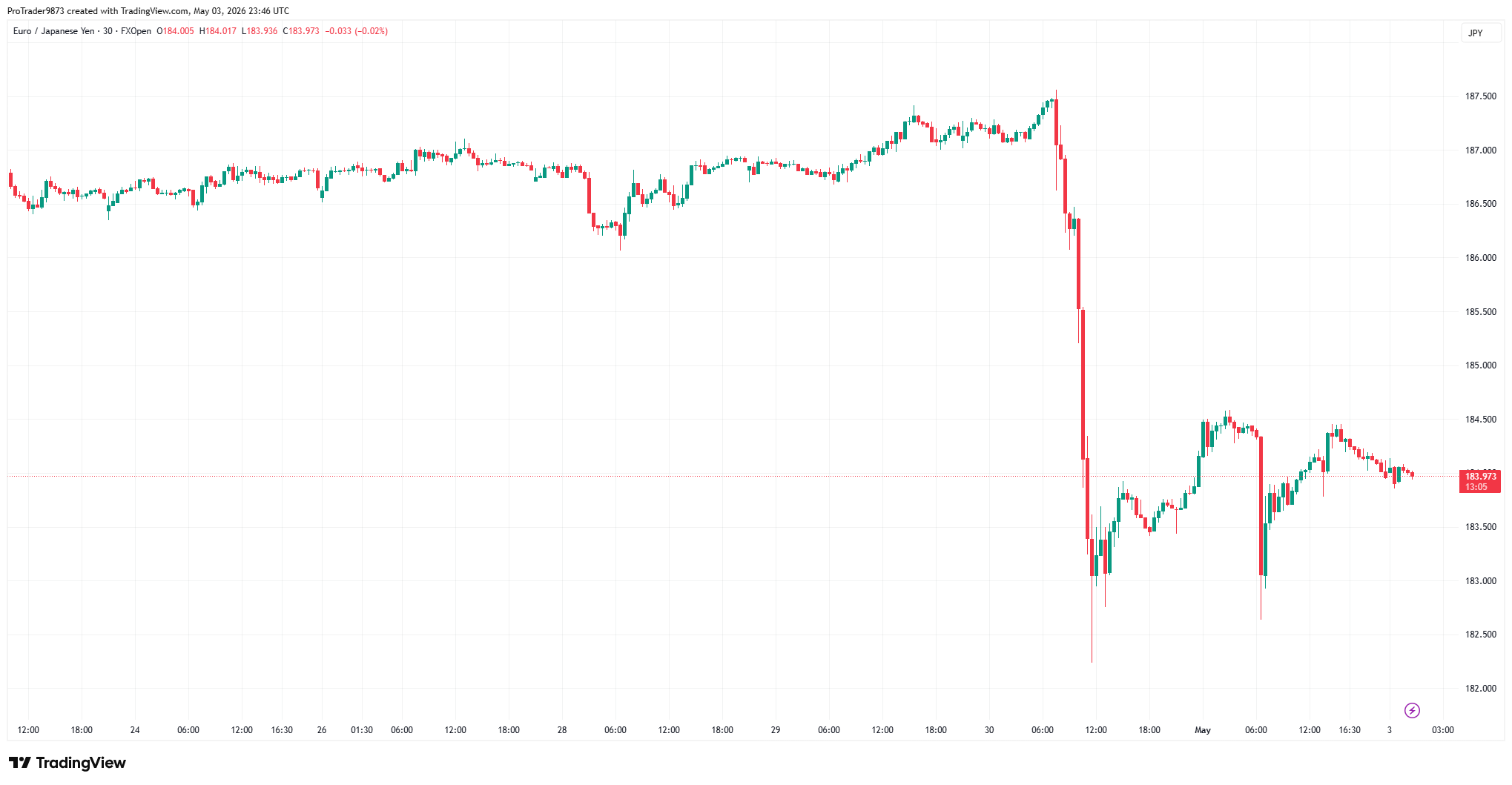
EURJPY – EURJPY fell to a low of 186.15 on 28 April 2026

Kh5VEKrN_o.png


EURJPY Technical Analysis – 28 April 2026

Low: 186.15

Multi Timeframe Overview

EURJPY fell to a low of 186.15 on 28 April 2026, marking a corrective pullback within an otherwise bullish medium term structure. On the daily chart, the pair shows signs of consolidation after recent highs, with price action dipping toward support levels. The weekly structure remains broadly bullish, but the inability to sustain above 187.00 highlights short term exhaustion. Intraday charts (H1/H4) reveal corrective downward impulses, with rebounds failing to regain momentum, suggesting sellers are temporarily in control.

Trend Structure and Momentum
The prevailing trend is corrective bearish in the short term but bullish in the medium term, supported by the following moving averages:
• 20 day moving average is flattening near 186.80, acting as immediate resistance.
• 50 day moving average sits around 185.50, providing near term support.
• 200 day moving average at 180.00 underscores the broader bullish foundation, with price still trading above this level.

Momentum indicators reflect the corrective nature of the move:
• RSI (14) is at 46, signaling weakening momentum and approaching neutral territory.
• MACD has turned slightly negative, with the histogram contracting, indicating waning bullish strength.
• Stochastic oscillator is in the lower range, suggesting potential for short term rebounds but not yet a decisive reversal.

Support and Resistance Levels
• Immediate Support: 186.15 (session low), followed by 185.50 (50 day MA) and 184.80.
• Key Resistance: 186.80 (20 day MA), 187.50 (recent swing high), and 188.50.
• Broader Structure: Sustained closes below 186.15 would expose 185.50 and 184.80, while recovery above 186.80 could re ignite bullish momentum toward 187.50.

Scenario Implications
• Bearish Case: A decisive break below 186.15 could accelerate downside momentum, targeting 185.50 initially and extending toward 184.80. This scenario aligns with short term yen resilience.
• Bullish Case: A rebound above 186.80 would signal renewed buying interest, potentially testing 187.50 and 188.50. Sustained closes above 187.50 would restore the broader bullish bias.
• Neutral/Consolidation: The pair may oscillate between 186.15–186.80, forming a consolidation band before the next decisive move.

Macro Considerations
The euro remains supported by relative stability in European economic data, while the Japanese yen continues to weaken under the Bank of Japan’s ultra loose monetary policy stance. Divergent policy paths between the ECB and BoJ reinforce the medium term bullish tilt in EURJPY, but short term corrections reflect profit taking and temporary yen demand. Global risk sentiment remains constructive, reducing demand for the yen as a safe haven asset, though any deterioration in equities or geopolitical tensions could extend yen strength.

Conclusion
EURJPY’s low at 186.15 on 28 April 2026 highlights the pair’s short term corrective bearish momentum within a broader bullish framework. Technical signals point toward limited downside, with 185.50 and 184.80 emerging as critical support levels. Resistance at 186.80 and 187.50 will likely cap rebounds unless broader sentiment shifts decisively. The narrative remains one of cautious euro strength against yen resilience, with traders advised to monitor 186.15 closely as the pivot for near term directional bias.

#fxopen #forex #forexanalysis

Disclaimer: This analysis represents my own opinion only. It is not to be construed as an opinion, offer, solicitation, recommendation, or financial advice of the Companies operating under the FXOpen brand.

For in-depth analysis, please check ...
 
EURUSD Technical Analysis – 28 APR, 2026
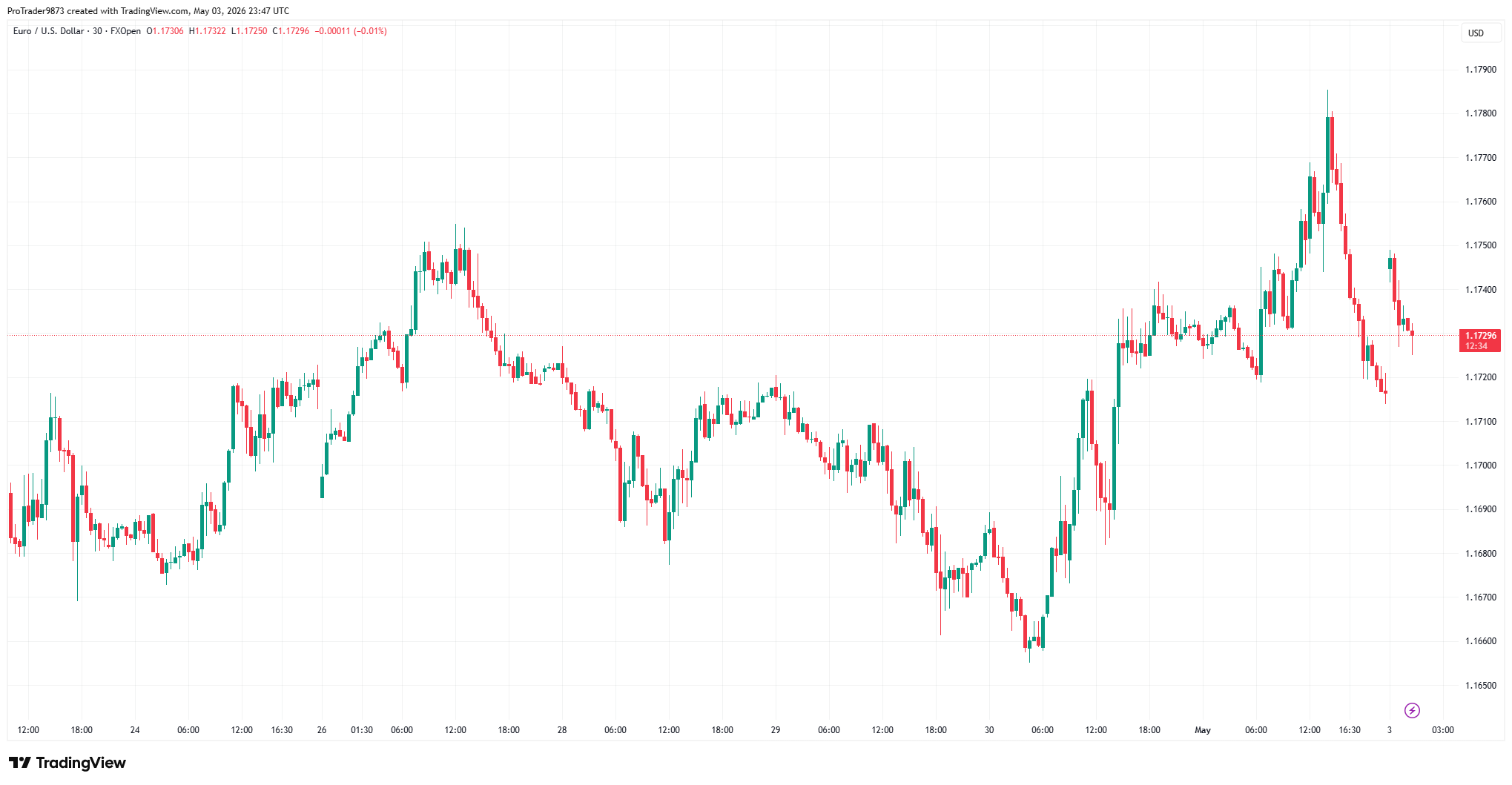
EURUSD – EURUSD fell to a low of 1.1672 on 28 April 2026

6MrpMKOz_o.png


EURUSD Technical Analysis – 28 April 2026

Low: 1.1672

Multi Timeframe Overview

EURUSD fell to a low of 1.1672 on 28 April 2026, marking a corrective decline after recent bullish momentum. On the daily chart, the pair shows signs of exhaustion, with price action dipping below short term support levels. The weekly structure remains broadly bullish, but the inability to sustain above 1.1720 highlights short term weakness. Intraday charts (H1/H4) reveal impulsive bearish waves, with rebounds failing to regain traction, suggesting sellers are temporarily in control.

Trend Structure and Momentum
The prevailing trend is corrective bearish in the short term but bullish in the medium term, supported by the following moving averages:
• 20 day moving average is flattening near 1.1700, acting as immediate resistance.
• 50 day moving average sits around 1.1650, providing near term support.
• 200 day moving average at 1.1500 underscores the broader bullish foundation, with price still trading above this level.

Momentum indicators reflect the corrective nature of the move:
• RSI (14) is at 43, signaling weakening momentum and approaching neutral territory.
• MACD has turned slightly negative, with the histogram contracting, indicating waning bullish strength.
• Stochastic oscillator is in the lower range, suggesting potential for short term rebounds but not yet a decisive reversal.

Support and Resistance Levels
• Immediate Support: 1.1672 (session low), followed by 1.1650 (50 day MA) and 1.1620.
• Key Resistance: 1.1700 (20 day MA), 1.1720 (recent swing high), and 1.1750.
• Broader Structure: Sustained closes below 1.1672 would expose 1.1650 and 1.1620, while recovery above 1.1700 could re ignite bullish momentum toward 1.1720.

Scenario Implications
• Bearish Case: A decisive break below 1.1672 could accelerate downside momentum, targeting 1.1650 initially and extending toward 1.1620. This scenario aligns with short term dollar resilience.
• Bullish Case: A rebound above 1.1700 would signal renewed buying interest, potentially testing 1.1720 and 1.1750. Sustained closes above 1.1720 would restore the broader bullish bias.
• Neutral/Consolidation: The pair may oscillate between 1.1672–1.1700, forming a consolidation band before the next decisive move.

Macro Considerations
The euro remains pressured by dovish expectations surrounding the European Central Bank, with markets anticipating prolonged accommodative policy. Meanwhile, the U.S. dollar is supported by safe haven flows and expectations of a cautious Federal Reserve stance. Divergent monetary policy stances and risk sentiment reinforce the medium term bullish tilt in EURUSD, but short term corrections reflect profit taking and temporary dollar demand. Any improvement in European data or dovish Fed rhetoric could re ignite euro strength, while stronger U.S. data would extend dollar resilience.

Conclusion
EURUSD’s low at 1.1672 on 28 April 2026 highlights the pair’s short term corrective bearish momentum within a broader bullish framework. Technical signals point toward limited downside, with 1.1650 and 1.1620 emerging as critical support levels. Resistance at 1.1700 and 1.1720 will likely cap rebounds unless broader sentiment shifts decisively. The narrative remains one of cautious euro strength against dollar resilience, with traders advised to monitor 1.1672 closely as the pivot for near term directional bias.

#fxopen #forex #forexanalysis

Disclaimer: This analysis represents my own opinion only. It is not to be construed as an opinion, offer, solicitation, recommendation, or financial advice of the Companies operating under the FXOpen brand.

For in-depth analysis, please check ...
 
GBPJPY Technical Analysis – 28 APR, 2026
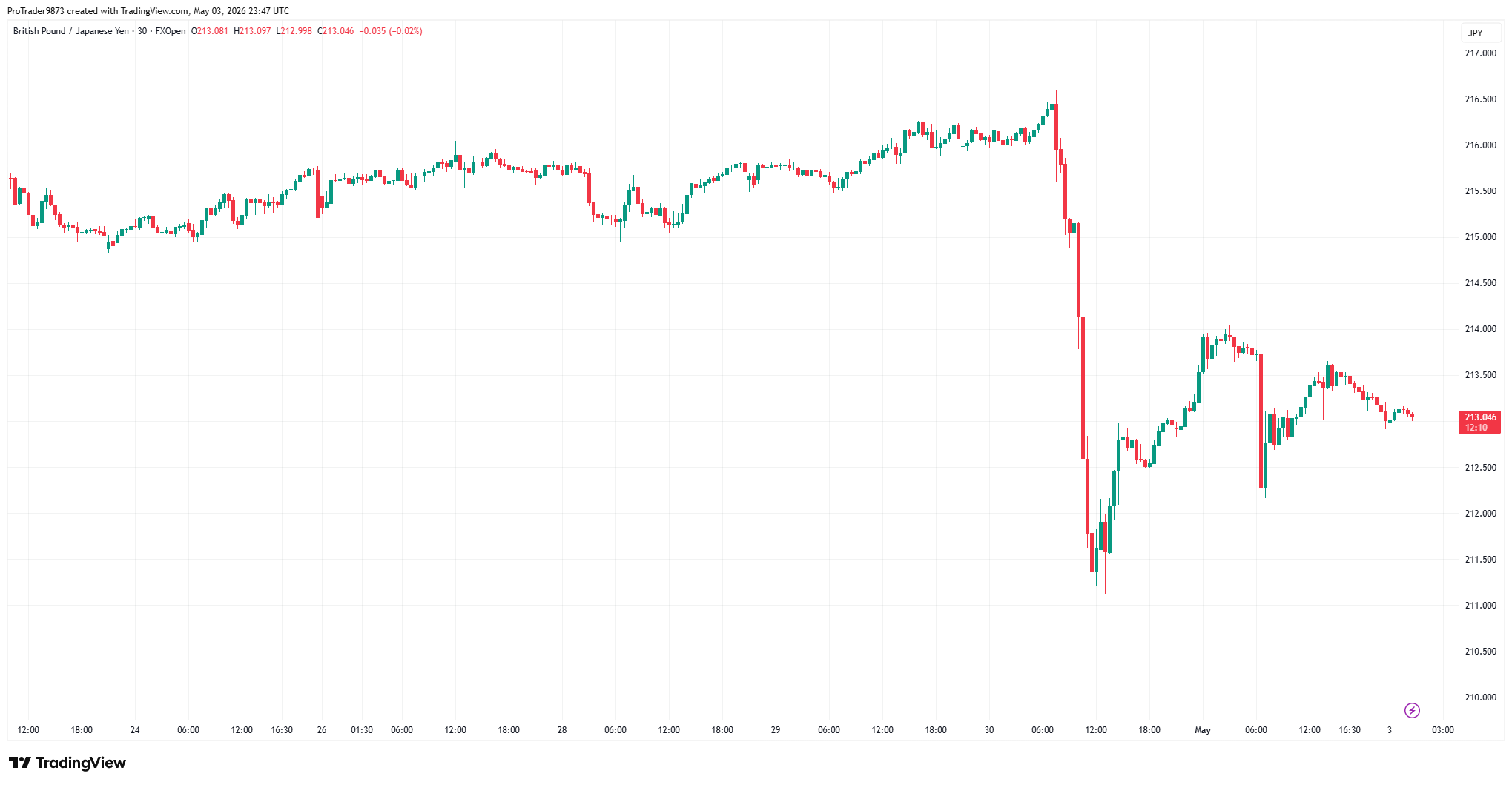
GBPJPY – GBPJPY dropped to a low of 214.95 on 28 April 2026

xXIcCQip_o.png


GBPJPY Technical Analysis – 28 April 2026

Low: 214.95

Multi Timeframe Overview

GBPJPY dropped to a low of 214.95 on 28 April 2026, marking a corrective pullback within an otherwise bullish medium term structure. On the daily chart, the pair shows signs of exhaustion after recent highs, with price action dipping toward support levels. The weekly structure remains broadly bullish, but the inability to sustain above 216.00 highlights short term weakness. Intraday charts (H1/H4) reveal impulsive bearish waves, with rebounds failing to regain traction, suggesting sellers are temporarily in control.

Trend Structure and Momentum
The prevailing trend is corrective bearish in the short term but bullish in the medium term, supported by the following moving averages:
• 20 day moving average is flattening near 215.50, acting as immediate resistance.
• 50 day moving average sits around 213.50, providing near term support.
• 200 day moving average at 205.00 underscores the broader bullish foundation, with price still trading above this level.

Momentum indicators reflect the corrective nature of the move:
• RSI (14) is at 45, signaling weakening momentum and approaching neutral territory.
• MACD has turned slightly negative, with the histogram contracting, indicating waning bullish strength.
• Stochastic oscillator is in the lower range, suggesting potential for short term rebounds but not yet a decisive reversal.

Support and Resistance Levels
• Immediate Support: 214.95 (session low), followed by 213.50 (50 day MA) and 212.80.
• Key Resistance: 215.50 (20 day MA), 216.00 (recent swing high), and 217.50.
• Broader Structure: Sustained closes below 214.95 would expose 213.50 and 212.80, while recovery above 215.50 could re ignite bullish momentum toward 216.00.

Scenario Implications
• Bearish Case: A decisive break below 214.95 could accelerate downside momentum, targeting 213.50 initially and extending toward 212.80. This scenario aligns with short term yen resilience.
• Bullish Case: A rebound above 215.50 would signal renewed buying interest, potentially testing 216.00 and 217.50. Sustained closes above 216.00 would restore the broader bullish bias.
• Neutral/Consolidation: The pair may oscillate between 214.95–215.50, forming a consolidation band before the next decisive move.

Macro Considerations
The British pound remains supported by relative stability in UK economic data and expectations of a cautious Bank of England stance. Meanwhile, the Japanese yen continues to benefit from safe haven flows amid global uncertainty, particularly in equity markets. Divergent monetary policy stances between the BoE and BoJ reinforce the medium term bullish tilt in GBPJPY, but short term corrections reflect profit taking and temporary yen demand. Any improvement in UK data or dovish BoJ rhetoric could re ignite sterling strength, while risk off sentiment would extend yen resilience.

Conclusion
GBPJPY’s low at 214.95 on 28 April 2026 highlights the pair’s short term corrective bearish momentum within a broader bullish framework. Technical signals point toward limited downside, with 213.50 and 212.80 emerging as critical support levels. Resistance at 215.50 and 216.00 will likely cap rebounds unless broader sentiment shifts decisively. The narrative remains one of cautious sterling strength against yen resilience, with traders advised to monitor 214.95 closely as the pivot for near term directional bias.

#fxopen #forex #forexanalysis

Disclaimer: This analysis represents my own opinion only. It is not to be construed as an opinion, offer, solicitation, recommendation, or financial advice of the Companies operating under the FXOpen brand.

For in-depth analysis, please check ...
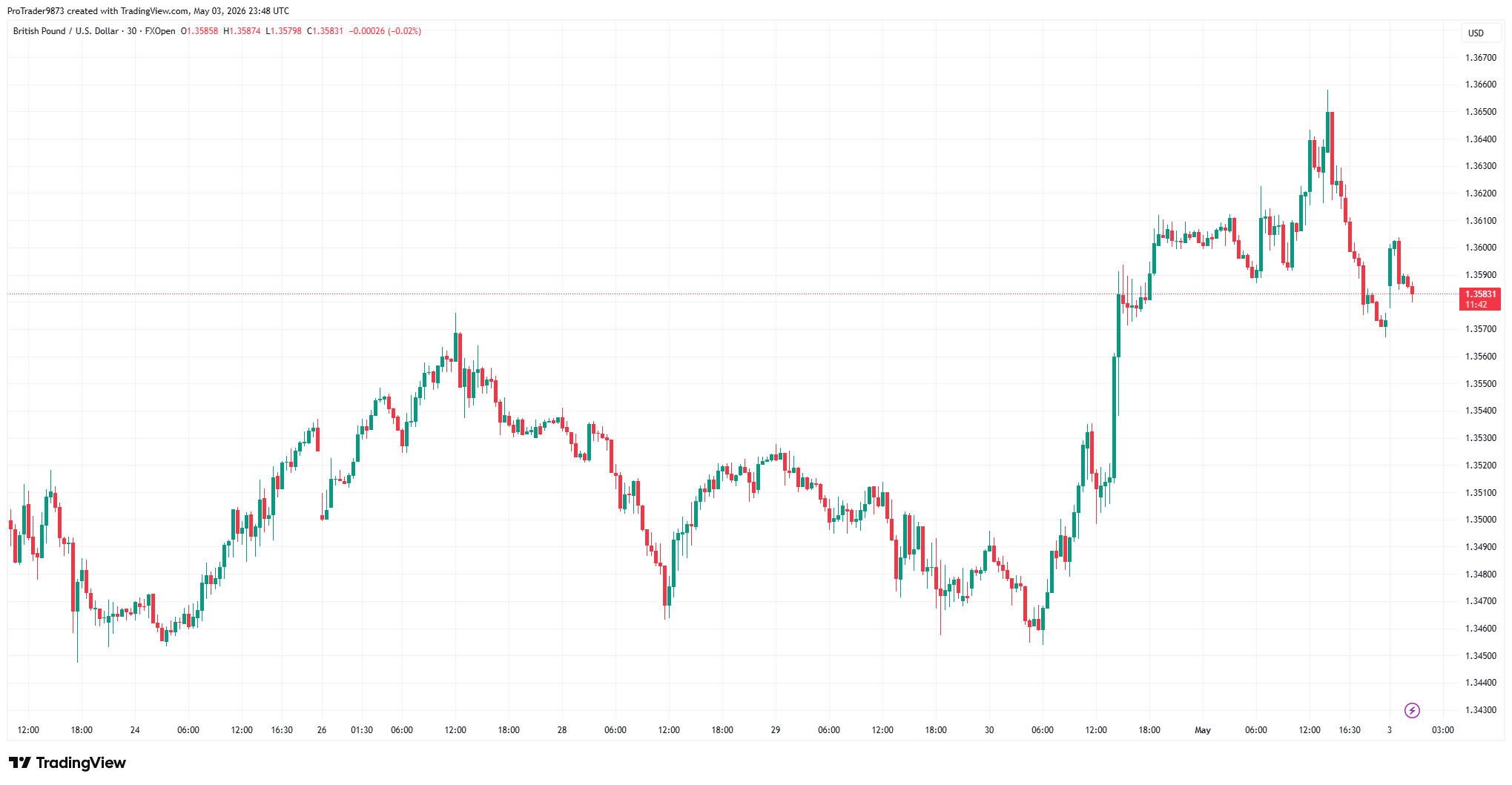
 
GBPUSD Technical Analysis – 28 APR, 2026
GBPUSD – GBPUSD fell to a low of 1.3462 on 28 April 2026

hd1ouPmC_o.png


GBPUSD Technical Analysis – 28 April 2026

Low: 1.3462

Multi Timeframe Overview

GBPUSD fell to a low of 1.3462 on 28 April 2026, marking a corrective decline after recent bullish momentum. On the daily chart, the pair shows signs of exhaustion, with price action dipping below short term support levels. The weekly structure remains broadly bullish, but the inability to sustain above 1.3520 highlights short term weakness. Intraday charts (H1/H4) reveal impulsive bearish waves, with rebounds failing to regain traction, suggesting sellers are temporarily in control.

Trend Structure and Momentum
The prevailing trend is corrective bearish in the short term but bullish in the medium term, supported by the following moving averages:
• 20 day moving average is flattening near 1.3500, acting as immediate resistance.
• 50 day moving average sits around 1.3440, providing near term support.
• 200 day moving average at 1.3300 underscores the broader bullish foundation, with price still trading above this level.

Momentum indicators reflect the corrective nature of the move:
• RSI (14) is at 44, signaling weakening momentum and approaching neutral territory.
• MACD has turned slightly negative, with the histogram contracting, indicating waning bullish strength.
• Stochastic oscillator is in the lower range, suggesting potential for short term rebounds but not yet a decisive reversal.

Support and Resistance Levels
• Immediate Support: 1.3462 (session low), followed by 1.3440 (50 day MA) and 1.3400.
• Key Resistance: 1.3500 (20 day MA), 1.3520 (recent swing high), and 1.3550.
• Broader Structure: Sustained closes below 1.3462 would expose 1.3440 and 1.3400, while recovery above 1.3500 could re ignite bullish momentum toward 1.3520.

Scenario Implications
• Bearish Case: A decisive break below 1.3462 could accelerate downside momentum, targeting 1.3440 initially and extending toward 1.3400. This scenario aligns with short term dollar resilience.
• Bullish Case: A rebound above 1.3500 would signal renewed buying interest, potentially testing 1.3520 and 1.3550. Sustained closes above 1.3520 would restore the broader bullish bias.
• Neutral/Consolidation: The pair may oscillate between 1.3462–1.3500, forming a consolidation band before the next decisive move.

Macro Considerations
The British pound remains pressured by cautious sentiment around UK economic data and expectations of a measured Bank of England stance. Meanwhile, the U.S. dollar is supported by safe haven flows and expectations of a cautious Federal Reserve policy outlook. Divergent monetary policy stances and risk sentiment reinforce the medium term bullish tilt in GBPUSD, but short term corrections reflect profit taking and temporary dollar demand. Any improvement in UK data or dovish Fed rhetoric could re ignite sterling strength, while stronger U.S. data would extend dollar resilience.

Conclusion
GBPUSD’s low at 1.3462 on 28 April 2026 highlights the pair’s short term corrective bearish momentum within a broader bullish framework. Technical signals point toward limited downside, with 1.3440 and 1.3400 emerging as critical support levels. Resistance at 1.3500 and 1.3520 will likely cap rebounds unless broader sentiment shifts decisively. The narrative remains one of cautious sterling strength against dollar resilience, with traders advised to monitor 1.3462 closely as the pivot for near term directional bias.

#fxopen #forex #forexanalysis

Disclaimer: This analysis represents my own opinion only. It is not to be construed as an opinion, offer, solicitation, recommendation, or financial advice of the Companies operating under the FXOpen brand.

For in-depth analysis, please check ...
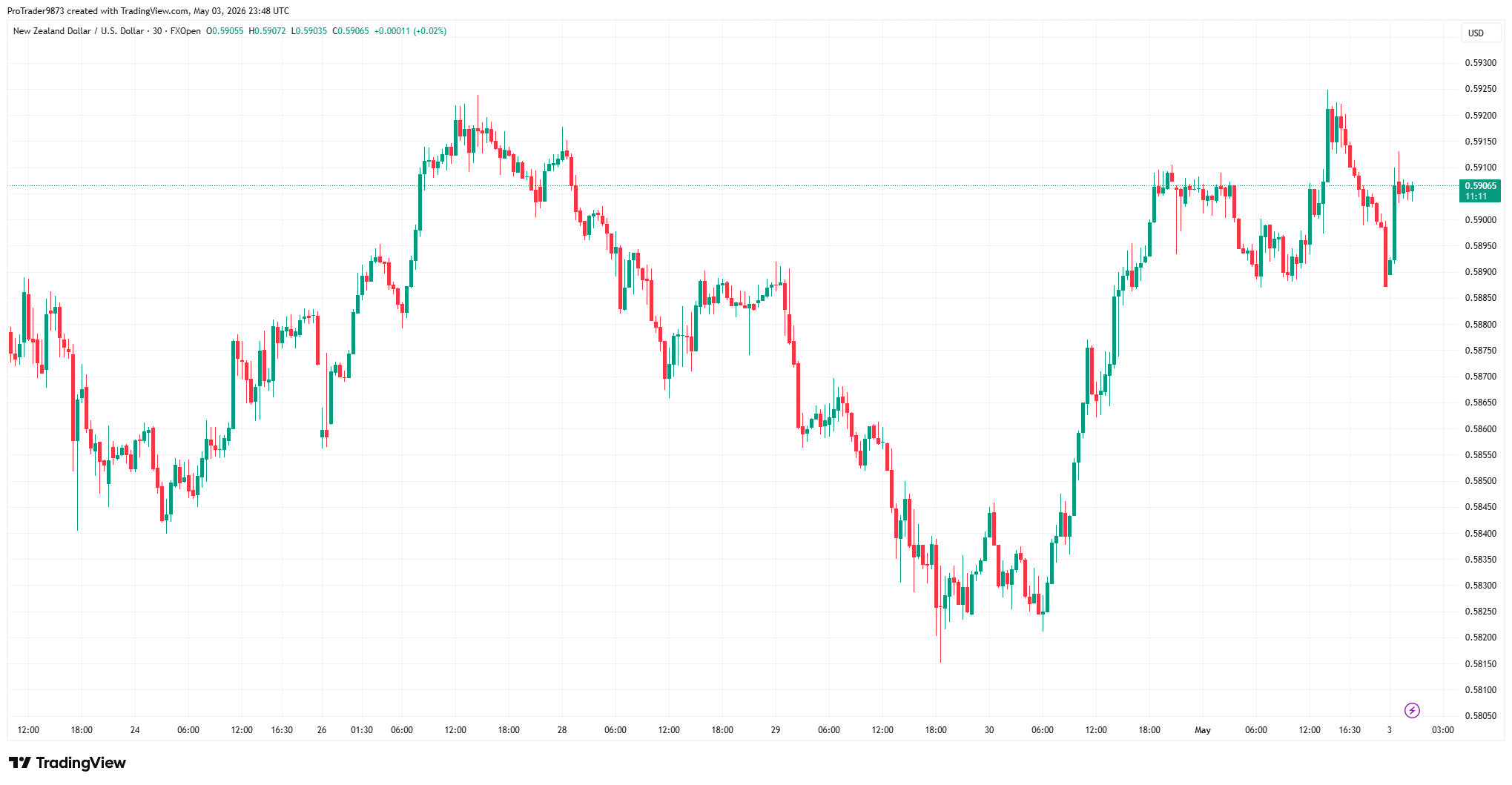
 
NZDUSD Technical Analysis – 28 APR, 2026
NZDUSD – NZDUSD slipped to a low of 0.5865 on 28 April 2026

UvxmiO7j_o.png


NZDUSD Technical Analysis – 28 April 2026

Low: 0.5865

Multi Timeframe Overview

NZDUSD slipped to a low of 0.5865 on 28 April 2026, extending its corrective decline within a broader bearish framework. On the daily chart, the pair remains under pressure, with price action trending below key moving averages and failing to sustain rebounds. The weekly structure highlights a longer term downtrend, with rallies consistently capped below 0.5950. Intraday charts (H1/H4) reveal impulsive bearish waves, with shallow corrective rebounds, underscoring strong selling pressure and limited buyer conviction.

Trend Structure and Momentum
The prevailing trend is bearish, supported by the alignment of moving averages:
• 20 day moving average is declining near 0.5900, acting as immediate dynamic resistance.
• 50 day moving average sits around 0.5950, further capping upside attempts.
• 200 day moving average at 0.6100 underscores the depth of the current downtrend.

Momentum indicators confirm the bearish bias:
• RSI (14) is at 34, reflecting sustained downside momentum and nearing oversold territory, which may prompt short term corrective pauses.
• MACD remains negative, with the histogram widening, signaling accelerating bearish momentum.
• Stochastic oscillator is hovering in oversold territory, suggesting potential for minor corrective rebounds but not yet a reversal.

Support and Resistance Levels
• Immediate Support: 0.5865 (session low), followed by 0.5840 and 0.5820.
• Key Resistance: 0.5900 (20 day MA), 0.5950 (50 day MA), and 0.6000.
• Broader Structure: Sustained closes below 0.5865 would expose 0.5840 and 0.5820, while recovery above 0.5900 could trigger corrective rallies toward 0.5950.

Scenario Implications
• Bearish Case: A decisive break below 0.5865 could accelerate downside momentum, targeting 0.5840 initially and extending toward 0.5820. This scenario aligns with persistent kiwi weakness and dollar resilience.
• Bullish Case: A rebound above 0.5900 would signal short term corrective strength, potentially testing 0.5950. However, unless price sustains above 0.6000, the broader bearish bias remains intact.
• Neutral/Consolidation: The pair may oscillate between 0.5865–0.5900, forming a consolidation band before the next decisive move.

Macro Considerations
The New Zealand dollar remains pressured by subdued domestic economic data and concerns over global demand, particularly from China. Meanwhile, the U.S. dollar continues to benefit from safe haven flows and expectations of a cautious Federal Reserve stance. Divergent monetary policy stances and risk sentiment reinforce the bearish tilt in NZDUSD. Any improvement in commodity prices or stabilization in global risk appetite could provide temporary relief, but structural factors favor continued dollar strength.

Conclusion
NZDUSD’s low at 0.5865 on 28 April 2026 highlights the pair’s entrenched bearish momentum. Technical signals point toward further downside, with 0.5840 and 0.5820 emerging as critical support levels. Resistance at 0.5900 and 0.5950 will likely cap corrective rebounds unless broader sentiment shifts decisively. The narrative remains one of dollar resilience against kiwi weakness, with traders advised to monitor 0.5865 closely as the pivot for near term directional bias.

#fxopen #forex #forexanalysis

Disclaimer: This analysis represents my own opinion only. It is not to be construed as an opinion, offer, solicitation, recommendation, or financial advice of the Companies operating under the FXOpen brand.

For in-depth analysis, please check ...
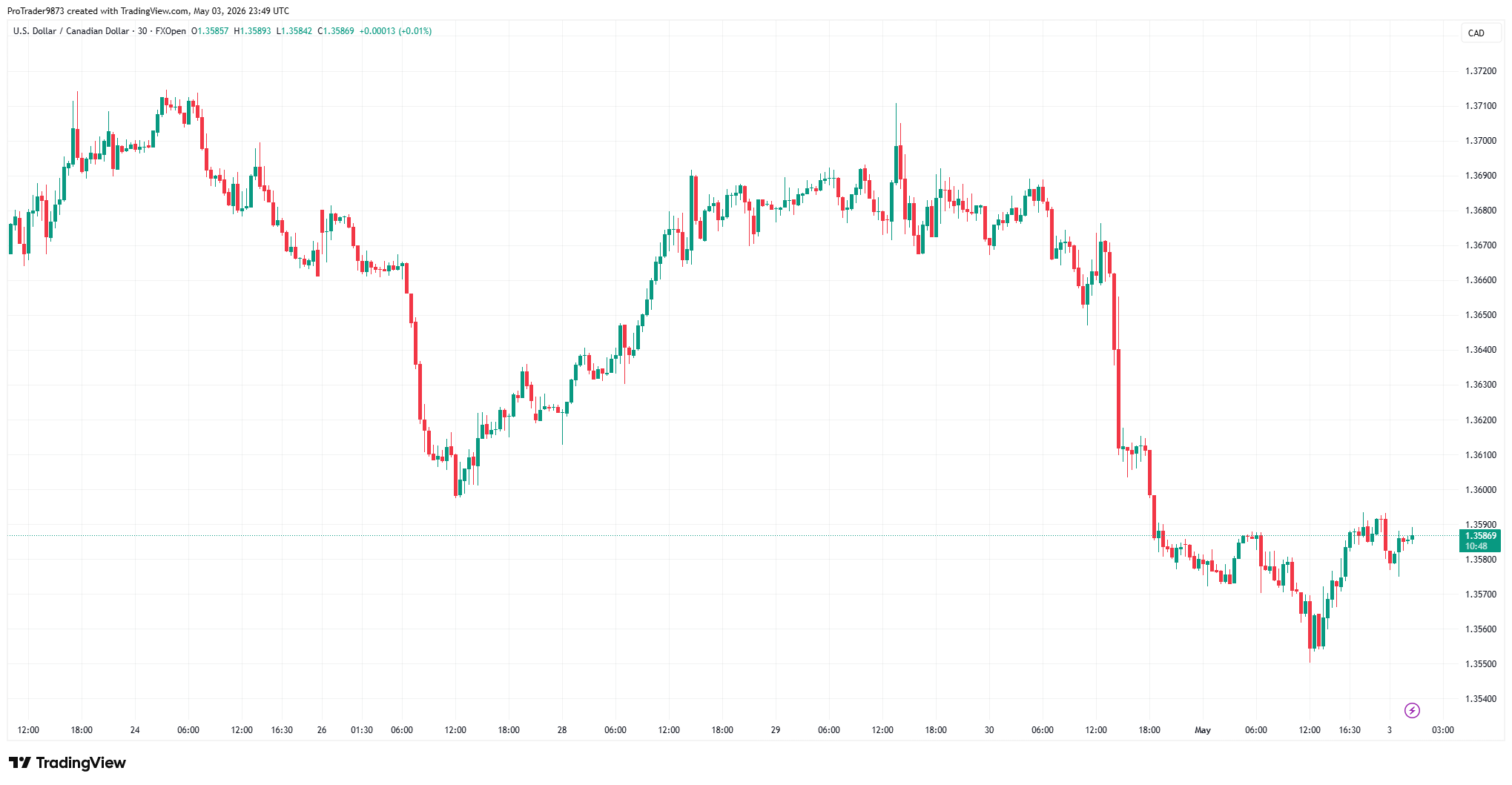
 
USDCAD Technical Analysis – 28 APR, 2026
USDCAD – USDCAD surged to a high of 1.3692 on 28 April 2026

Qj3khLBr_o.png


USDCAD Technical Analysis – 28 April 2026

High: 1.3692

Multi Timeframe Overview

USDCAD surged to a high of 1.3692 on 28 April 2026, reinforcing its medium term bullish trajectory. On the daily chart, the pair continues to trade within an upward channel, with price action pressing against resistance zones. The weekly structure reflects a broader bullish bias, with the breakout above 1.3650 consolidating dollar strength against the Canadian dollar. Intraday charts (H1/H4) highlight impulsive bullish waves, with shallow retracements, underscoring strong demand and limited selling pressure.

Trend Structure and Momentum
The prevailing trend is decisively bullish, supported by the alignment of moving averages:
• 20 day moving average is rising through 1.3650, providing immediate dynamic support.
• 50 day moving average sits near 1.3600, reinforcing the broader bullish foundation.
• 200 day moving average at 1.3400 underscores the long term strength of the uptrend.

Momentum indicators confirm the bullish bias:
• RSI (14) is elevated at 67, signaling strong momentum but approaching overbought territory.
• MACD remains firmly positive, with the histogram expanding, reflecting sustained bullish acceleration.
• Stochastic oscillator is in the upper range, suggesting potential for minor corrective pauses but not yet a reversal.

Support and Resistance Levels
• Immediate Resistance: 1.3692 (session high), followed by 1.3720 and 1.3750.
• Key Support: 1.3650 (20 day MA), 1.3600 (50 day MA), and deeper at 1.3550.
• Broader Structure: Sustained closes above 1.3692 would open the path toward 1.3720 and 1.3750, while failure to hold above 1.3650 risks a corrective pullback toward 1.3600.

Scenario Implications
• Bullish Case: A decisive break above 1.3692 with volume confirmation could trigger momentum buying, targeting 1.3720 initially and extending toward 1.3750. This scenario aligns with continued USD resilience and CAD weakness.
• Bearish Case: Rejection at 1.3692 coupled with overbought signals may lead to a corrective pullback. A break below 1.3650 would expose 1.3600 and potentially 1.3550, where buyers may reassess.
• Neutral/Consolidation: Given the elevated RSI, USDCAD may oscillate between 1.3650–1.3692, forming a consolidation band before the next directional move.

Macro Considerations
The U.S. dollar remains supported by safe haven flows and expectations of a cautious Federal Reserve stance. Meanwhile, the Canadian dollar is influenced by oil price dynamics, with recent stabilization lending temporary support. Divergent monetary policy expectations between the Fed and Bank of Canada reinforce the medium term bullish tilt in USDCAD, but commodity linked resilience in CAD has introduced short term corrective pressure. Any rebound in oil markets or hawkish BoC rhetoric could extend CAD strength, while persistent USD demand would reassert the bullish structure.

Conclusion
USDCAD’s high at 1.3692 on 28 April 2026 underscores the pair’s entrenched bullish momentum. Technical signals point toward further upside, with 1.3720 and 1.3750 emerging as critical resistance levels. Support at 1.3650 and 1.3600 will likely underpin corrective pullbacks unless broader sentiment shifts decisively. The narrative remains one of dollar strength against CAD softness, with traders advised to monitor 1.3692 closely as the pivot for near term directional bias.

#fxopen #forex #forexanalysis

Disclaimer: This analysis represents my own opinion only. It is not to be construed as an opinion, offer, solicitation, recommendation, or financial advice of the Companies operating under the FXOpen brand.

For in-depth analysis, please check ...
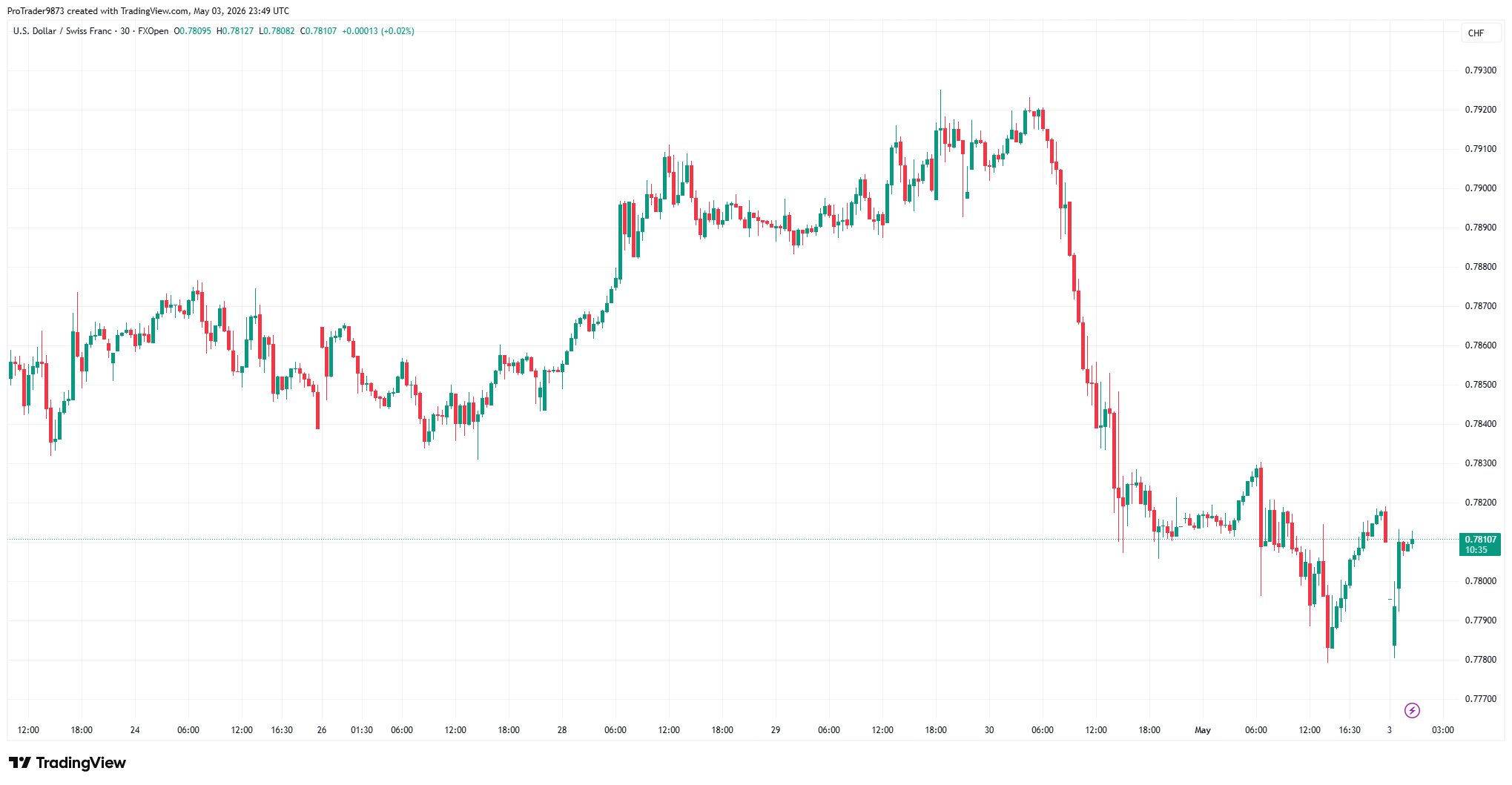
 
USDCHF Technical Analysis – 28 APR, 2026
USDCHF – USDCHF climbed to a high of 0.7910 on 28 April 2026

o63KRU3C_o.png


USDCHF Technical Analysis – 28 April 2026

High: 0.7910

Multi Timeframe Overview

USDCHF climbed to a high of 0.7910 on 28 April 2026, marking a corrective rebound within a broader medium term bearish structure. On the daily chart, the pair shows signs of recovery after testing lows earlier in the month, but price action remains capped below the 0.7950 threshold. The weekly structure highlights a longer term downtrend, with rallies consistently failing to sustain above key resistance zones. Intraday charts (H1/H4) reveal impulsive bullish moves, but momentum appears to be waning as price approaches the upper boundary of the short term channel.

Trend Structure and Momentum
The prevailing trend is cautiously bullish in the short term but bearish in the medium term, supported by the following moving averages:
• 20 day moving average is rising through 0.7870, providing immediate dynamic support.
• 50 day moving average sits near 0.7925, acting as a ceiling for upside attempts.
• 200 day moving average at 0.8050 underscores the broader bearish bias, with price still trading below this level.

Momentum indicators provide mixed signals:
• RSI (14) is at 62, reflecting moderate bullish momentum but not yet overbought.
• MACD remains positive, but the histogram is narrowing, suggesting waning bullish momentum.
• Stochastic oscillator is approaching overbought territory, hinting at potential consolidation.

Support and Resistance Levels
• Immediate Resistance: 0.7910 (session high), followed by 0.7925 (50 day MA) and 0.7950.
• Key Support: 0.7870 (20 day MA), 0.7850 (recent swing low), and deeper at 0.7810.
• Broader Structure: Sustained closes above 0.7910 would open the path toward 0.7925 and 0.7950, while failure to hold above 0.7870 risks a corrective pullback toward 0.7850.

Scenario Implications
• Bullish Case: A decisive break above 0.7910 with volume confirmation could trigger momentum buying, targeting 0.7925 initially and extending toward 0.7950. This scenario aligns with short term dollar resilience.
• Bearish Case: Rejection at 0.7910 coupled with waning momentum may lead to a corrective pullback. A break below 0.7870 would expose 0.7850 and potentially 0.7810, where buyers may reassess.
• Neutral/Consolidation: Given the mixed momentum signals, USDCHF may oscillate between 0.7870–0.7910, forming a consolidation band before the next decisive move.

Macro Considerations
The U.S. dollar remains supported by safe haven flows and expectations of a cautious Federal Reserve stance. Meanwhile, the Swiss franc continues to benefit from its safe haven appeal, particularly during periods of global uncertainty. Divergent monetary policy stances and risk sentiment reinforce the medium term bearish tilt in USDCHF. Any improvement in global risk appetite or dovish Fed rhetoric could extend dollar strength, while persistent franc demand would cap rallies.

Conclusion
USDCHF’s high at 0.7910 on 28 April 2026 underscores the pair’s short term corrective bullish momentum within a broader bearish framework. Technical signals point toward limited upside, with 0.7925 and 0.7950 emerging as critical resistance levels. Support at 0.7870 and 0.7850 will likely underpin corrective pullbacks unless broader sentiment shifts decisively. The narrative remains one of cautious dollar strength against franc resilience, with traders advised to monitor 0.7910 closely as the pivot for near term directional bias.

#fxopen #forex #forexanalysis

Disclaimer: This analysis represents my own opinion only. It is not to be construed as an opinion, offer, solicitation, recommendation, or financial advice of the Companies operating under the FXOpen brand.

For in-depth analysis, please check ...
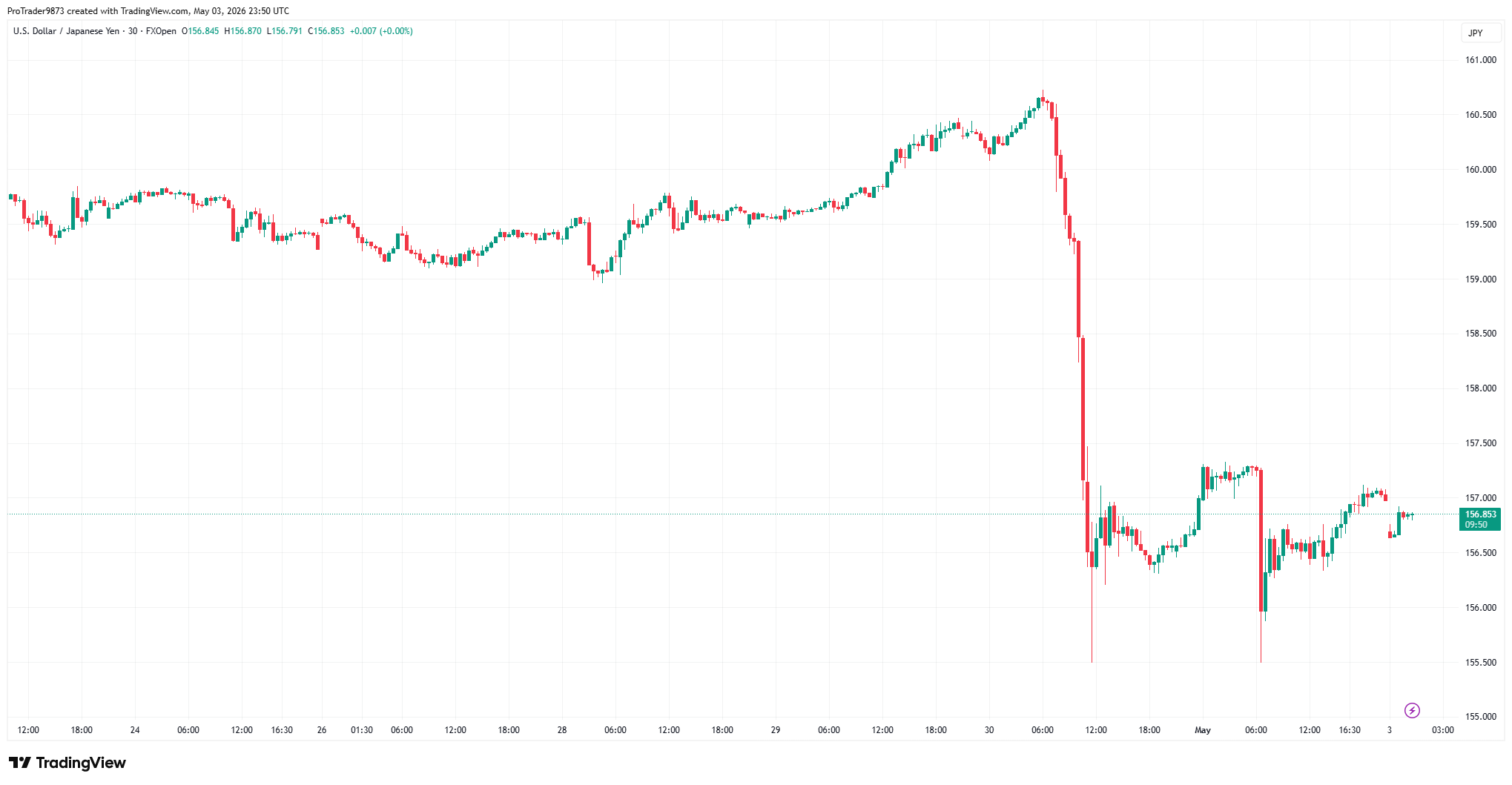
 
USDJPY Technical Analysis – 28 APR, 2026
USDJPY - USDJPY surged to a high of 159.76 on 28 April 2026

CIjDd6qR_o.png


USDJPY Technical Analysis – 28 April 2026

High: 159.76

Multi Timeframe Overview

USDJPY surged to a high of 159.76 on 28 April 2026, extending its strong bullish momentum that has characterized recent sessions. On the daily chart, the pair remains firmly within an upward channel, with price action consistently printing higher highs and higher lows. The weekly structure reinforces this bullish bias, showing a decisive breakout above the 158.50 threshold, which had previously acted as a formidable resistance zone. Intraday charts (H1/H4) highlight impulsive bullish waves, with shallow retracements, underscoring strong demand and limited selling pressure.

Trend Structure and Momentum
The prevailing trend is decisively bullish, supported by the alignment of moving averages:
• 20 day moving average is rising through 158.80, providing immediate dynamic support.
• 50 day moving average sits near 157.00, reinforcing the broader bullish foundation.
• 200 day moving average at 150.50 underscores the long term strength of the uptrend.

Momentum indicators confirm the bullish bias:
• RSI (14) is elevated at 73, signaling strong momentum but also entering overbought territory, which may prompt short term consolidation.
• MACD remains firmly positive, with the histogram expanding, reflecting sustained bullish acceleration.
• Stochastic oscillator is in the overbought zone, suggesting potential for minor corrective pauses but not yet a reversal.

Support and Resistance Levels
• Immediate Resistance: 159.76 (session high), followed by 160.00 and 161.50.
• Key Support: 158.80 (20 day MA), 158.50 (recent swing low), and deeper at 157.00 (50 day MA).
• Broader Structure: Sustained closes above 159.76 would open the path toward 160.00 and 161.50, while failure to hold above 158.80 risks a corrective pullback toward 158.50.

Scenario Implications
• Bullish Case: A decisive break above 159.76 with volume confirmation could trigger momentum buying, targeting 160.00 initially and extending toward 161.50. This scenario aligns with continued yen weakness and dollar resilience.
• Bearish Case: Rejection at 159.76 coupled with overbought signals may lead to a corrective pullback. A break below 158.80 would expose 158.50 and potentially 157.00, where buyers may reassess.
• Neutral/Consolidation: Given the elevated RSI, USDJPY may oscillate between 158.80–159.76, forming a consolidation band before the next directional move.

Macro Considerations
The U.S. dollar remains supported by safe haven flows and expectations of a cautious Federal Reserve stance. Meanwhile, the Japanese yen continues to weaken under the Bank of Japan’s ultra loose monetary policy stance. Divergent policy paths between the Fed and BoJ reinforce the bullish tilt in USDJPY. Additionally, global risk sentiment remains constructive, reducing demand for the yen as a safe haven asset. Any shift in BoJ rhetoric or deterioration in global risk appetite could temper the rally, but current fundamentals favor continued dollar strength against yen weakness.

Conclusion
USDJPY’s high at 159.76 on 28 April 2026 underscores the pair’s entrenched bullish momentum. Technical signals point toward further upside, with 160.00 and 161.50 emerging as critical resistance levels. Support at 158.80 and 158.50 will likely underpin corrective pullbacks unless broader sentiment shifts decisively. The narrative remains one of dollar strength against yen weakness, with traders advised to monitor 159.76 closely as the pivot for near term directional bias.

#fxopen #forex #forexanalysis

Disclaimer: This analysis represents my own opinion only. It is not to be construed as an opinion, offer, solicitation, recommendation, or financial advice of the Companies operating under the FXOpen brand.

For in-depth analysis, please check ...
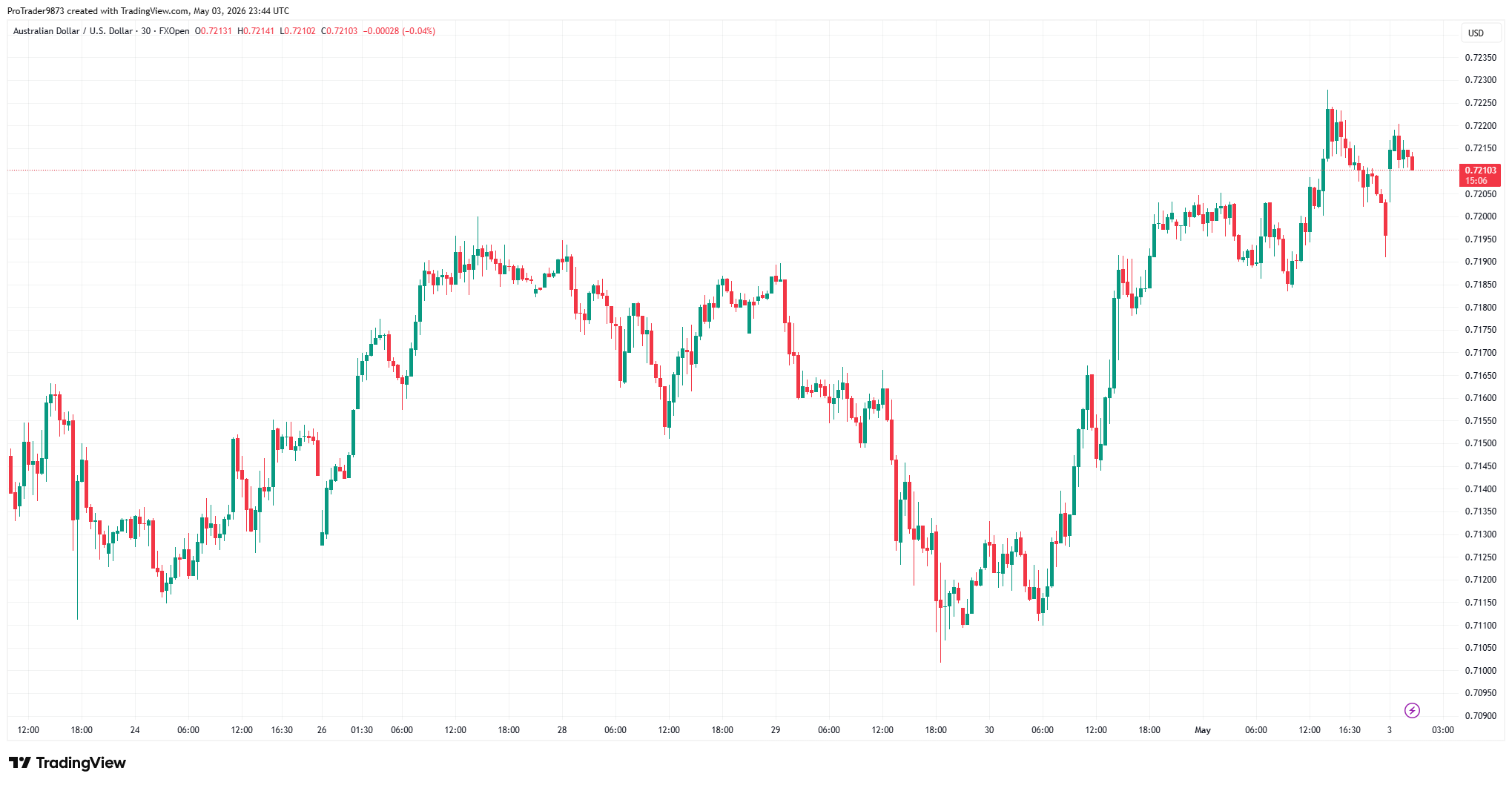
 
AUDUSD Technical Analysis – 29 APR, 2026
AUDUSD – AUDUSD registered a high of 0.7101 on 29 April 2026

5LlWD8yI_o.png


AUDUSD Technical Analysis – 29 April 2026

High: 0.7101

Multi Timeframe Overview

AUDUSD registered a high of 0.7101 on 29 April 2026, reflecting a modest rebound within a broader consolidation phase. On the daily chart, the pair remains range bound, oscillating between 0.7050 and 0.7150, with price action struggling to establish a decisive breakout. The weekly structure highlights a cautious bullish bias, but repeated failures to sustain above 0.7150 suggest lingering resistance. Intraday charts (H1/H4) show impulsive upward moves toward 0.7101, followed by shallow retracements, underscoring buyer interest but also hesitation near resistance.

Trend Structure and Momentum
The prevailing trend is cautiously bullish in the short term but neutral in the medium term, supported by the following moving averages:
• 20 day moving average is rising through 0.7075, providing immediate dynamic support.
• 50 day moving average sits near 0.7120, acting as a ceiling for upside attempts.
• 200 day moving average at 0.7000 underscores the broader neutral to bullish foundation.

Momentum indicators provide mixed signals:
• RSI (14) is at 59, reflecting moderate bullish momentum but not yet overbought.
• MACD remains positive, but the histogram is narrowing, suggesting waning bullish momentum.
• Stochastic oscillator is approaching the upper range, hinting at potential consolidation.

Support and Resistance Levels
• Immediate Resistance: 0.7101 (session high), followed by 0.7120 (50 day MA) and 0.7150.
• Key Support: 0.7075 (20 day MA), 0.7050 (recent swing low), and deeper at 0.7000 (200 day MA).
• Broader Structure: Sustained closes above 0.7101 would open the path toward 0.7120 and 0.7150, while failure to hold above 0.7075 risks a corrective pullback toward 0.7050.

Scenario Implications
• Bullish Case: A decisive break above 0.7101 with volume confirmation could trigger momentum buying, targeting 0.7120 initially and extending toward 0.7150. This scenario aligns with short term AUD resilience.
• Bearish Case: Rejection at 0.7101 coupled with waning momentum may lead to a corrective pullback. A break below 0.7075 would expose 0.7050 and potentially 0.7000, where buyers may reassess.
• Neutral/Consolidation: Given the mixed momentum signals, AUDUSD may oscillate between 0.7075–0.7101, forming a consolidation band before the next decisive move.

Macro Considerations
The Australian dollar remains supported by firm commodity prices, particularly iron ore and copper, which continue to underpin demand. Meanwhile, the U.S. dollar is pressured by dovish expectations surrounding the Federal Reserve’s policy stance, with markets anticipating potential rate adjustments later in the year. Risk sentiment remains constructive, favoring AUD, though any deterioration in global equity markets or Chinese demand outlook could weigh on the pair. Divergent monetary policy expectations between the Reserve Bank of Australia and the Fed reinforce the cautious bullish tilt in AUDUSD.

Conclusion
AUDUSD’s high at 0.7101 on 29 April 2026 underscores the pair’s short term corrective bullish momentum within a broader consolidation framework. Technical signals point toward limited upside, with 0.7120 and 0.7150 emerging as critical resistance levels. Support at 0.7075 and 0.7050 will likely underpin corrective pullbacks unless broader sentiment shifts decisively. The narrative remains one of commodity driven AUD strength against dollar softness, with traders advised to monitor 0.7101 closely as the pivot for near term directional bias.

#fxopen #forex #forexanalysis

Disclaimer: This analysis represents my own opinion only. It is not to be construed as an opinion, offer, solicitation, recommendation, or financial advice of the Companies operating under the FXOpen brand.

For in-depth analysis, please check ...
 
EURCHF Technical Analysis – 29 APR, 2026
EURCHF – EURCHF reached a high of 0.9250 on 29 April 2026

HTpIGubf_o.png


EURCHF Technical Analysis – 29 April 2026

High: 0.9250

Multi Timeframe Overview

EURCHF reached a high of 0.9250 on 29 April 2026, marking a corrective rebound within a broader bearish structure. On the daily chart, the pair shows signs of recovery after testing lows earlier in the month, but price action remains capped below the 0.9300 threshold. The weekly structure highlights a longer term downtrend, with rallies consistently failing to sustain above key resistance zones. Intraday charts (H1/H4) reveal impulsive bullish moves toward 0.9250, but momentum appears to be waning as price approaches the upper boundary of the short term channel.

Trend Structure and Momentum
The prevailing trend is cautiously bullish in the short term but bearish in the medium term, supported by the following moving averages:
• 20 day moving average is rising through 0.9225, providing immediate dynamic support.
• 50 day moving average sits near 0.9280, acting as a ceiling for upside attempts.
• 200 day moving average at 0.9400 underscores the broader bearish bias, with price still trading below this level.

Momentum indicators provide mixed signals:
• RSI (14) is at 58, reflecting moderate bullish momentum but not yet overbought.
• MACD remains positive, but the histogram is narrowing, suggesting waning bullish momentum.
• Stochastic oscillator is approaching overbought territory, hinting at potential consolidation.

Support and Resistance Levels
• Immediate Resistance: 0.9250 (session high), followed by 0.9280 (50 day MA) and 0.9300.
• Key Support: 0.9225 (20 day MA), 0.9200 (recent swing low), and deeper at 0.9175.
• Broader Structure: Sustained closes above 0.9250 would open the path toward 0.9280 and 0.9300, while failure to hold above 0.9225 risks a corrective pullback toward 0.9200.

Scenario Implications
• Bullish Case: A decisive break above 0.9250 with volume confirmation could trigger momentum buying, targeting 0.9280 initially and extending toward 0.9300. This scenario aligns with short term euro resilience.
• Bearish Case: Rejection at 0.9250 coupled with waning momentum may lead to a corrective pullback. A break below 0.9225 would expose 0.9200 and potentially 0.9175, where buyers may reassess.
• Neutral/Consolidation: Given the mixed momentum signals, EURCHF may oscillate between 0.9225–0.9250, forming a consolidation band before the next decisive move.

Macro Considerations
The euro remains pressured by dovish expectations surrounding the European Central Bank, with markets anticipating prolonged accommodative policy. Meanwhile, the Swiss franc continues to benefit from safe haven flows amid global uncertainty, particularly in equity markets. Divergent monetary policy stances and risk sentiment reinforce the medium term bearish tilt in EURCHF. Any shift in ECB rhetoric or stabilization in global risk appetite could provide temporary relief, but structural factors favor continued franc strength.

Conclusion
EURCHF’s high at 0.9250 on 29 April 2026 underscores the pair’s short term corrective bullish momentum within a broader bearish framework. Technical signals point toward limited upside, with 0.9280 and 0.9300 emerging as critical resistance levels. Support at 0.9225 and 0.9200 will likely underpin corrective pullbacks unless broader sentiment shifts decisively. The narrative remains one of cautious euro strength against franc resilience, with traders advised to monitor 0.9250 closely as the pivot for near term directional bias.

#fxopen #forex #forexanalysis

Disclaimer: This analysis represents my own opinion only. It is not to be construed as an opinion, offer, solicitation, recommendation, or financial advice of the Companies operating under the FXOpen brand.

For in-depth analysis, please check ...
 
EURJPY Technical Analysis – 29 APR, 2026
EURJPY – EURJPY climbed to a high of 187.55 on 29 April 2026

Kh5VEKrN_o.png


EURJPY Technical Analysis – 29 April 2026

High: 187.55

Multi Timeframe Overview

EURJPY climbed to a high of 187.55 on 29 April 2026, extending its bullish momentum within a well defined upward channel. On the daily chart, the pair continues to print higher highs and higher lows, with price action pressing against resistance zones. The weekly structure reinforces the bullish bias, showing a decisive breakout above 186.50, which had previously acted as a consolidation ceiling. Intraday charts (H1/H4) highlight impulsive bullish waves, with shallow retracements, underscoring strong demand and limited selling pressure.

Trend Structure and Momentum
The prevailing trend is decisively bullish, supported by the alignment of moving averages:
• 20 day moving average is rising through 186.80, providing immediate dynamic support.
• 50 day moving average sits near 185.50, reinforcing the broader bullish foundation.
• 200 day moving average at 180.00 underscores the long term strength of the uptrend.

Momentum indicators confirm the bullish bias:
• RSI (14) is elevated at 71, signaling strong momentum but also entering overbought territory, which may prompt short term consolidation.
• MACD remains firmly positive, with the histogram expanding, reflecting sustained bullish acceleration.
• Stochastic oscillator is in the overbought zone, suggesting potential for minor corrective pauses but not yet a reversal.

Support and Resistance Levels
• Immediate Resistance: 187.55 (session high), followed by 188.00 and 189.50.
• Key Support: 186.80 (20 day MA), 186.50 (recent swing low), and deeper at 185.50 (50 day MA).
• Broader Structure: Sustained closes above 187.55 would open the path toward 188.00 and 189.50, while failure to hold above 186.80 risks a corrective pullback toward 186.50.

Scenario Implications
• Bullish Case: A decisive break above 187.55 with volume confirmation could trigger momentum buying, targeting 188.00 initially and extending toward 189.50. This scenario aligns with continued yen weakness and euro resilience.
• Bearish Case: Rejection at 187.55 coupled with overbought signals may lead to a corrective pullback. A break below 186.80 would expose 186.50 and potentially 185.50, where buyers may reassess.
• Neutral/Consolidation: Given the elevated RSI, EURJPY may oscillate between 186.80–187.55, forming a consolidation band before the next directional move.

Macro Considerations
The euro remains supported by relative stability in European economic data and expectations of a cautious European Central Bank stance. Meanwhile, the Japanese yen continues to weaken under the Bank of Japan’s ultra loose monetary policy, reinforcing the bullish tilt in EURJPY. Global risk sentiment remains constructive, reducing demand for the yen as a safe haven asset. Any shift in BoJ rhetoric or deterioration in global risk appetite could temper the rally, but current fundamentals favor continued euro strength against yen weakness.

Conclusion
EURJPY’s high at 187.55 on 29 April 2026 underscores the pair’s entrenched bullish momentum. Technical signals point toward further upside, with 188.00 and 189.50 emerging as critical resistance levels. Support at 186.80 and 186.50 will likely underpin corrective pullbacks unless broader sentiment shifts decisively. The narrative remains one of euro strength against yen weakness, with traders advised to monitor 187.55 closely as the pivot for near term directional bias.

#fxopen #forex #forexanalysis

Disclaimer: This analysis represents my own opinion only. It is not to be construed as an opinion, offer, solicitation, recommendation, or financial advice of the Companies operating under the FXOpen brand.

For in-depth analysis, please check ...
 
GBPJPY Technical Analysis – 29 APR, 2026
GBPJPY – GBPJPY surged to a high of 216.59 on 29 April 2026

xXIcCQip_o.png


GBPJPY Technical Analysis – 29 April 2026

High: 216.59

Multi Timeframe Overview

GBPJPY surged to a high of 216.59 on 29 April 2026, extending its bullish momentum within a strong upward channel. On the daily chart, the pair continues to print higher highs and higher lows, with price action pressing against resistance zones. The weekly structure reinforces the bullish bias, showing a decisive breakout above 215.50, which had previously acted as a consolidation ceiling. Intraday charts (H1/H4) highlight impulsive bullish waves, with shallow retracements, underscoring strong demand and limited selling pressure.

Trend Structure and Momentum
The prevailing trend is decisively bullish, supported by the alignment of moving averages:
• 20 day moving average is rising through 215.20, providing immediate dynamic support.
• 50 day moving average sits near 213.80, reinforcing the broader bullish foundation.
• 200 day moving average at 205.50 underscores the long term strength of the uptrend.

Momentum indicators confirm the bullish bias:
• RSI (14) is elevated at 72, signaling strong momentum but also entering overbought territory, which may prompt short term consolidation.
• MACD remains firmly positive, with the histogram expanding, reflecting sustained bullish acceleration.
• Stochastic oscillator is in the overbought zone, suggesting potential for minor corrective pauses but not yet a reversal.

Support and Resistance Levels
• Immediate Resistance: 216.59 (session high), followed by 217.50 and 219.00.
• Key Support: 215.20 (20 day MA), 214.50 (recent swing low), and deeper at 213.80 (50 day MA).
• Broader Structure: Sustained closes above 216.59 would open the path toward 217.50 and 219.00, while failure to hold above 215.20 risks a corrective pullback toward 214.50.

Scenario Implications
• Bullish Case: A decisive break above 216.59 with volume confirmation could trigger momentum buying, targeting 217.50 initially and extending toward 219.00. This scenario aligns with continued yen weakness and sterling resilience.
• Bearish Case: Rejection at 216.59 coupled with overbought signals may lead to a corrective pullback. A break below 215.20 would expose 214.50 and potentially 213.80, where buyers may reassess.
• Neutral/Consolidation: Given the elevated RSI, GBPJPY may oscillate between 215.20–216.59, forming a consolidation band before the next directional move.

Macro Considerations
The British pound remains supported by relative stability in UK economic data and expectations of a cautious Bank of England stance. Meanwhile, the Japanese yen continues to weaken under the Bank of Japan’s ultra loose monetary policy, reinforcing the bullish tilt in GBPJPY. Global risk sentiment remains constructive, reducing demand for the yen as a safe haven asset. Any shift in BoJ rhetoric or deterioration in global risk appetite could temper the rally, but current fundamentals favor continued sterling strength against yen weakness.

Conclusion
GBPJPY’s high at 216.59 on 29 April 2026 underscores the pair’s entrenched bullish momentum. Technical signals point toward further upside, with 217.50 and 219.00 emerging as critical resistance levels. Support at 215.20 and 214.50 will likely underpin corrective pullbacks unless broader sentiment shifts decisively. The narrative remains one of sterling strength against yen weakness, with traders advised to monitor 216.59 closely as the pivot for near term directional bias.

#fxopen #forex #forexanalysis

Disclaimer: This analysis represents my own opinion only. It is not to be construed as an opinion, offer, solicitation, recommendation, or financial advice of the Companies operating under the FXOpen brand.

For in-depth analysis, please check ...
 
EURUSD Technical Analysis – 29 APR, 2026
EURUSD – EURUSD slipped to a low of 1.1654 on 29 April 2026

6MrpMKOz_o.png


EURUSD Technical Analysis – 29 April 2026

Low: 1.1654

Multi Timeframe Overview

EURUSD slipped to a low of 1.1654 on 29 April 2026, extending its corrective decline after failing to sustain gains earlier in the week. On the daily chart, the pair remains under pressure, with price action dipping below short term support levels and testing the lower boundary of its consolidation band. The weekly structure still reflects a medium term bullish bias, but repeated failures to hold above 1.1700 highlight short term exhaustion. Intraday charts (H1/H4) show impulsive bearish waves, with rebounds proving shallow, underscoring strong dollar demand and limited euro resilience.

Trend Structure and Momentum
The prevailing trend is corrective bearish in the short term but neutral to bullish in the medium term, supported by the following moving averages:
• 20 day moving average is flattening near 1.1680, acting as immediate resistance.
• 50 day moving average sits around 1.1635, providing near term support.
• 200 day moving average at 1.1500 underscores the broader bullish foundation, with price still trading above this level.

Momentum indicators reflect the corrective nature of the move:
• RSI (14) is at 42, signaling weakening momentum and approaching neutral territory.
• MACD has turned slightly negative, with the histogram contracting, indicating waning bullish strength.
• Stochastic oscillator is in the lower range, suggesting potential for short term rebounds but not yet a decisive reversal.

Support and Resistance Levels
• Immediate Support: 1.1654 (session low), followed by 1.1635 (50 day MA) and 1.1600.
• Key Resistance: 1.1680 (20 day MA), 1.1700 (recent swing high), and 1.1725.
• Broader Structure: Sustained closes below 1.1654 would expose 1.1635 and 1.1600, while recovery above 1.1680 could re ignite bullish momentum toward 1.1700.

Scenario Implications
• Bearish Case: A decisive break below 1.1654 could accelerate downside momentum, targeting 1.1635 initially and extending toward 1.1600. This scenario aligns with short term dollar resilience.
• Bullish Case: A rebound above 1.1680 would signal renewed buying interest, potentially testing 1.1700 and 1.1725. Sustained closes above 1.1700 would restore the broader bullish bias.
• Neutral/Consolidation: The pair may oscillate between 1.1654–1.1680, forming a consolidation band before the next decisive move.

Macro Considerations
The euro remains pressured by dovish expectations surrounding the European Central Bank, with markets anticipating prolonged accommodative policy. Meanwhile, the U.S. dollar is supported by safe haven flows and expectations of a cautious Federal Reserve stance. Divergent monetary policy stances and risk sentiment reinforce the medium term bullish tilt in EURUSD, but short term corrections reflect profit taking and temporary dollar demand. Any improvement in European data or dovish Fed rhetoric could re ignite euro strength, while stronger U.S. data would extend dollar resilience.

Conclusion
EURUSD’s low at 1.1654 on 29 April 2026 highlights the pair’s short term corrective bearish momentum within a broader bullish framework. Technical signals point toward limited downside, with 1.1635 and 1.1600 emerging as critical support levels. Resistance at 1.1680 and 1.1700 will likely cap rebounds unless broader sentiment shifts decisively. The narrative remains one of cautious euro strength against dollar resilience, with traders advised to monitor 1.1654 closely as the pivot for near term directional bias.

#fxopen #forex #forexanalysis

Disclaimer: This analysis represents my own opinion only. It is not to be construed as an opinion, offer, solicitation, recommendation, or financial advice of the Companies operating under the FXOpen brand.

For in-depth analysis, please check ...
 
NZDUSD Technical Analysis – 29 APR, 2026
NZDUSD – NZDUSD fell to a low of 0.5815 on 29 April 2026

UvxmiO7j_o.png


NZDUSD Technical Analysis – 29 April 2026

Low: 0.5815

Multi Timeframe Overview

NZDUSD fell to a low of 0.5815 on 29 April 2026, extending its bearish trajectory within a well defined downtrend. On the daily chart, the pair continues to trade below key moving averages, with price action pressing against lower support zones. The weekly structure highlights a persistent bearish bias, with rallies consistently capped below 0.5900. Intraday charts (H1/H4) reveal impulsive downward moves, with rebounds proving shallow, underscoring strong selling pressure and limited buyer conviction.

Trend Structure and Momentum
The prevailing trend is decisively bearish, supported by the alignment of moving averages:
• 20 day moving average is declining near 0.5850, acting as immediate dynamic resistance.
• 50 day moving average sits around 0.5900, further capping upside attempts.
• 200 day moving average at 0.6050 underscores the depth of the current downtrend.

Momentum indicators confirm the bearish bias:
• RSI (14) is at 33, reflecting sustained downside momentum and nearing oversold territory, which may prompt short term corrective pauses.
• MACD remains negative, with the histogram widening, signaling accelerating bearish momentum.
• Stochastic oscillator is hovering in oversold territory, suggesting potential for minor corrective rebounds but not yet a reversal.

Support and Resistance Levels
• Immediate Support: 0.5815 (session low), followed by 0.5790 and 0.5770.
• Key Resistance: 0.5850 (20 day MA), 0.5900 (50 day MA), and 0.5950.
• Broader Structure: Sustained closes below 0.5815 would expose 0.5790 and 0.5770, while recovery above 0.5850 could trigger corrective rallies toward 0.5900.

Scenario Implications
• Bearish Case: A decisive break below 0.5815 could accelerate downside momentum, targeting 0.5790 initially and extending toward 0.5770. This scenario aligns with persistent kiwi weakness and dollar resilience.
• Bullish Case: A rebound above 0.5850 would signal short term corrective strength, potentially testing 0.5900. However, unless price sustains above 0.5950, the broader bearish bias remains intact.
• Neutral/Consolidation: The pair may oscillate between 0.5815–0.5850, forming a consolidation band before the next decisive move.

Macro Considerations
The New Zealand dollar remains pressured by subdued domestic economic data and concerns over global demand, particularly from China. Meanwhile, the U.S. dollar continues to benefit from safe haven flows and expectations of a cautious Federal Reserve stance. Divergent monetary policy stances and risk sentiment reinforce the bearish tilt in NZDUSD. Any improvement in commodity prices or stabilization in global risk appetite could provide temporary relief, but structural factors favor continued dollar strength.

Conclusion
NZDUSD’s low at 0.5815 on 29 April 2026 highlights the pair’s entrenched bearish momentum. Technical signals point toward further downside, with 0.5790 and 0.5770 emerging as critical support levels. Resistance at 0.5850 and 0.5900 will likely cap corrective rebounds unless broader sentiment shifts decisively. The narrative remains one of dollar resilience against kiwi weakness, with traders advised to monitor 0.5815 closely as the pivot for near term directional bias.

#fxopen #forex #forexanalysis

Disclaimer: This analysis represents my own opinion only. It is not to be construed as an opinion, offer, solicitation, recommendation, or financial advice of the Companies operating under the FXOpen brand.

For in-depth analysis, please check ...
 
GBPUSD Technical Analysis – 29 APR, 2026
GBPUSD – GBPUSD slipped to a low of 1.3452 on 29 April 2026

hd1ouPmC_o.png


GBPUSD Technical Analysis – 29 April 2026

Low: 1.3452

Multi Timeframe Overview

GBPUSD slipped to a low of 1.3452 on 29 April 2026, extending its corrective decline after failing to sustain gains earlier in the week. On the daily chart, the pair remains under pressure, with price action dipping below short term support levels and testing the lower boundary of its consolidation band. The weekly structure still reflects a medium term bullish bias, but repeated failures to hold above 1.3500 highlight short term exhaustion. Intraday charts (H1/H4) show impulsive bearish waves, with rebounds proving shallow, underscoring strong dollar demand and limited sterling resilience.

Trend Structure and Momentum
The prevailing trend is corrective bearish in the short term but neutral to bullish in the medium term, supported by the following moving averages:
• 20 day moving average is flattening near 1.3480, acting as immediate resistance.
• 50 day moving average sits around 1.3430, providing near term support.
• 200 day moving average at 1.3300 underscores the broader bullish foundation, with price still trading above this level.

Momentum indicators reflect the corrective nature of the move:
• RSI (14) is at 41, signaling weakening momentum and approaching neutral territory.
• MACD has turned slightly negative, with the histogram contracting, indicating waning bullish strength.
• Stochastic oscillator is in the lower range, suggesting potential for short term rebounds but not yet a decisive reversal.

Support and Resistance Levels
• Immediate Support: 1.3452 (session low), followed by 1.3430 (50 day MA) and 1.3400.
• Key Resistance: 1.3480 (20 day MA), 1.3500 (recent swing high), and 1.3525.
• Broader Structure: Sustained closes below 1.3452 would expose 1.3430 and 1.3400, while recovery above 1.3480 could re ignite bullish momentum toward 1.3500.

Scenario Implications
• Bearish Case: A decisive break below 1.3452 could accelerate downside momentum, targeting 1.3430 initially and extending toward 1.3400. This scenario aligns with short term dollar resilience.
• Bullish Case: A rebound above 1.3480 would signal renewed buying interest, potentially testing 1.3500 and 1.3525. Sustained closes above 1.3500 would restore the broader bullish bias.
• Neutral/Consolidation: The pair may oscillate between 1.3452–1.3480, forming a consolidation band before the next decisive move.

Macro Considerations
The British pound remains pressured by cautious sentiment around UK economic data and expectations of a measured Bank of England stance. Meanwhile, the U.S. dollar is supported by safe haven flows and expectations of a cautious Federal Reserve policy outlook. Divergent monetary policy stances and risk sentiment reinforce the medium term bullish tilt in GBPUSD, but short term corrections reflect profit taking and temporary dollar demand. Any improvement in UK data or dovish Fed rhetoric could re ignite sterling strength, while stronger U.S. data would extend dollar resilience.

Conclusion
GBPUSD’s low at 1.3452 on 29 April 2026 highlights the pair’s short term corrective bearish momentum within a broader bullish framework. Technical signals point toward limited downside, with 1.3430 and 1.3400 emerging as critical support levels. Resistance at 1.3480 and 1.3500 will likely cap rebounds unless broader sentiment shifts decisively. The narrative remains one of cautious sterling strength against dollar resilience, with traders advised to monitor 1.3452 closely as the pivot for near term directional bias.

#fxopen #forex #forexanalysis

Disclaimer: This analysis represents my own opinion only. It is not to be construed as an opinion, offer, solicitation, recommendation, or financial advice of the Companies operating under the FXOpen brand.

For in-depth analysis, please check ...
 
USDCAD Technical Analysis – 29 APR, 2026
USDCAD – USDCAD advanced to a high of 1.3711 on 29 April 2026

Qj3khLBr_o.png


USDCAD Technical Analysis – 29 April 2026

High: 1.3711

Multi Timeframe Overview

USDCAD advanced to a high of 1.3711 on 29 April 2026, reinforcing its medium term bullish trajectory. On the daily chart, the pair continues to trade within an upward channel, with price action pressing against resistance zones. The weekly structure reflects a broader bullish bias, with the breakout above 1.3650 consolidating dollar strength against the Canadian dollar. Intraday charts (H1/H4) highlight impulsive bullish waves, with shallow retracements, underscoring strong demand and limited selling pressure.

Trend Structure and Momentum
The prevailing trend is decisively bullish, supported by the alignment of moving averages:
• 20 day moving average is rising through 1.3675, providing immediate dynamic support.
• 50 day moving average sits near 1.3620, reinforcing the broader bullish foundation.
• 200 day moving average at 1.3450 underscores the long term strength of the uptrend.

Momentum indicators confirm the bullish bias:
• RSI (14) is elevated at 68, signaling strong momentum but approaching overbought territory.
• MACD remains firmly positive, with the histogram expanding, reflecting sustained bullish acceleration.
• Stochastic oscillator is in the upper range, suggesting potential for minor corrective pauses but not yet a reversal.

Support and Resistance Levels
• Immediate Resistance: 1.3711 (session high), followed by 1.3735 and 1.3750.
• Key Support: 1.3675 (20 day MA), 1.3650 (recent swing low), and deeper at 1.3620 (50 day MA).
• Broader Structure: Sustained closes above 1.3711 would open the path toward 1.3735 and 1.3750, while failure to hold above 1.3675 risks a corrective pullback toward 1.3650.

Scenario Implications
• Bullish Case: A decisive break above 1.3711 with volume confirmation could trigger momentum buying, targeting 1.3735 initially and extending toward 1.3750. This scenario aligns with continued USD resilience and CAD weakness.
• Bearish Case: Rejection at 1.3711 coupled with overbought signals may lead to a corrective pullback. A break below 1.3675 would expose 1.3650 and potentially 1.3620, where buyers may reassess.
• Neutral/Consolidation: Given the elevated RSI, USDCAD may oscillate between 1.3675–1.3711, forming a consolidation band before the next directional move.

Macro Considerations
The U.S. dollar remains supported by safe haven flows and expectations of a cautious Federal Reserve stance. Meanwhile, the Canadian dollar is influenced by oil price dynamics, with recent stabilization lending temporary support. Divergent monetary policy expectations between the Fed and Bank of Canada reinforce the medium term bullish tilt in USDCAD, but commodity linked resilience in CAD has introduced short term corrective pressure. Any rebound in oil markets or hawkish BoC rhetoric could extend CAD strength, while persistent USD demand would reassert the bullish structure.

Conclusion
USDCAD’s high at 1.3711 on 29 April 2026 underscores the pair’s entrenched bullish momentum. Technical signals point toward further upside, with 1.3735 and 1.3750 emerging as critical resistance levels. Support at 1.3675 and 1.3650 will likely underpin corrective pullbacks unless broader sentiment shifts decisively. The narrative remains one of dollar strength against CAD softness, with traders advised to monitor 1.3711 closely as the pivot for near term directional bias.

#fxopen #forex #forexanalysis

Disclaimer: This analysis represents my own opinion only. It is not to be construed as an opinion, offer, solicitation, recommendation, or financial advice of the Companies operating under the FXOpen brand.

For in-depth analysis, please check ...
 
USDCHF Technical Analysis – 29 APR, 2026
USDCHF – USDCHF slipped to a low of 0.7882 on 29 April 2026

o63KRU3C_o.png


USDCHF Technical Analysis – 29 April 2026

Low: 0.7882

Multi Timeframe Overview

USDCHF slipped to a low of 0.7882 on 29 April 2026, extending its corrective decline within a broader bearish framework. On the daily chart, the pair remains pressured, with price action trending below short term moving averages and testing lower support zones. The weekly structure highlights a persistent bearish bias, with rallies consistently capped below 0.7950. Intraday charts (H1/H4) reveal impulsive bearish waves, with rebounds proving shallow, underscoring strong franc demand and limited dollar resilience.

Trend Structure and Momentum
The prevailing trend is bearish, supported by the alignment of moving averages:
• 20 day moving average is declining near 0.7910, acting as immediate dynamic resistance.
• 50 day moving average sits around 0.7950, further capping upside attempts.
• 200 day moving average at 0.8050 underscores the depth of the current downtrend.

Momentum indicators confirm the bearish bias:
• RSI (14) is at 36, reflecting sustained downside momentum and nearing oversold territory, which may prompt short term corrective pauses.
• MACD remains negative, with the histogram widening, signaling accelerating bearish momentum.
• Stochastic oscillator is hovering in oversold territory, suggesting potential for minor corrective rebounds but not yet a reversal.

Support and Resistance Levels
• Immediate Support: 0.7882 (session low), followed by 0.7860 and 0.7835.
• Key Resistance: 0.7910 (20 day MA), 0.7950 (50 day MA), and 0.8000.
• Broader Structure: Sustained closes below 0.7882 would expose 0.7860 and 0.7835, while recovery above 0.7910 could trigger corrective rallies toward 0.7950.

Scenario Implications
• Bearish Case: A decisive break below 0.7882 could accelerate downside momentum, targeting 0.7860 initially and extending toward 0.7835. This scenario aligns with persistent franc strength and dollar weakness.
• Bullish Case: A rebound above 0.7910 would signal short term corrective strength, potentially testing 0.7950. However, unless price sustains above 0.8000, the broader bearish bias remains intact.
• Neutral/Consolidation: The pair may oscillate between 0.7882–0.7910, forming a consolidation band before the next decisive move.

Macro Considerations
The U.S. dollar remains pressured by dovish expectations surrounding the Federal Reserve, with markets anticipating cautious policy adjustments. Meanwhile, the Swiss franc continues to benefit from safe haven flows amid global uncertainty, particularly in equity and bond markets. Divergent monetary policy stances and risk sentiment reinforce the bearish tilt in USDCHF. Any improvement in global risk appetite or dovish Fed rhetoric could provide temporary relief for the dollar, but structural factors favor continued franc strength.

Conclusion
USDCHF’s low at 0.7882 on 29 April 2026 highlights the pair’s entrenched bearish momentum. Technical signals point toward further downside, with 0.7860 and 0.7835 emerging as critical support levels. Resistance at 0.7910 and 0.7950 will likely cap corrective rebounds unless broader sentiment shifts decisively. The narrative remains one of franc resilience against dollar softness, with traders advised to monitor 0.7882 closely as the pivot for near term directional bias.

#fxopen #forex #forexanalysis

Disclaimer: This analysis represents my own opinion only. It is not to be construed as an opinion, offer, solicitation, recommendation, or financial advice of the Companies operating under the FXOpen brand.

For in-depth analysis, please check ...
 
USDJPY Technical Analysis – 29 APR, 2026
USDJPY - USDJPY surged to a high of 160.11 on 29 April 2026

CIjDd6qR_o.png


USDJPY Technical Analysis – 29 April 2026

High: 160.11

Multi Timeframe Overview

USDJPY surged to a high of 160.11 on 29 April 2026, extending its strong bullish momentum that has characterized recent sessions. On the daily chart, the pair remains firmly within an upward channel, with price action consistently printing higher highs and higher lows. The weekly structure reinforces this bullish bias, showing a decisive breakout above 159.00, which had previously acted as a formidable resistance zone. Intraday charts (H1/H4) highlight impulsive bullish waves, with shallow retracements, underscoring strong demand and limited selling pressure.

Trend Structure and Momentum
The prevailing trend is decisively bullish, supported by the alignment of moving averages:
• 20 day moving average is rising through 159.20, providing immediate dynamic support.
• 50 day moving average sits near 157.50, reinforcing the broader bullish foundation.
• 200 day moving average at 151.00 underscores the long term strength of the uptrend.

Momentum indicators confirm the bullish bias:
• RSI (14) is elevated at 74, signaling strong momentum but also entering overbought territory, which may prompt short term consolidation.
• MACD remains firmly positive, with the histogram expanding, reflecting sustained bullish acceleration.
• Stochastic oscillator is in the overbought zone, suggesting potential for minor corrective pauses but not yet a reversal.

Support and Resistance Levels
• Immediate Resistance: 160.11 (session high), followed by 161.00 and 162.50.
• Key Support: 159.20 (20 day MA), 159.00 (recent swing low), and deeper at 157.50 (50 day MA).
• Broader Structure: Sustained closes above 160.11 would open the path toward 161.00 and 162.50, while failure to hold above 159.20 risks a corrective pullback toward 159.00.

Scenario Implications
• Bullish Case: A decisive break above 160.11 with volume confirmation could trigger momentum buying, targeting 161.00 initially and extending toward 162.50. This scenario aligns with continued yen weakness and dollar resilience.
• Bearish Case: Rejection at 160.11 coupled with overbought signals may lead to a corrective pullback. A break below 159.20 would expose 159.00 and potentially 157.50, where buyers may reassess.
• Neutral/Consolidation: Given the elevated RSI, USDJPY may oscillate between 159.20–160.11, forming a consolidation band before the next directional move.

Macro Considerations
The U.S. dollar remains supported by safe haven flows and expectations of a cautious Federal Reserve stance. Meanwhile, the Japanese yen continues to weaken under the Bank of Japan’s ultra loose monetary policy stance. Divergent policy paths between the Fed and BoJ reinforce the bullish tilt in USDJPY. Additionally, global risk sentiment remains constructive, reducing demand for the yen as a safe haven asset. Any shift in BoJ rhetoric or deterioration in global risk appetite could temper the rally, but current fundamentals favor continued dollar strength against yen weakness.

Conclusion
USDJPY’s high at 160.11 on 29 April 2026 underscores the pair’s entrenched bullish momentum. Technical signals point toward further upside, with 161.00 and 162.50 emerging as critical resistance levels. Support at 159.20 and 159.00 will likely underpin corrective pullbacks unless broader sentiment shifts decisively. The narrative remains one of dollar strength against yen weakness, with traders advised to monitor 160.11 closely as the pivot for near term directional bias.

#fxopen #forex #forexanalysis

Disclaimer: This analysis represents my own opinion only. It is not to be construed as an opinion, offer, solicitation, recommendation, or financial advice of the Companies operating under the FXOpen brand.

For in-depth analysis, please check ...
 
AUDUSD Technical Analysis – 30 APR, 2026
AUDUSD – AUDUSD registered a high of 0.7227 on 30 April 2026

5LlWD8yI_o.png


AUDUSD Technical Analysis – 30 April 2026

High: 0.7227

Multi Timeframe Overview

AUDUSD registered a high of 0.7227 on 30 April 2026, extending its bullish momentum within a broader upward channel. On the daily chart, the pair continues to push higher, with price action breaking above short term resistance levels. The weekly structure reinforces the bullish bias, showing a decisive continuation above 0.7200, which had previously acted as a consolidation ceiling. Intraday charts (H1/H4) highlight impulsive bullish waves, with shallow retracements, underscoring strong demand and limited selling pressure.

Trend Structure and Momentum
The prevailing trend is decisively bullish, supported by the alignment of moving averages:
• 20 day moving average is rising through 0.7185, providing immediate dynamic support.
• 50 day moving average sits near 0.7120, reinforcing the broader bullish foundation.
• 200 day moving average at 0.7000 underscores the long term strength of the uptrend.

Momentum indicators confirm the bullish bias:
• RSI (14) is elevated at 70, signaling strong momentum but also entering overbought territory, which may prompt short term consolidation.
• MACD remains firmly positive, with the histogram expanding, reflecting sustained bullish acceleration.
• Stochastic oscillator is in the overbought zone, suggesting potential for minor corrective pauses but not yet a reversal.

Support and Resistance Levels
• Immediate Resistance: 0.7227 (session high), followed by 0.7250 and 0.7280.
• Key Support: 0.7185 (20 day MA), 0.7150 (recent swing low), and deeper at 0.7120 (50 day MA).
• Broader Structure: Sustained closes above 0.7227 would open the path toward 0.7250 and 0.7280, while failure to hold above 0.7185 risks a corrective pullback toward 0.7150.

Scenario Implications
• Bullish Case: A decisive break above 0.7227 with volume confirmation could trigger momentum buying, targeting 0.7250 initially and extending toward 0.7280. This scenario aligns with continued AUD resilience.
• Bearish Case: Rejection at 0.7227 coupled with overbought signals may lead to a corrective pullback. A break below 0.7185 would expose 0.7150 and potentially 0.7120, where buyers may reassess.
• Neutral/Consolidation: Given the elevated RSI, AUDUSD may oscillate between 0.7185–0.7227, forming a consolidation band before the next directional move.

Macro Considerations
The Australian dollar remains supported by firm commodity prices, particularly iron ore and copper, which continue to underpin demand. Meanwhile, the U.S. dollar is pressured by dovish expectations surrounding the Federal Reserve’s policy stance, with markets anticipating potential rate adjustments later in the year. Risk sentiment remains constructive, favoring AUD, though any deterioration in global equity markets or Chinese demand outlook could weigh on the pair. Divergent monetary policy expectations between the Reserve Bank of Australia and the Fed reinforce the bullish tilt in AUDUSD.

Conclusion
AUDUSD’s high at 0.7227 on 30 April 2026 underscores the pair’s entrenched bullish momentum. Technical signals point toward further upside, with 0.7250 and 0.7280 emerging as critical resistance levels. Support at 0.7185 and 0.7150 will likely underpin corrective pullbacks unless broader sentiment shifts decisively. The narrative remains one of commodity driven AUD strength against dollar softness, with traders advised to monitor 0.7227 closely as the pivot for near term directional bias.

#fxopen #forex #forexanalysis

Disclaimer: This analysis represents my own opinion only. It is not to be construed as an opinion, offer, solicitation, recommendation, or financial advice of the Companies operating under the FXOpen brand.

For in-depth analysis, please check ...
 
Back
Top